
What if the very windows that offer your home’s best views are also the biggest threat to your electricity bill and your favorite leather sofa? It’s a classic Australian dilemma; we love our natural light, but the harsh 2026 sun can quickly turn a living room into a sauna while fading your furnishings. When weighing up sunscreen roller blinds vs blockout, you might feel like you have to choose between seeing the garden and staying cool. We know how frustrating it is to deal with annoying TV glare during the day only to feel like you’re living in a fishbowl once the lights go on at night.
The good news is that you don’t have to settle for a one-size-fits-all approach. By understanding the practical differences between these fabrics, you can create a custom light and privacy strategy for every room in your house. In this guide, we’ll show you how sunscreen fabrics can block up to 98% of UV rays without hiding your view, and why blockout options are essential for hitting those 7-star energy ratings in the bedroom. You’ll discover how to lower your indoor temperatures and achieve a high-end, professional look through simple self-installation, all while keeping your home comfortable and secure.
Key Takeaways
- Learn to identify which fabric suits specific needs, from preserving your coastal views to ensuring a deep, dark sleep.
- Discover how sunscreen fabrics can block up to 97% of UV rays, protecting your floors and furniture from the harsh Australian sun.
- Evaluate sunscreen roller blinds vs blockout based on room function to maximize your home’s energy efficiency and comfort.
- See why blockout options are essential for thermal insulation, helping your home meet modern 7-star energy standards.
- Explore the benefits of dual roller systems that combine both fabrics for a versatile, round-the-clock light and privacy solution.
Understanding the Core Differences: Sunscreen vs Blockout Blinds
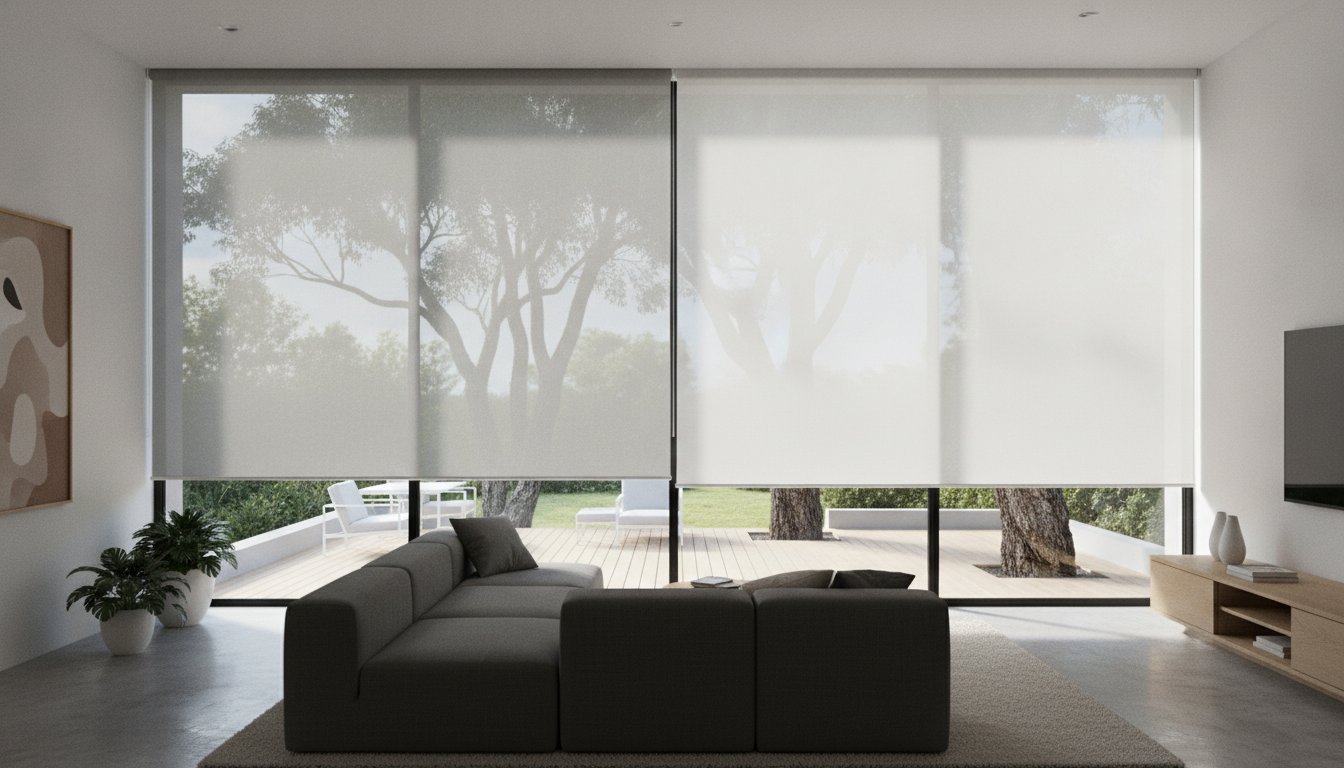
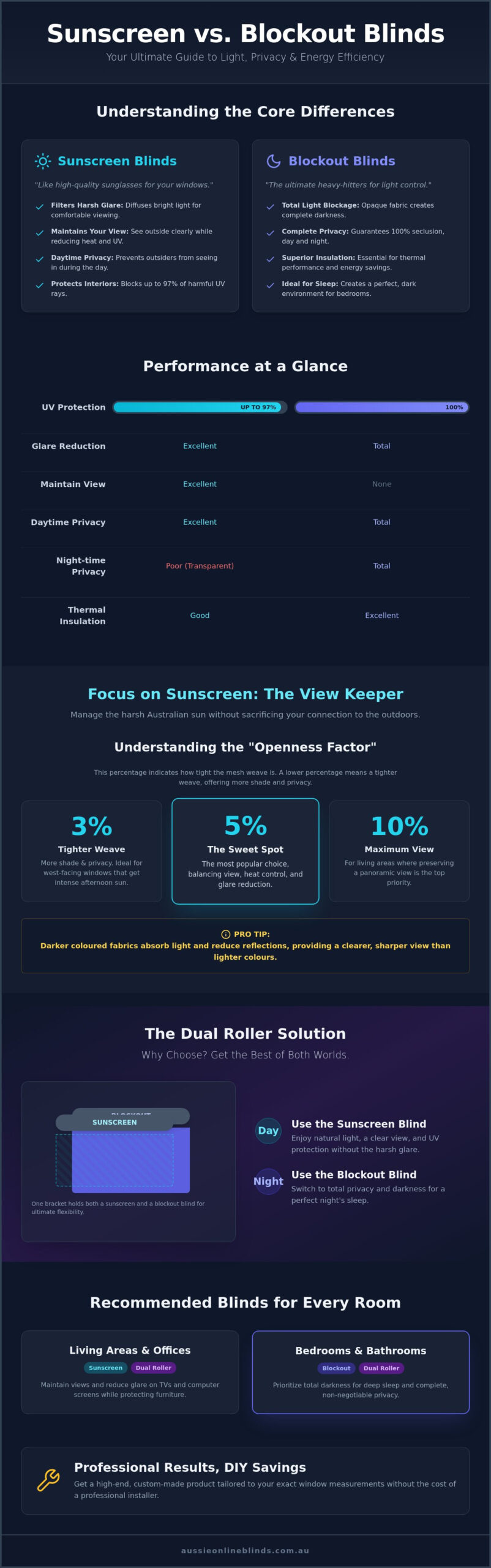
Choosing the right window treatment for your home often feels like a toss-up between style and function. When we look at the comparison of sunscreen roller blinds vs blockout, we are really talking about how you want to interact with the Australian sun. A Window blind serves as a vital barrier between your sanctuary and the elements; however, these two fabrics perform very different jobs. Sunscreen blinds act like a pair of high-quality sunglasses for your windows. They use a clever technical mesh to filter out the harsh glare while letting you keep that view of the backyard or the coast. On the flip side, blockout blinds are your heavy hitters. They feature a solid, opaque fabric designed to stop light in its tracks, making them the gold standard for anyone needing total darkness or complete seclusion.
The choice isn’t just about how much light fills the room. It’s also about thermal performance and protecting your home’s interior. While both styles help manage heat, they do so in distinct ways. Both of these options are available as bespoke, DIY blinds. This means you get a high-end, custom-made product tailored to your exact window measurements without having to pay for a professional installer to spend hours at your house. It’s a practical way to upgrade your home’s value while keeping your project budget firmly under control.
The Science of the Weave
The magic of sunscreen mesh lies in its openness factor. This percentage tells you how much of the weave is actually open space. A 5% openness factor is the sweet spot for most Australian homes, as it balances heat reduction with a clear view outside. Blockout fabrics take a different approach. They usually have a multi-layered backing, often a white or color-matched coating, that ensures zero light bleed through the material itself. Because you’ll be handling the installation yourself, we ensure the hardware is robust and easy to mount, providing that smooth, professional glide every time you operate the blind.
Privacy: Daytime vs Night-time
Privacy is where the two styles really part ways. During the day, sunscreen blinds are fantastic. You can see out, but passersby can’t see in because the light outside is much brighter than the light inside. This effect reverses once the sun goes down. If you have the lights on inside at night, a sunscreen blind becomes quite transparent from the street. For rooms like bathrooms and bedrooms, blockout blinds are the non-negotiable choice for guaranteed night-time privacy. While sunscreen mesh is a brilliant tool for glare control, it cannot provide total visual seclusion after dark.
The Benefits of Sunscreen Roller Blinds for the Australian Climate
Living in Australia means we deal with some of the most intense UV radiation in the world. While we previously discussed the basic differences in the sunscreen roller blinds vs blockout debate, it’s the sunscreen option that truly shines during our long, hot summer days. These blinds are designed to block between 95% and 97% of harmful UV rays. While some specialized window films can block more than 99% of UVA and UVB light, a high-quality sunscreen blind provides a similar, highly effective shield that protects your family while keeping the room bright and airy. They reduce solar heat gain significantly, ensuring your home doesn’t feel like a dark cave just because you want to stay cool.
Glare is another silent productivity killer, especially if you spend your day in a home office. Sunscreen mesh diffuses the light, removing those harsh reflections from your TV or computer monitor. The best part is the connection to the outdoors. You can keep an eye on the kids in the pool or enjoy your garden view without the blinding sun ruining the moment. It’s about maintaining that sense of space while controlling the environment.
Understanding the Openness Factor
The “openness factor” refers to how tightly the mesh is woven. A 3% openness factor is tighter, offering more shade and slightly better daytime privacy. This is ideal for west-facing windows that bear the brunt of the afternoon heat. A 5% or 10% factor is more common for living areas where you want to maximize your view. Here is a handy tip: many homeowners assume light-coloured fabrics provide a better view, but it’s actually the opposite. Darker fabric colours absorb more light and reduce reflections, allowing your eyes to focus through the mesh more easily than lighter tones.
Protecting Your Interior Assets
UV damage is a slow but expensive problem. Over time, direct sunlight will bleach your floorboards, fade your rugs, and cause upholstery to become brittle. When deciding on sunscreen roller blinds vs blockout for your sun-drenched lounge room, consider the long-term value of UV protection. Investing in high-quality sunscreen roller blinds acts as a protective barrier for your interior assets. It preserves the vibrant colours of your furniture and the integrity of your flooring for years to come. If you’re ready to see how these fabrics look in your own space, you can easily order free samples through Aussie Online Blinds to find the perfect match for your decor.
Why Blockout Roller Blinds Are Essential for Privacy and Sleep
While sunscreen fabrics are the masters of the view, blockout blinds are the undisputed champions of the sanctuary. When you are looking at sunscreen roller blinds vs blockout for your private spaces, the decision usually comes down to one thing: control. In a bedroom or nursery, the ability to achieve 100% light exclusion isn’t just a luxury; it’s the foundation of a good night’s sleep. These blinds use a solid, opaque fabric that stops streetlights and early morning sun from creeping into your room, helping you maintain a natural circadian rhythm regardless of what is happening outside.
Privacy is the other side of the coin. In sensitive areas like bathrooms or street-facing bedrooms, you need to know that your business stays your own. Unlike mesh fabrics that can become transparent when your interior lights are on at night, blockout fabrics provide total visual seclusion 24 hours a day. Modern blockout materials are also incredibly durable. They are engineered to withstand the intense Australian sun without cracking or peeling, ensuring your investment looks as good in five years as it does the day you install it.
Thermal Insulation and Energy Savings
The thermal benefits of a blockout blind go far beyond just keeping the sun out of your eyes. By acting as a physical barrier at the window, these blinds trap a layer of air between the fabric and the glass. This creates a thermal buffer that follows Australian government advice on shading to improve home comfort. In simple terms, it increases the ‘R-value’ or resistance to heat flow of your window. This means your air conditioner doesn’t have to work nearly as hard during a February heatwave. Effectively using blockout blinds can significantly lower your summer energy bills by preventing radiant heat from entering your living spaces in the first place.
Creating the Perfect Media Room
For home theatre enthusiasts or shift workers who need to sleep during the day, blockout is the only logical choice. To get the best results from your DIY project, we recommend measuring carefully to ensure the fabric covers as much of the window frame as possible, which minimises those annoying light gaps at the edges. When it comes to style, you can choose from a wide range of fabric colours that complement modern Australian interior palettes, from cool charcoals to warm linens. For a deeper dive into fabric types and textures, check out our ultimate guide to blockout roller blinds. Whether you are aiming for a minimalist look or a bold statement, these blinds provide the functional foundation every Australian home needs.
Performance Comparison: Choosing the Right Blind for Every Room
Choosing the right window treatment isn’t a one-and-done decision for the whole house. When comparing sunscreen roller blinds vs blockout, you need to look at the primary job of each specific space. While sunscreen blinds are the masters of the living room, a blockout blind is often the hero of the bedroom. A common misconception is that blockout is always the superior choice for heat. In reality, sunscreen fabrics are excellent at reflecting solar energy before it can bake your interiors, whereas blockout fabrics are better at insulating against air temperature changes. Both play a role in keeping your home comfortable, but they do so in different ways.
Maintenance is another practical factor to consider. Sunscreen mesh is usually a robust blend of PVC and polyester, making it incredibly easy to maintain. You can simply wipe it down with a damp cloth if it gets a bit of kitchen grease or dust on it. Blockout fabrics often feature a specialized acrylic or foam backing. These are best handled with a light dusting or a very gentle spot clean to preserve the integrity of the light-stopping layer. To get the best performance from either style, your mounting choice matters. An inside mount offers a sleek, integrated look, but an outside mount covers the entire window architrave. This is much more effective at stopping light “halos” and preventing heat from leaking around the edges of the fabric.
Room-by-Room Recommendation
In living areas and kitchens, sunscreen is usually the winner. It allows you to cook or watch TV without glare while keeping an eye on the kids outside. For bedrooms and nurseries, blockout is non-negotiable for quality sleep. In bathrooms, you need to balance privacy with moisture resistance. We recommend blockout fabrics for these spaces to ensure total seclusion, provided the room has decent ventilation to protect the fabric over time.
The DIY Advantage: Custom Fit vs Off-the-Shelf
Custom-measured blinds will always outperform standard off-the-shelf sizes. When a blind fits your window precisely, there are fewer gaps for light to peek through and less room for heat to escape. You don’t need a professional to get these results; you just need a steel measuring tape and a few minutes. You can follow our DIY measurement guide to ensure a perfect fit every time. By ordering your blinds online and handling the simple installation yourself, you get a premium, bespoke product without the hefty labour costs usually associated with custom furnishings. If you’re ready to start your project, you can browse our full range of DIY blinds to find the perfect match for your home’s style.
The Double Roller Solution: Why You Don’t Have to Choose
Throughout this guide, we’ve explored the specific strengths of sunscreen roller blinds vs blockout as if you have to pick a side. In reality, the most effective window strategy for a modern Australian home in 2026 is often the “Double Roller” or “Dual Blind” system. This hybrid solution effectively ends the debate by mounting both fabrics on a single, specially designed bracket. It’s the ultimate high-performance setup that allows you to swap between a sun-drenched, glare-free view during the day and total, insulated darkness at night. You get the UV protection of the sunscreen mesh and the thermal barrier of the blockout fabric without having to sacrifice one for the other.
This “Day/Night” system is particularly popular in living rooms and bedrooms where the requirements change as the sun moves. During the afternoon, you can lower the sunscreen layer to protect your furniture and stop the TV glare while still seeing the kids playing in the backyard. Once the sun set, you simply drop the blockout layer to secure your privacy and keep the warmth inside. It’s a practical, versatile approach that makes your home work harder for you, providing two distinct functions in a single window frame.
How Dual Brackets Work
Many homeowners worry that installing two blinds will look bulky or be difficult to manage, but modern bracket systems are remarkably slimline. These compact brackets allow both rollers to sit neatly within a single window reveal, provided you have enough depth. For a standard DIY inside-mount double roller, you generally need a reveal depth of at least 100mm to 120mm to ensure everything fits flush. Each blind operates independently with its own chain, or you can opt for motorised versions to control your light levels with a remote. Because the system is designed for the DIY market, the installation process is just as straightforward as a single blind; you simply mount the brackets and click the two rollers into place.
Maximising Your Home’s Resale Value
Investing in high-quality, custom-made dual blinds is a savvy move for your property’s long-term value. Potential buyers in the 2026 market look for energy-efficient features and “move-in ready” luxury. Having total control over light and privacy in every room creates a premium feel that off-the-shelf options simply can’t match. It shows a level of care and attention to detail that sets your home apart from the rest. By choosing a bespoke DIY solution, you’re adding significant aesthetic and functional value to your home while saving on the professional installation fees. If you’re ready to upgrade your windows with the best of both worlds, explore our custom double roller blind options today and see how easy it is to transform your living space.
Take Control of Your Home’s Climate Today
Finding the right balance for your windows is the secret to a comfortable, energy-efficient home. Whether you decide on the view-preserving benefits of sunscreen mesh or the total sanctuary provided by blockout fabric, you now have the tools to choose with confidence. Remember that the debate of sunscreen roller blinds vs blockout often finds its best answer in a dual system, giving you round-the-clock control over light and privacy. It’s a simple upgrade that makes a massive difference in your daily life and your power bills.
We are proud to be an Australian family-owned and operated business, and we’re here to support you through every step of your project journey. Every order comes with a 3-year warranty on all custom blinds, and we provide Australia-wide shipping on all DIY orders to make your renovation as smooth as possible. You don’t need to be a professional to get a high-end finish; you just need the right products and a little bit of local advice to get the job done right.
Shop our custom-made DIY Roller Blinds and save today!
Your journey to a more stylish and comfortable home starts with a single measurement. We can’t wait to see the results of your DIY project and help you create the perfect atmosphere in every room.
Common Questions About Choosing Your Blinds
Can you see through sunscreen blinds at night from the outside?
Yes, sunscreen blinds become transparent at night when your interior lights are on. This happens because the mesh works on a light-balance principle where you can see from the darker side into the brighter side. During the day, you have a clear view out, but once the sun goes down and you flick on the switch, passersby will be able to see into your home. For total night-time seclusion, we recommend a dual roller setup.
Do sunscreen blinds really stop heat from entering the room?
They certainly do. By reflecting up to 98% of UV rays, these blinds stop the sun from baking your interior surfaces like floorboards and furniture. This prevents the “glasshouse effect” and keeps your rooms much cooler during an Australian summer. It is a practical way to lower your indoor temperatures without losing your connection to the garden or the street view outside.
Are blockout blinds more expensive than sunscreen blinds?
When comparing sunscreen roller blinds vs blockout, you’ll find that the cost for a single blind is usually very similar. The final price mostly depends on the size of your window and the specific fabric texture you choose. Because you are choosing the DIY path, you are already saving significantly by avoiding professional installation fees, making both options a very cost-effective way to finish your room.
Can I install double roller blinds myself if I’m not a professional?
Absolutely, you can handle this project with ease. Our double roller systems use a streamlined bracket that holds both rollers in one place. If you can use a drill and a level, you can have your new dual blinds up and running in about 20 minutes per window. We design our hardware to be straightforward so that any homeowner feels confident during the installation process.
What is the best openness factor for a north-facing window in Australia?
For a north-facing window that gets hit with intense midday sun, a 3% openness factor is the best choice. This tighter weave provides extra shade and superior heat protection when the sun is at its strongest. It still allows enough natural light to filter through so the room stays bright, but it does a better job of keeping the heat at bay than a 5% or 10% mesh.
How do I clean sunscreen roller blinds without damaging the mesh?
Cleaning is simple and only requires a soft cloth with mild, soapy water. The PVC and polyester blend used in the mesh is quite hardy, so a gentle wipe-down will remove most dust and marks. It’s best to avoid using abrasive scrubbers or harsh chemical cleaners, as these could strip the protective UV coating from the fabric over time.
Will blockout blinds completely darken a room during a bright day?
The blockout fabric itself is 100% opaque and will stop all light from passing through the material. However, you might still see a small glow of light around the edges of the blind, which is often called a light halo. To get the darkest result possible for a media room or nursery, we suggest an outside mount that covers the entire window frame to block those peripheral gaps.
What happens if I measure my windows incorrectly for DIY blinds?
Because these are custom-made to your exact specifications, getting the measurements right is the most important step. We provide detailed guides to walk you through the process and ensure you are measuring the right areas. Always use a quality steel tape measure and check your numbers twice; it is the best way to ensure your sunscreen roller blinds vs blockout project is a success from day one.