

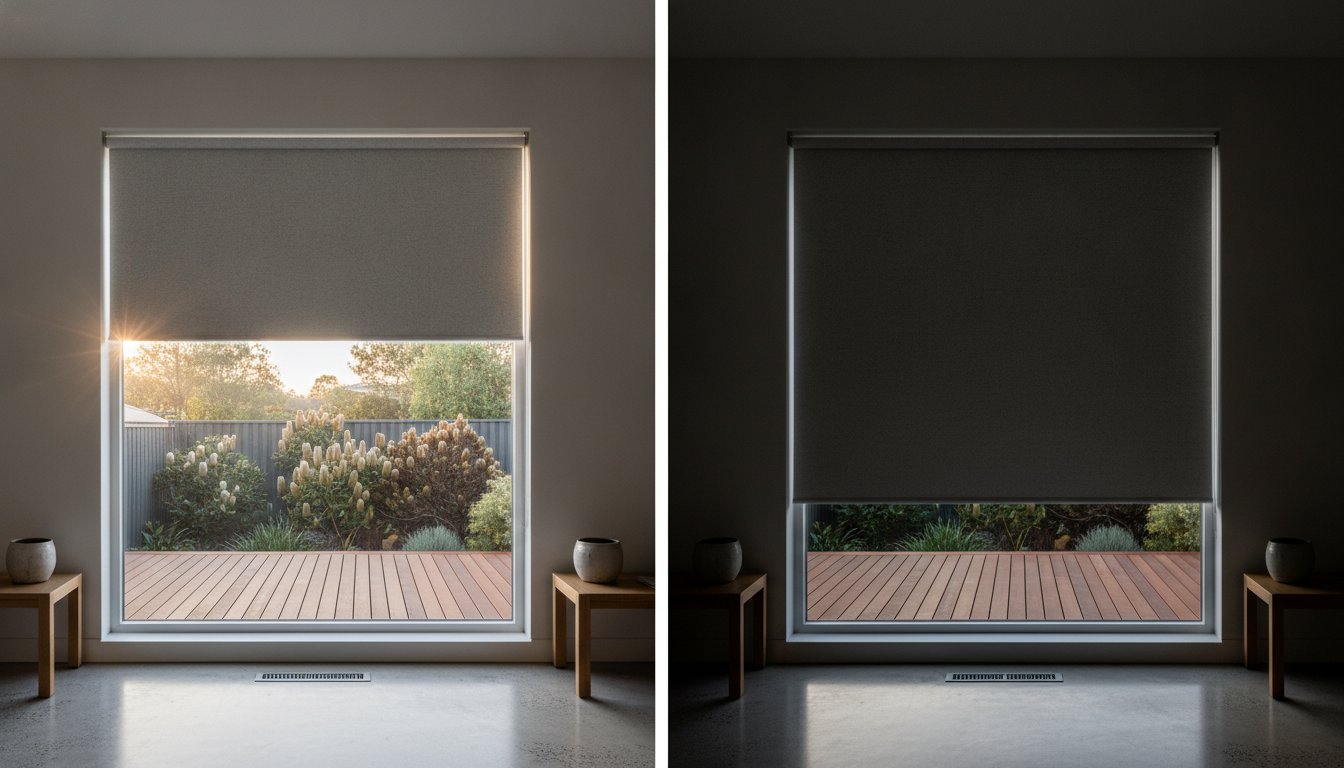
Could the simple choice of where you mount your brackets be the difference between a restful Sunday morning and being woken up by a harsh beam of light at 6 AM? Most of us have been there, staring at a beautiful new window treatment only to realize those pesky light gaps are letting the world in. It’s frustrating when you’ve put in the effort to DIY your home, but the result doesn’t quite feel like that professional finish you were after. When you’re standing there with a tape measure, wondering about recess vs face fit blinds what’s the difference is the most important question you can ask.
We understand that ordering custom-made products online can feel a bit daunting, especially when you’re worried about architectural constraints like window depth or getting those measurements just right. You want a sleek look that works for your home’s unique style, whether that’s a streamlined finish or maximum light blockage for a bedroom. In this guide, we’ll walk you through the functional and aesthetic differences between these two mounting styles. You’ll gain the confidence to measure up and choose the perfect fit for your windows, ensuring your next project performs perfectly and looks like it was installed by a seasoned expert.
Key Takeaways
- Understand recess vs face fit blinds what’s the difference by comparing a streamlined, inside-the-frame look with a wall-mounted style that covers the entire window frame.
- Learn why face fit blinds are often the superior choice for bedrooms where you need to eliminate light gaps and achieve maximum blockout performance.
- Identify architectural constraints like window depth, winders, or security screens that will determine which mounting style is the most practical for your DIY project.
- Master the “Golden Rule” of measuring with a steel tape to ensure your custom-made blinds fit perfectly, even if your window reveals are slightly out of square.
- Discover the long-term value of choosing custom-made blinds that are specifically designed for the Australian climate rather than settling for off-the-shelf, cut-to-size alternatives.
Understanding the Basics: Recess Fit vs Face Fit Explained
Deciding on your mounting style is the very first step in your DIY journey. It’s the foundation for everything that follows, from how you measure to how the final product performs in our harsh Australian sun. If you’ve been asking about recess vs face fit blinds what’s the difference, you’re in the right place to get some plain-English answers. This choice dictates the look of your room and how much light creeps in at the edges, so it’s worth getting right from the start.
What is a Recess Fit? (The Inside Mount)
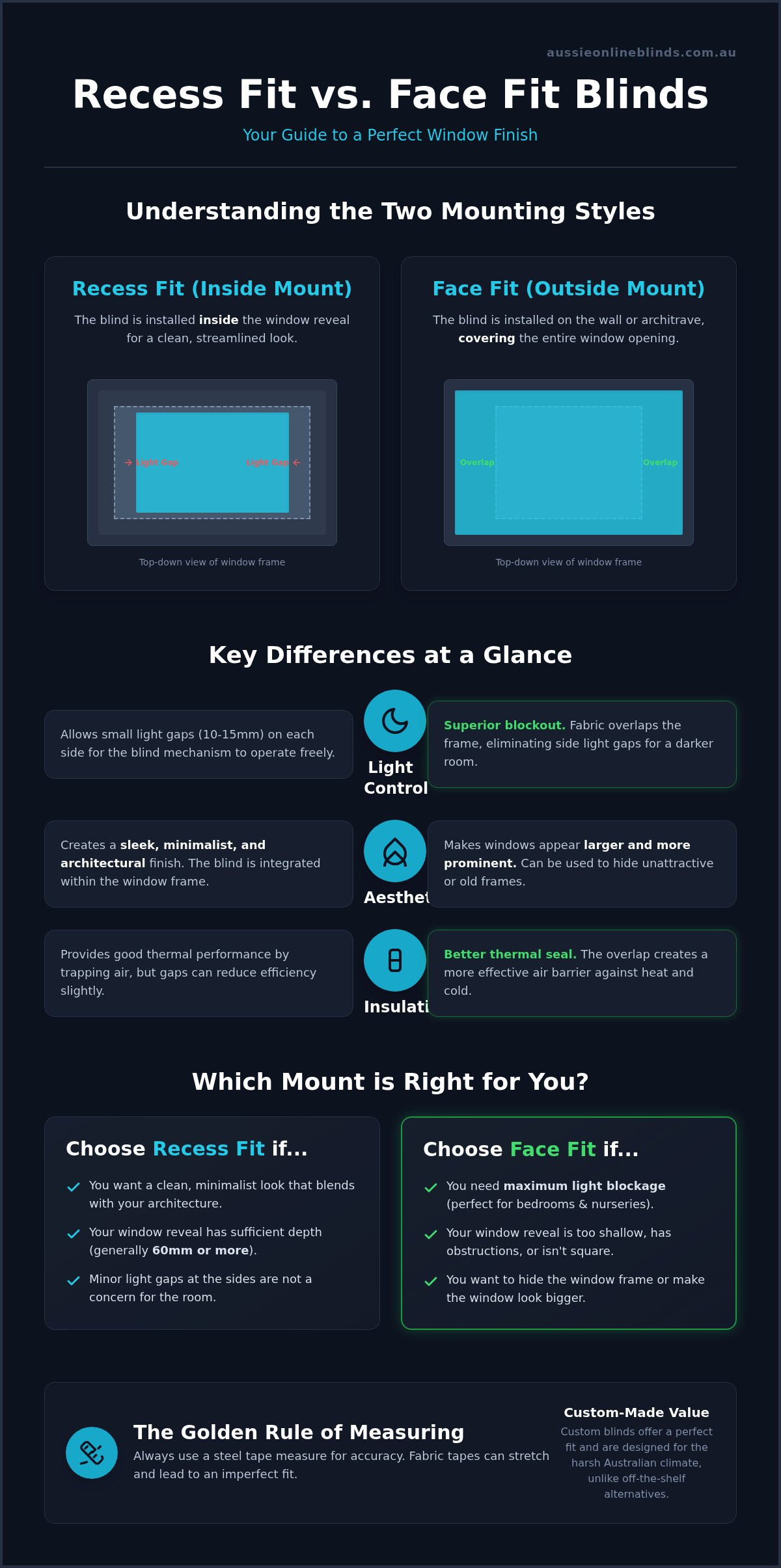
This style involves mounting the blind inside the window reveal, which is the internal part of the frame. It’s a favorite for modern Australian homes because it creates a clean, flush finish that doesn’t distract from your interior decor. Architects often specify this look because it keeps the window treatment neatly tucked away, allowing the clean lines of your home to shine. You’ll need enough depth in your reveal to accommodate the brackets and the roll of the fabric. For a standard blockout roller blind, you generally need a minimum depth of 60mm to ensure the blind sits comfortably within the space without protruding into the room.
What is a Face Fit? (The Outside Mount)
A face fit installation means mounting your blinds to the front of the window architrave or the wall above it. This is a brilliant, practical solution if your window reveals aren’t perfectly square or if you’re dealing with older, unattractive frames that you’d rather keep hidden. By covering the entire window opening, you can disguise those little architectural imperfections while making the window itself appear much larger. Face fitting is also the go-to choice for bedrooms because it allows the fabric to overlap the frame, significantly reducing those annoying light gaps. Understanding recess vs face fit blinds what’s the difference helps you realize that face fit offers a more forgiving installation process for the everyday DIYer.
Comparing the Benefits: Aesthetics, Privacy, and Light Control
When you’re trying to figure out recess vs face fit blinds what’s the difference, it’s easy to get caught up in looks. But for most of us living in Australia, the real decision comes down to how well those blinds actually work in our daily lives. Whether you’re trying to keep the midday sun out of a nursery or stop the neighbors from seeing in at night, the mounting style you choose makes a world of difference to your home’s comfort. It’s about finding that sweet spot where style meets real-world utility. For those who need to manage light sensitivity to improve focus, you can learn more about how visual perception impacts your indoor environment.
If you choose a recess fit, you’ll notice a small vertical gap of about 10mm to 15mm on either side of the fabric. This isn’t a mistake; it’s a physical requirement so the blind can rotate freely without rubbing against your window reveal. However, for shift workers or parents of young children, that sliver of light can be a real nuisance during the day. This is where face fit blinds shine. By mounting the blind to the architrave, the fabric overlaps the window opening entirely, effectively eliminating those light leaks. Pairing this mounting style with high-quality blockout roller blinds is the gold standard for creating a pitch-black environment for sleep.
Insulation and the Australian Climate
Living through an Australian summer means dealing with intense solar heat gain. A face fit installation offers a distinct advantage here because it creates a much better seal against the window frame. By covering the entire architrave, you’re trapping a layer of air between the glass and the fabric, which acts as a thermal buffer. This helps keep your living spaces cooler and reduces the strain on your air conditioning. When you use fabrics specifically designed for our local conditions, the thermal performance is even better. It’s a practical way to manage your energy bills while staying comfortable year-round.
Privacy is another big factor, especially for street-facing windows or homes built close to neighbors. A face fit provides total coverage, so there’s no chance of anyone catching a glimpse through a side gap when the sun goes down and your lights come on. If you’re ready to see how these options look in your own home, you can browse our full range of custom blinds online to find the perfect match for your needs. Whether you prioritize a minimalist aesthetic or maximum performance, choosing the right fit ensures your DIY project is a success and provides the long-term comfort you deserve.
How to Decide: Which Mounting Style is Best for Your Windows?
Before you commit to a style, take a close look at your window’s anatomy. It’s not just a matter of taste; your window’s physical features often make the choice for you. When homeowners ask about recess vs face fit blinds what’s the difference, we always suggest starting with a quick audit of the window frame. Look for obstructions like winding handles, latches, or security screens that might get in the way of a moving blind. If your window hardware protrudes into the reveal, a face fit might be your only practical option to avoid the fabric snagging every time you operate it.
Your choice also depends on the specific needs of each room. In a lounge or dining area, you might prioritize a clean, architectural look that lets your window frames shine. In a nursery or master bedroom, sleep quality is usually the top priority. Consider how you use each space:
- Bedrooms: Face fit is usually the winner here for maximum darkness and sleep quality.
- Living Areas: Recess fit offers a sleek, modern finish that keeps the room feeling open and airy.
- Kitchens and Bathrooms: Recess fit keeps the blind tucked away from splashes, steam, and benchtop clutter.
When to Choose a Recess Fit
When a Face Fit is the Superior Option
Sometimes, your home’s architecture makes the decision for you. If your window reveals are shallow, a recess fit simply won’t work because the blind will stick out awkwardly into the room. Face fit is the superior choice for total blockout performance and absolute privacy because the fabric overlaps the entire opening. It’s also the best way to disguise windows that are “out of square.” If your house has settled and the frames are slightly wonky, a face fit blind covers the entire opening and hides those uneven lines. It’s a forgiving choice that ensures a professional-looking result every time, regardless of the window’s condition.
Measuring for Success: DIY Tips for a Perfect Fit
Measuring up is where the rubber hits the road. If you’re still wondering about recess vs face fit blinds what’s the difference in terms of effort, the answer is simple: they both require precision, but the ‘Golden Rule’ remains the same. Always use a high-quality steel tape measure. Fabric or plastic tapes can stretch over time, and even a 2mm error can be the difference between a blind that glides smoothly and one that scuffs your paintwork. Taking your time here saves a lot of heartache later.
Identifying an ‘out of square’ window is a vital step before you even touch the order button. Simply measure the diagonals of your window reveal from corner to corner. If the two measurements differ by more than 5mm, your window is slightly wonky. In these cases, a face fit is almost always the better choice because it hides those uneven lines behind a perfectly level blind. It’s a simple trick that ensures your DIY project looks like it was handled by a pro.
Critical Measurement Rules for Recess Mounts
For a recess mount, you’re looking for the tightest spot in your window reveal. Walls in Australian homes, whether they’re older brick or modern plaster, are rarely perfectly flat. You need to measure the width in three specific places: the top, the middle, and the bottom. Record the smallest of these three measurements. This ensures the blind won’t jam halfway down. When you order, provide the exact opening size. Don’t make your own deductions; our team handles the technical math to ensure your custom blinds have the necessary clearance to operate. Also, double-check for internal obstructions like window winders or handles that might stop the blind from dropping straight.
Avoiding Common Face Fit Mounting Mistakes
Face fit measuring is a bit more flexible but requires a strategic approach to overlaps. To achieve that superior blockout performance, you need the fabric to extend past the glass. A common mistake is measuring only to the edges of the architrave. Instead, we suggest aiming for at least 50mm of overlap on each side. This extra width is what truly eliminates those annoying light gaps. You can choose to mount directly to the timber architrave or on the wall above it if you want to create the illusion of a taller window. If you’re feeling a bit unsure about where to place your tape, check out our ultimate 2026 DIY measuring guide for clear visual aids and step-by-step videos. Once you have your numbers ready, you can confidently order your custom blinds online and get your project moving.
Custom Blinds for Every Window: The Aussie Online Blinds Difference
Understanding recess vs face fit blinds what’s the difference is the key to a successful project, but the quality of the product you choose is what ensures that success lasts for years. While it might be tempting to pick up a “cut-to-size” blind from a local hardware store, those off-the-shelf options often struggle in our demanding climate. Cutting a generic blind to fit your window can leave you with frayed edges, weakened mechanisms, and a fit that’s never quite right. By choosing custom-made, you’re getting a product built specifically for your measurements, ensuring that whether you’ve opted for a sleek recess fit or a high-performance face fit, the result is flawless—much like how professional painters use Quickatoo to ensure their project estimates and details are perfectly accurate.
Our online configuration tool is designed to take the guesswork out of the ordering process. When you enter your measurements, you simply select your mounting preference, and our system handles the technical tolerances. This means you don’t have to worry about doing complex math or subtracting millimeters for clearance. We handle the technical side so you can focus on the fun part: choosing the perfect fabric and color to suit your home’s unique style.
Quality Australian-Made Blinds for DIY Installation
We take great pride in being a family-owned Australian business. Our indoor roller blinds are designed to withstand local conditions, from intense UV rays to high humidity levels. Because we operate a direct-to-consumer model, we can offer high-end, bespoke quality without the massive showroom markups that usually come with custom furnishings. Every order is backed by a 3-year warranty, giving you the confidence that your DIY project is an investment in long-term comfort and style. Supporting a local business means you get a superior product and expert support whenever you need it.
Simple DIY Installation with Professional Results
You don’t need to hire an expensive professional installer to get a high-end finish in your home. We’ve simplified the installation process so that anyone with a few basic tools can achieve a perfect result. Our library of DIY blinds resources provides clear, plain-English guidance to help you through every step, from the first bracket to the final check. There’s a real sense of pride that comes with transforming your own space. We encourage you to take that leap, trust your measurements, and enjoy the professional-looking results that only custom-made blinds can provide. Your home deserves a fit that is as hardworking and reliable as you are.
Ready to Transform Your Windows with Confidence?
Choosing the right mounting style is about more than just looks; it’s about balancing your home’s unique architecture with your daily lifestyle needs. Whether you’ve decided on the minimalist, flush finish of a recess fit or the superior blockout performance of a face fit, you now have the practical knowledge to measure like a pro. Understanding recess vs face fit blinds what’s the difference ensures you won’t be caught out by unexpected light gaps or shallow window reveals when your order arrives.
As an Australian family-owned and operated business, we take pride in helping you achieve high-end results without the professional price tag. Every custom blind we sell comes with a 3-year warranty for your peace of mind. Plus, we offer reliable Australia-wide shipping to ensure your new window treatments arrive safely at your door. Don’t let measurement anxiety hold you back from the home styling you’ve always wanted.
Browse our custom-made blinds and start your DIY project today! You’ve done the hard work of researching; now it’s time to enjoy the satisfaction of a job well done.
Frequently Asked Questions
Can I change a recess fit blind to a face fit later?
Generally, you can’t swap them easily. A recess fit blind is custom-made to fit the internal width of your window reveal, which is almost always narrower than the width needed to cover your architraves. If you try to mount it on the face of the window later, it won’t provide full coverage and will leave large, unattractive gaps. It’s best to commit to one style before ordering.
What is the minimum window depth required for a recess fit roller blind?
You usually need a minimum reveal depth of 60mm for a standard roller blind to sit flush within the frame. If your reveal is shallower than this, the blind will stick out into the room, which can look a bit untidy. Always check your specific window depth before deciding on recess vs face fit blinds what’s the difference in your own installation plan.
Which fit is better for blocking out 100% of the light?
Face fit is the superior choice for maximum light blockage every time. Because the fabric overlaps the window opening and architrave, it covers the light gaps that naturally occur with recess fit installations. While recess fit looks sleek, it leaves a 10mm to 15mm gap on the sides for clearance. For nurseries or bedrooms, mounting to the face of the window is the most effective solution.
Do recess fit blinds make a room look smaller?
Yes, you can mount face fit blinds directly to the wall above or around the window opening. This is a common solution in modern Australian homes with square set plastering that lacks traditional timber frames. You just need to ensure you’re using the correct wall plugs or anchors for your specific wall type, whether it’s plasterboard or masonry. It’s a versatile way to add style to any window.
What happens if my window reveal is not perfectly square?
If your window is out of square, a face fit blind is your best friend. It mounts to the wall or architrave, completely hiding the uneven lines of the internal reveal. If you try to force a recess fit into a wonky frame, the blind might jam or show awkward, uneven gaps. Choosing a face fit ensures a level, professional finish regardless of how much your house has settled.
Are recess fit blinds harder to install than face fit?
Both styles are quite simple for a DIYer, but recess fits require a bit more precision during the measurement phase. You’re working within a fixed space, so there’s less room for error. Face fit is often considered more forgiving because you can adjust the mounting position slightly on the architrave. Regardless of the choice, our custom-made products and guides make the actual installation process straightforward for any homeowner.
How much overlap should I allow for a face fit blind?
We recommend allowing at least 50mm of overlap on each side of the window opening. This ensures the fabric covers the glass completely and provides enough surface area for the brackets to be securely mounted. If you’re looking to minimize light leakage, a larger overlap of 70mm to 100mm is even more effective. Getting this measurement right is a key part of understanding recess vs face fit blinds what’s the difference for your comfort.