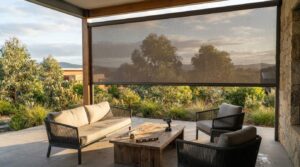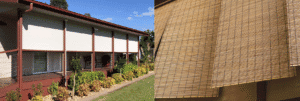

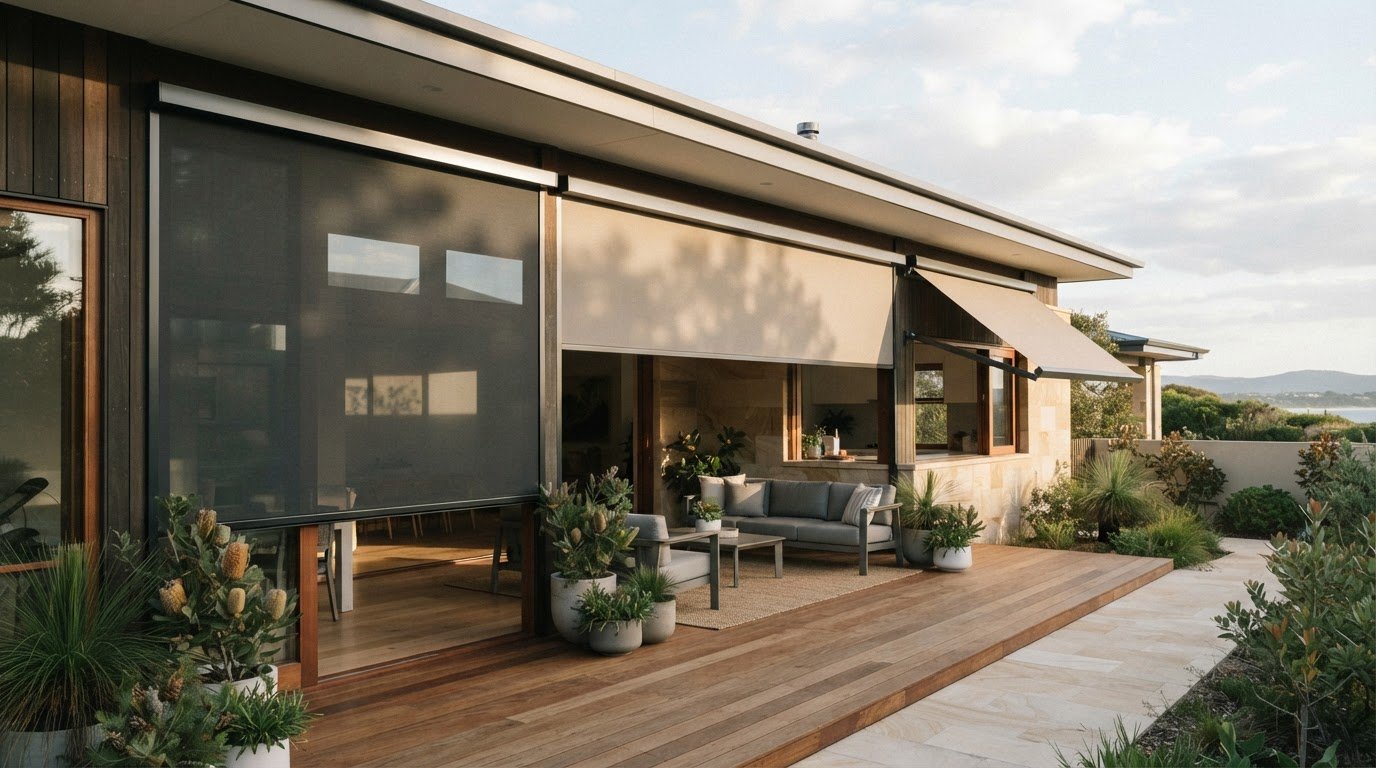
The most enclosed outdoor blind isn’t always the best fit for your patio. In Australia, changing sun angles, privacy needs and breezes can make one style a great choice for one space and less suitable for another. Rather than getting caught up in product names, start with how you use the area and what you want the blind to do.
This guide compares outside shades and blinds by sun exposure, privacy, airflow and everyday use, so you can narrow down the options with confidence. You’ll learn how styles such as Zipscreen, Deep Channel, Pivot Arm, Wire Guide and Straight Drop blinds differ as categories, and what to consider before choosing.
We’ll also cover measuring, ordering a custom-made blind online and planning a DIY installation. With a clear idea of your space and priorities, you can make a considered choice for your home. Aussie Online Blinds is a family-owned Australian business offering custom-made outdoor blinds, Australia-wide shipping and a three-year warranty.
Key Takeaways
- Start with what the opening needs to do, then compare outside shades and blinds by sun, privacy, airflow and view-through.
- Use the style comparison to see how Zipscreen, Deep Channel, Pivot Arm, Wire Guide and Straight Drop options differ as categories.
- Before ordering, inspect the opening, settle on your priorities and record measurements carefully using the product guidance.
- Custom-made online ordering and DIY installation let you plan your project step by step, with Australia-wide shipping and a three-year warranty.
What Do Outside Shades and Blinds Do for an Outdoor Area?
Outside shades and blinds are coverings fitted to outdoor openings, such as a patio or veranda, to help manage direct sun, screen a space or add privacy. They can make an area more comfortable to use, but different styles suit different needs. The right choice depends on the opening’s shape and position, the conditions it faces and how you want to use the space.
Start by identifying the problem you want to solve. An exposed area used for afternoon meals may need a different balance of shade and airflow from a spot beside a neighbour’s window where privacy matters most. If keeping a view is a priority, include that in your decision too.
Product names alone don’t always tell the whole story. Compare how a blind is constructed, how it operates and how it’s intended to be fitted. A fixed pergola roof provides overhead cover, while an awning extends over an area from a building. Outdoor blinds screen the sides of an opening; indoor roller blinds sit inside the home. These options address different parts of a space, so they aren’t direct substitutes.
For a general overview of how coverings are described and used, see this guide to window blinds. For your project, focus on the product’s outdoor suitability and the details that match your opening. Similar names don’t necessarily mean similar construction or performance.
Which outdoor problems can blinds help address?
Consider shade, privacy, glare, airflow and view-through as separate needs. A screen can moderate direct sunlight, but the result depends on its fabric, coverage and position. A denser screen may better suit a privacy priority, while glare control might matter most beside a bright outdoor dining area. A more open material may preserve airflow or a view, but provide a different level of screening. Compare fabric details and configuration against your priorities.
How is an outdoor blind different from an indoor shade?
An outdoor blind is fitted to an exterior opening or outdoor living area and is intended for outdoor exposure. An indoor shade is installed inside, where it faces different conditions. That difference makes product-specific care, suitability and operating guidance important, especially for an opening exposed to sun or variable weather. Don’t assume every outdoor blind blocks rain, wind or heat completely. Check the guidance for the particular style and use it as directed.
Picture the space in use before choosing. A screen on a side opening may help soften the sun or create a greater sense of separation, while a fixed roof or awning addresses overhead exposure. Once you’ve identified what the blind needs to do, compare suitable styles by construction and operation. This helps you choose for the actual opening, not just a product name that sounds right.
How Sun, Privacy and Airflow Shape Outside Blind Choices
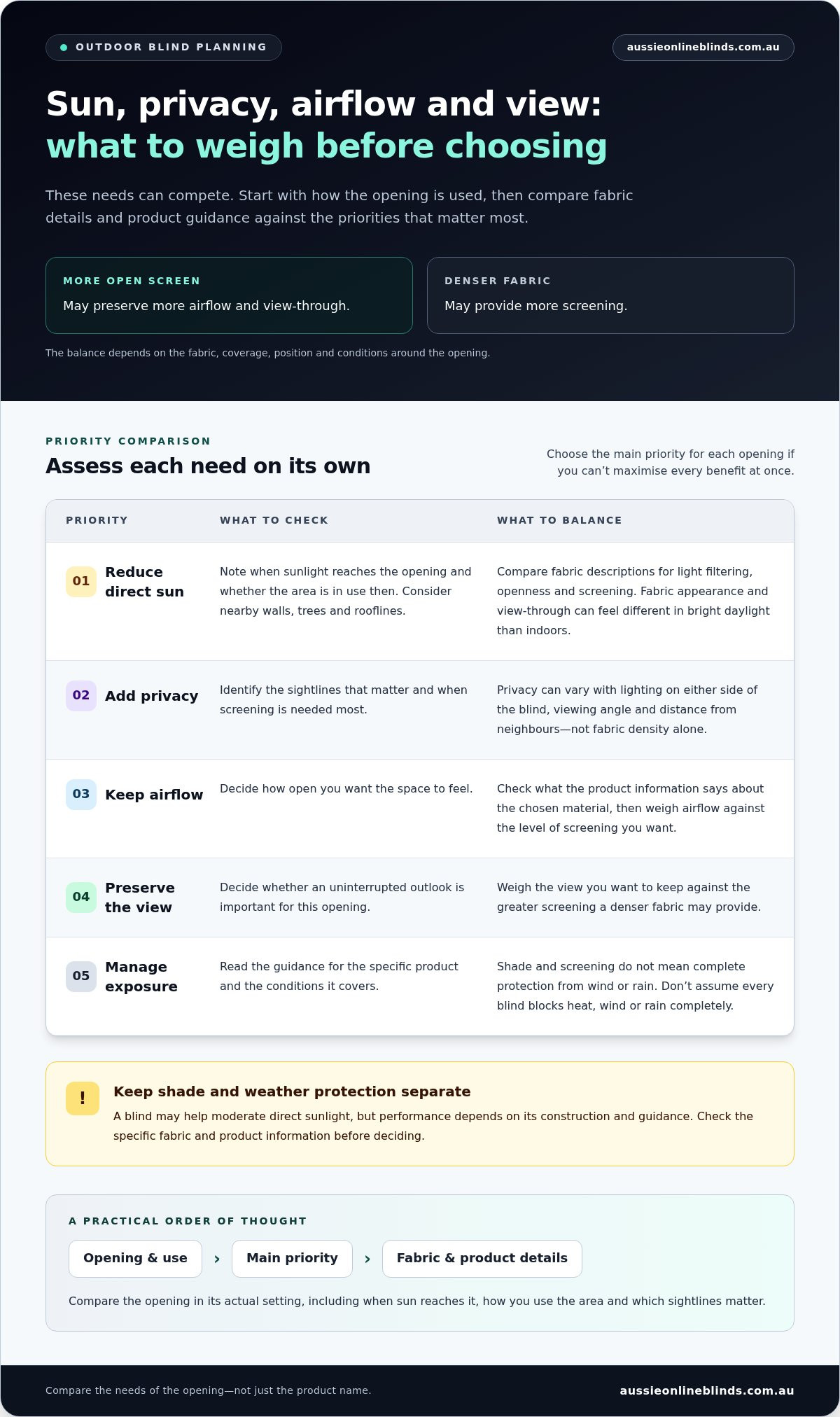
A useful way to compare outside shades and blinds is to weigh four things: when sun reaches the opening, how much privacy you want, whether airflow matters and how much of the view you’d like to keep. These needs can compete. A more open screen may preserve a view and let air pass through, while a denser fabric may provide more screening. Decide which benefit matters most before comparing product details.
How should sun direction and exposure affect the choice?
Notice when direct sun lands on the opening and whether you use the area at that time. An outdoor dining spot used in the afternoon may need a different approach from a breakfast nook that gets morning sun. Nearby walls, trees and rooflines also affect how much shade the space already receives, so assess the opening in its actual setting.
Compare fabric descriptions for light filtering, openness and screening, then consider colour in the space. Review the product’s fabric information and images alongside the light and finishes around the opening. A fabric’s appearance and the view through it can feel different in bright daylight than they do indoors.
How can a blind balance privacy, airflow and views?
Privacy depends on more than fabric density. Lighting on either side of the blind, the viewing angle and the distance from neighbours can all affect what people see through it. Think about when you need screening most, then weigh that against the outlook and airflow you want to keep. If you can’t maximise every benefit at once, choose the main priority for that opening.
Use this quick comparison to focus your product research:
Reduce direct sun: When does sunlight hit the opening, and what fabric details describe its light-filtering or screening effect?
Add privacy: Which sightlines matter, and how might lighting or viewing angle affect privacy?
Keep airflow: How open does the space need to feel, and what does the product information say about the chosen material?
Preserve the view: Is an uninterrupted outlook more important than denser screening?
Manage weather exposure: What conditions does the product guidance cover? Shade and screening aren’t the same as complete protection from wind or rain.
Keep shade and weather protection as separate questions. A blind may help moderate direct sun, but that doesn’t mean it blocks heat, wind or rain completely. Outdoor conditions vary, and suitability depends on the product’s construction and guidance. Read the specific fabric and product information before deciding, rather than applying a general claim to every style.
Once you’ve ranked your priorities, compare the available custom outdoor blinds against those needs. This gives you a clearer starting point for choosing a style and reviewing its product-specific details.
Comparing Outside Shades and Blinds by Style and Installation
The style name is a starting point, not a full specification. Zipscreen, Deep Channel, Pivot Arm, Wire Guide and Straight Drop blinds are distinct categories, but the right match depends on the opening, the fixing surface and how you want the blind to operate. Use the comparison below to identify details to check in the product information, rather than assuming a category suits every space.
Which outdoor blind style suits each opening?
Consider whether you’re screening a broad patio opening, an exposed side or a window, then check the available mounting area and dimensions. The examples below are prompts for comparing options, not a guarantee of suitability. Fixing conditions and product requirements determine what’s practical.
| Style | Opening and fixing context to consider | Operation to check | Illustrative priority |
|---|---|---|---|
| Zipscreen | Could suit a vertical opening where a guided screen is being considered; check required fixing surfaces. | Review the specific guide and operating details. | Screening a patio opening while keeping the setup aligned with its mounting conditions. |
| Deep Channel | Compare the opening edges and available fixing space with the product’s channel requirements. | Confirm how the blind is guided and operated. | Finding an option for an opening where the specified channel arrangement is practical. |
| Pivot Arm | Check whether the window or opening has suitable fixing points for the product configuration. | Read how the arms and blind are operated. | Considering a window location where the product’s stated arrangement suits the space. |
| Wire Guide | Assess the opening edges and fixing positions against the product guidance. | Check the guide and operating method for that configuration. | Comparing options for an exposed side where the specified guide arrangement fits. |
| Straight Drop | Consider a vertical opening and the fixing surface above it. | Check how the blind lowers and is secured, as described for the product. | Screening a side opening where a descending blind is being considered. |
The Zipscreen outdoor blinds guide offers more detail on that style. Use it alongside the product’s specifications to understand the configuration and installation requirements for your opening.
What should you compare beyond the product name?
Before settling on a style, compare its operating method, fixing requirements, fabric choices and stated limitations. These details matter as much as the label. For example, a mounting surface that doesn’t match the required fixing context can make an otherwise appealing configuration impractical.
Measurements and mounting conditions can affect the final fit, so follow the instructions for the specific blind you’re considering. If you’re weighing up Zipscreen against Ziptrak, the Zipscreen vs. Ziptrak blinds comparison can help clarify that distinction. Don’t rely on names alone to infer construction, operation or suitability. Use the relevant product information to make your choice.
Planning Outside Shades and Blinds Before You Order
A little preparation can make choosing outside shades and blinds more straightforward. Before ordering, focus on the job the blind needs to do, the opening it must fit and the practicalities of installing and using it. For a DIY project, keep the product’s measuring and fixing instructions close at hand. Different styles can have different requirements, so one measuring rule won’t suit every configuration.
- Define the need. Write down your main priority, such as managing sun, adding privacy or screening an exposed side. Note how and when you use the area.
- Inspect the opening. Look at its shape, the surrounding frame or wall, possible fixing surfaces and anything that could obstruct the blind.
- Choose a style to investigate. Compare suitable outdoor blind categories against the opening and your intended use, rather than choosing by name alone.
- Check the product guidance. Review the specific measuring, mounting, operating and care information before settling on a configuration.
What should you check at the opening?
Consider whether the blind can attach to a suitable wall, frame or other mounting surface as described in its product guidance. Note uneven edges, nearby handles, posts or other obstructions that could affect fixing or operation. Also consider access: will you be able to reach and use the blind as intended once installed? Record relevant details beside your measurements so you can review them together.
Opening dimensions and mounting conditions can affect which setup is practical. Measure and record carefully, including which opening each measurement belongs to, then follow the instructions for the particular style. Identify the intended fixing position before measuring and use the specified method. Don’t apply an inside-mount or outside-mount assumption across every product.
How can you reduce DIY ordering mistakes?
Before submitting an order, compare your recorded measurements with the product instructions and check the selected style and configuration. Read the entries back slowly. A number recorded against the wrong opening can be just as troublesome as an inaccurate measurement. Review the fabric and colour information in the context of the outdoor setting, since surrounding light and finishes can influence how they look.
Make a final check against your day-to-day plans. Consider how often you’ll operate the blind, whether the area needs to remain accessible and whether the chosen position works with the opening’s surroundings. Keep your measurements, configuration and product instructions together, and resolve any mismatch between your notes and the instructions before ordering.
Once your opening details and priorities are clear, explore custom-made outdoor blinds as you plan your DIY order. Careful checks help you move forward with a clearer understanding of the fit and setup you’re choosing.
Ordering Custom Outside Shades and Blinds with Aussie Online Blinds
Once you’ve matched a blind style to your opening and priorities, plan an order that fits your project. Aussie Online Blinds is a family-owned Australian online business offering custom-made outdoor blinds for DIY installation. The range includes Zipscreen, Deep Channel, Pivot Arm, Wire Guide and Straight Drop options. Choose a category, provide your measurements and configure your order online, then follow the product instructions for installation.
What can you expect when ordering online?
Start with the category that suits your space, then use the relevant product guidance to measure the opening and select a configuration. Take your time with both steps. The measurements you provide inform a custom-made order, and installation planning is part of a DIY purchase.
Check the product’s measuring and installation instructions before entering dimensions, as requirements can vary by style. Keep your notes clear and match each measurement to the right opening. Use a general outdoor blinds buying guide for broader selection advice, then check the specific information for the style you’re considering.
Outdoor blinds from Aussie Online Blinds come with a three-year warranty, and Australia-wide shipping is available. Keep these details in mind as you compare options and plan your project, alongside the product information for the category you select.
How can you move from comparison to a confident choice?
Before configuring an order, bring your main decisions together. Revisit the conditions the opening faces, the level of privacy you want, whether airflow and view-through matter, and how the blind will be fixed and used. Then choose the category that best aligns with those needs. Review its product-specific instructions and available configuration before entering measurements.
- Exposure: Note when the opening gets direct sun and how the space is used.
- Privacy and outlook: Decide which matters more if you can’t maximise both.
- Airflow: Consider how open you want the area to feel.
- Opening and fixing: Check dimensions, mounting surface and possible obstructions against the product guidance.
This short review gives you a practical basis for comparing outside shades and blinds without relying on style labels alone. If you’re still weighing up categories, revisit a general outdoor blinds buying guide before configuring a product. Once your measurements and preferred style are ready, explore the range and plan your custom order at your own pace.
Explore outdoor blinds and configure your order when you’re ready to take the next step.
Make Your Outdoor Space Your Next Home Project
A considered choice of outside shades and blinds can help you make better use of an outdoor area, but the project doesn’t end when you pick a style. Think about how the finished space should feel and function through an ordinary week. That picture can help turn your product choice into a practical plan, from preparing the opening to setting aside time for DIY installation.
Before you begin, keep your measurements, product instructions and installation notes together. A clear plan makes it easier to work through each step and keep the details you’ve already considered close at hand. You don’t need to rush. Start with the option that best fits your space, then move forward when you’re ready.
Explore custom outdoor blinds from Aussie Online Blinds and take the next step towards a more considered outdoor setup. With your priorities in mind, you can approach your project with confidence and shape a space that feels more suited to the way you live.
Frequently Asked Questions
Are outside shades and outdoor blinds the same thing?
Often, yes: “outside shades” and “outdoor blinds” are commonly used for coverings fitted outside to screen an opening or outdoor living area. Product names can vary, so look beyond the label when comparing options. Check where each blind is designed to be fitted, how it operates and what the product guidance says about its intended use. This helps avoid confusing outdoor screens with indoor roller blinds, awnings or fixed roof structures.
Which outdoor blinds are best for a windy area?
No one outdoor blind style is best for every windy site. Wind exposure, opening size, mounting conditions and the specific blind’s design all matter. A sheltered veranda and a fully exposed side of a home can face quite different conditions. Compare the product’s weather guidance with the conditions at your opening, and follow any instructions about operating the blind in wind. Don’t assume a screen is designed to remain down in all conditions.
Do outdoor blinds provide privacy at night?
They can provide some privacy, but the result depends on the fabric, viewing angle and lighting on both sides. If your patio is brightly lit at night while the area outside is dark, people may be able to see more through a screen than they can during daylight. For a bedroom-facing boundary or a close neighbouring sightline, consider how the space is lit after dark and review the fabric’s privacy details before choosing.
Can outdoor blinds keep rain out?
Some outdoor blinds may help shelter an area from rain, but you shouldn’t assume a blind will keep all water out. The outcome depends on the product, its installation and the conditions, including rain direction and wind. Check the specific product guidance for weather suitability, and treat an outdoor blind as a screen rather than a guarantee of a dry or weatherproof space. Keep the area’s drainage and exposure in mind when planning.
Can outside shades be fitted to a pergola?
Outside shades may be suitable for some pergola openings, provided the structure and fixing surfaces match the product’s requirements. Check the pergola’s frame, available fixing points, opening dimensions and any obstructions before choosing a configuration. A timber post, masonry wall and lightweight frame may offer different mounting conditions. Follow the selected blind’s installation guidance rather than assuming every pergola can take every style.
How do I measure for custom outdoor blinds?
Use the measuring instructions for the exact outdoor blind style you’re ordering, because the required measurement points can differ by product and mounting arrangement. First identify the opening and intended fixing position, then record each measurement clearly with its location. Recheck the figures before entering them in your order. If you’re measuring more than one opening, label each set separately so dimensions don’t get mixed up during configuration.
How long do outdoor blinds last?
There isn’t one dependable lifespan for every outdoor blind. Longevity can vary with fabric and construction, how exposed the blind is, how often it’s used and whether it’s cared for according to its instructions. For example, a screen in a sheltered area may face different wear from one exposed to strong sun and changing weather. Review the product care guidance and warranty terms, and avoid treating warranty length as a guaranteed lifespan.