
The best patio-door blind isn’t necessarily the one that blocks the most sun. It’s the one that gives you shade and privacy without getting in the way when you head outside. If you’re searching for blinds doors patio options, start with the door’s layout, then compare the blind’s position and function.
It’s understandable to worry that a blind might clutter the view, catch on a moving door or make everyday access awkward. The right choice depends on whether your doors slide, swing or fold, along with how much sun and privacy you want to manage.
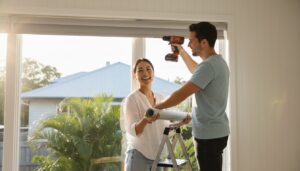
This guide compares practical blind options for patio doors and explains what to consider before ordering. You’ll learn how to match a blind to your door style, balance light control with clear access, and prepare accurate measurements for a made-to-measure DIY fit. Aussie Online Blinds offers custom blinds to order online, with DIY installation, Australia-wide shipping and a three-year warranty. Use the steps below to narrow your options.
Key Takeaways
- Match the blind style to how your patio doors slide, swing or fold so the covering works with everyday access.
- Compare outdoor options such as Zipscreen, deep channel, wire guide and straight drop blinds against your exposure, privacy and view priorities.
- Consider blind placement as well as blind type to balance shade and privacy with easy passage outdoors.
- For blinds doors patio, identify the door layout and mounting position before measuring, then follow the chosen product’s instructions.
- Use a checklist of door movement, sun exposure, privacy needs and measuring readiness to narrow down your options.
Blinds for patio doors: solve sun, privacy, and access together
Patio-door blinds are window coverings selected to suit the glass, the way the door opens and the conditions around the adjoining outdoor space. A well-planned covering can soften glare, help manage sunlight and provide privacy without making the doorway awkward to use or cutting you off from the patio.
Start with how the doors work. A blind across a frequently used entrance may interrupt passage, while a covering positioned outside can shade the glass from the patio side. Neither indoor nor outdoor blinds are automatically the better choice. Think about where the blind will sit, how often you use the door and what you want it to do.
What makes patio doors different from ordinary windows?
Patio doors are often opened throughout the day, so a blind needs to work around moving panels and a clear path through the doorway. Sliding doors travel along a track, hinged doors swing into or out of a room, and bifold doors fold and stack to one side. Handles, tracks and the space each panel uses can affect where a blind can sit. Map the door’s movement before choosing a position, so the blind does not obstruct the panels or your route through the opening.
Which patio-door problems should your blinds solve?
Decide what matters most: reducing glare on screens, softening strong sunlight, adding privacy from nearby homes or preserving the outdoor view. Notice when the sun reaches the glass and whether the patio is exposed to weather. An indoor blind may suit needs focused on the room and glazing, while an outdoor blind may suit a priority focused on the patio side. Choose according to your setting and priorities rather than assuming one type works for every home.
For a patio-facing opening, outdoor options include Zipscreen, deep channel, wire guide and straight drop blinds. Compare them against the opening and your routine, then weigh the shade and privacy you want against the access and outlook you want to keep. For more detail, read our outdoor blinds buying guide.
If you’re comparing blinds doors patio options, it can also help to understand the wider range of types of window blinds and their operating methods. Use that background to narrow your choice according to door movement, sun exposure and everyday comfort.
Compare blind types for sliding, hinged, and bifold patio doors
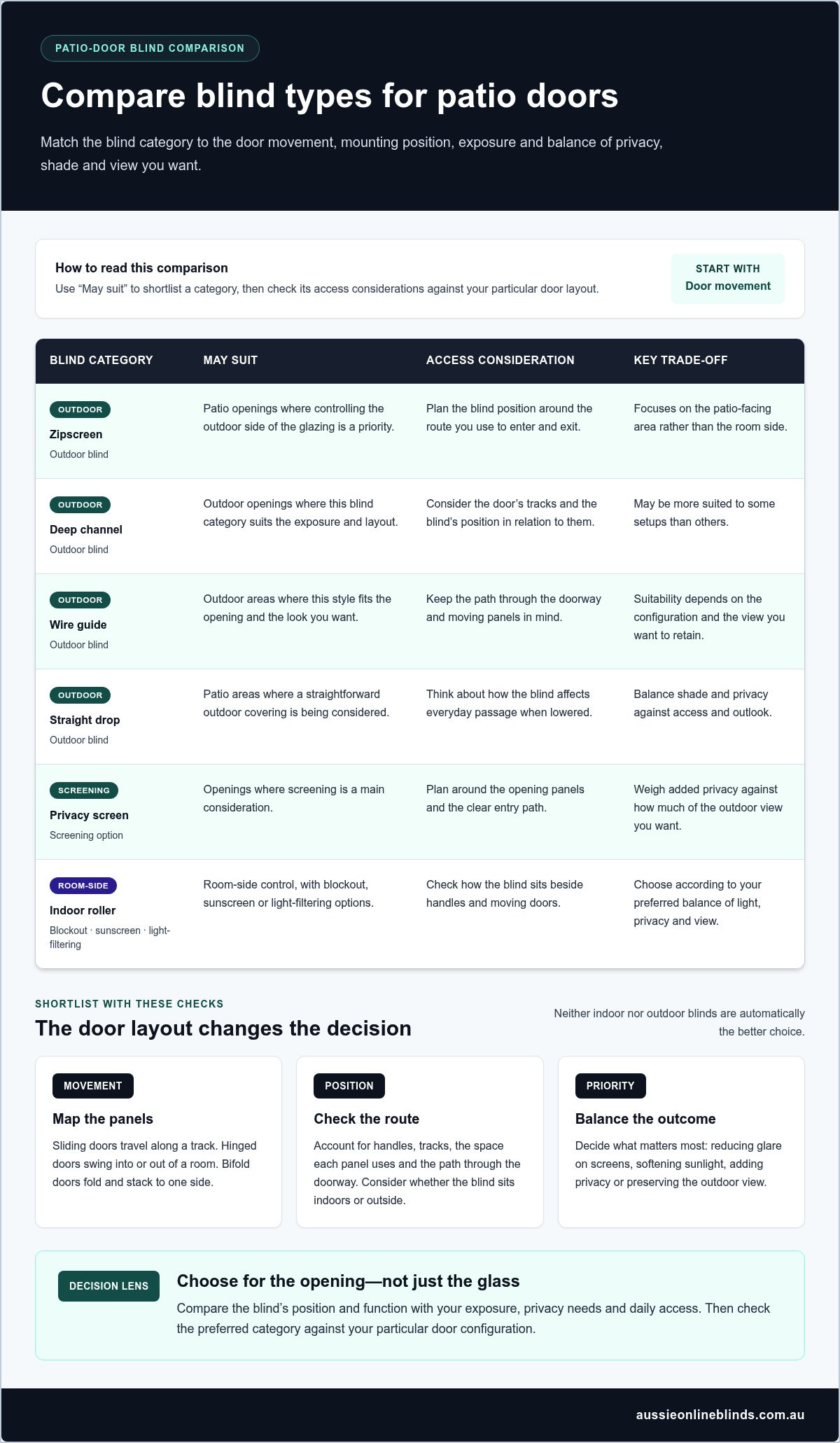
The right blind depends on more than the glass dimensions. Consider how each panel moves, where the blind will sit, how exposed the opening is and whether privacy or an open view matters more. Use the options below as a starting point, then check how your preferred blind works with your particular door layout.
| Blind category | May suit | Access consideration | Key trade-off |
|---|---|---|---|
| Zipscreen outdoor blinds | Patio openings where controlling the outdoor side of the glazing is a priority | Plan the blind position around the route you use to enter and exit | Focuses on the patio-facing area rather than the room side |
| Deep channel blinds | Outdoor openings where the blind category suits the exposure and layout | Consider the door’s tracks and the blind’s position in relation to them | May be more suited to some setups than others |
| Wire guide blinds | Outdoor areas where this style fits the opening and desired look | Keep the path through the doorway and moving panels in mind | Suitability depends on the configuration and the view you want to retain |
| Straight drop blinds | Patio areas where a straightforward outdoor covering is being considered | Think about how the blind affects everyday passage when lowered | Balance shade and privacy against access and outlook |
| Privacy screens | Openings where screening is a main consideration | Plan around the opening panels and clear entry path | Weigh added privacy against how much of the outdoor view you want |
| Indoor roller blinds | Room-side control, with blockout, sunscreen or light-filtering options | Check how the blind sits beside handles and moving doors | Choose according to your preferred balance of light, privacy and view |
When might outdoor blinds suit patio doors?
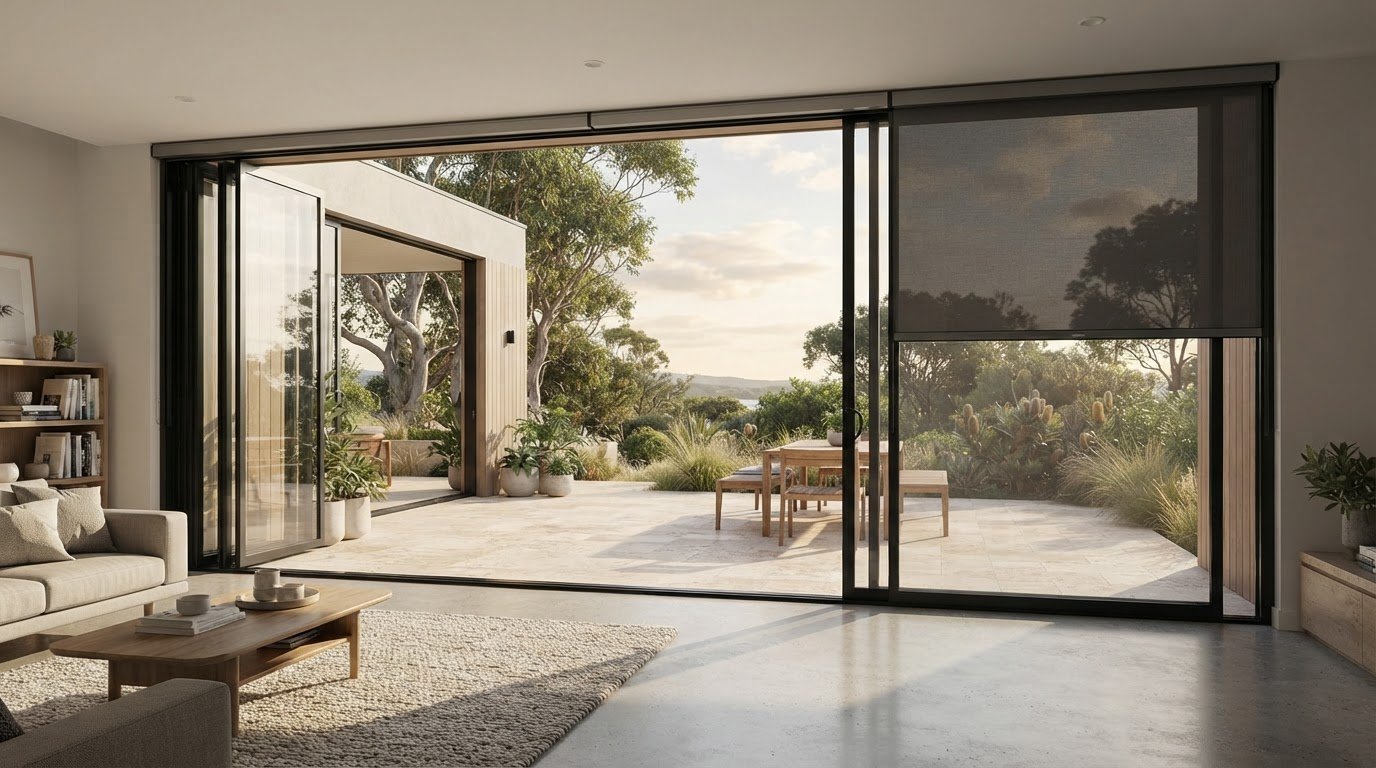
Consider an outdoor blind if shading the area beyond the glazing is central to how you use the patio. Compare Zipscreen, deep channel, wire guide and straight drop blinds against your opening, exposure and access needs. The best category depends on the arrangement rather than the name of the blind alone. For a closer look at one option, read the Zipscreen outdoor blinds guide.
When are indoor blinds or privacy screens worth considering?
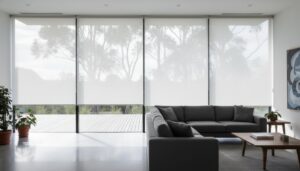
Room-side blinds may suit you if your priority is managing light and privacy from inside. Indoor roller options include blockout, sunscreen and light-filtering blinds, while privacy screens offer another category to consider. Decide whether you want a more private room, filtered daylight or a clearer view, then check how the covering relates to the door’s movement and handles.
For blinds doors patio, use this comparison to shortlist options, then review the door configuration and mounting position before deciding. Explore custom-made blind options to find a direction that fits your home and routine.
Will blinds block patio-door access? Choose around operation and views
They don’t have to, but access should shape both your blind choice and its position. Picture the door fully open, the blind in use and someone walking through with their hands full. A blind that suits the glass on paper may still be awkward if it clashes with a handle, track or frequently used path.
No single blind type suits every sliding, hinged or bifold door. Consider how the panels move and what you want the covering to do. Then use the chosen product’s information to understand its operation and features instead of assuming every blind in a category works the same way.
How do sliding and hinged doors change the decision?
Sliding panels travel along a track, so note where they overlap and where handles sit. Hinged panels swing into or out of the room, taking up space as they open. Bifold panels fold and stack to one side. Check the proposed blind position against the moving panels and your usual route through the doorway. You can sketch the open-door path or mark it on the floor before planning where the blind will sit.
How can you balance privacy with a clear outdoor view?
Consider when you want privacy and where people can see in from. A room may feel private during the day but more exposed after dark when interior lights are on. Also decide whether you’d rather keep the patio view open or have more control over light and outlook. For instance, switchable privacy film—showcased by specialists like faagg.no—illustrates how glass can shift instantly between transparent and frosted without hanging fabrics obstructing moving doors. These priorities can pull in different directions, so choose what matters most at different times of day.
Use these trade-offs to clarify your priorities. They are planning prompts, not guarantees about how a particular blind will perform:
- Easy passage: Keeping the entry clear may mean raising or moving a blind before walking through. Consider how often you’re willing to do that.
- More privacy: A blockout roller blind or privacy screen may be worth considering. Think about how the covering affects the view when in use.
- Outdoor outlook: If maintaining a connection to the patio matters, compare options with that aim in mind and review their product details.
- Shade at the patio: An outdoor blind may suit a priority focused on the area outside the glazing. Its position still needs to work with the doorway.
For blinds doors patio, the practical choice fits your routine as well as your privacy and shading needs. Before ordering, review the product’s operating details and consider the blind both open and in use. This check can help you avoid an option that looks right but makes everyday access less convenient.
Measure and plan patio-door blinds before you order
A careful DIY order starts with the door, not the tape measure. Work through these steps in order so the blind and measurements reflect how the opening works every day:
- Identify the layout: Note whether the doors slide, swing or fold, and which way each panel moves.
- Choose the mounting position: Decide whether the blind will sit inside or outside the opening, following the product instructions.
- Measure: Take measurements in the positions and manner specified for that product.
- Review the order: Check the dimensions and selected options before submitting.
Measuring instructions differ between blind types and mounting positions, so don’t rely on a generic assumption about where to measure. Use the DIY measuring guide to prepare, then follow the instructions for the specific blind you’re ordering.
What should you check before taking measurements?
First, decide where the blind will sit and inspect the opening. Look for handles, door tracks, nearby walls and other features that could affect placement or clearance. Record whether the panels slide, swing or fold, and the direction each one moves. Think about the usual path through the doorway too, so the planned position accounts for daily access as well as the glazing.
How can you feel confident ordering custom patio-door blinds?
Take your time with the measuring steps. Repeat each measurement using the locations and method in the product instructions, then record the results clearly so you can check them against your order. Before submitting, review the dimensions alongside your selected options. This final pause can help catch entry errors and make online ordering more straightforward.
With a DIY order, you check the opening, follow the instructions and enter the details yourself. For blinds doors patio, careful measuring is part of choosing a made-to-measure fit. Once you’ve reviewed your measurements, explore custom-made blinds online and use your notes to guide your selection.
Choose patio-door blinds that fit your home and daily routine
The best choice suits both your patio and the way you use the doorway. Before deciding, run through this checklist:
- Door movement: Note whether panels slide, swing or fold, and keep their movement and your usual entry path in mind.
- Sun exposure: Consider when sunlight reaches the glass and whether you want shade inside, outside or both.
- Privacy: Think about neighbouring sightlines and when you most want screening.
- View: Decide how much of the patio outlook you’d like to keep when the blind is in use.
- Blind position: Choose whether an indoor or outdoor option better suits the opening and your priorities.
- Measuring readiness: Make sure you’re ready to follow the instructions for the specific product you choose.
This check turns a broad search for blinds doors patio into a practical shortlist. Custom-made outdoor blinds are an option for a tailored solution at a patio-facing opening. The right category depends on your exposure, door arrangement and preferred balance of shade, privacy and view. For investment homes and holiday rentals, maintaining effortless indoor-outdoor flow also helps protect guest comfort and reduce wear; property owners can turn to short-term rental specialists like bnbbooking.com.au for guidance on presenting and managing guest-ready spaces.
Which patio-door blind priorities matter most to you?
If the patio is exposed to strong sun, compare outdoor blind categories such as Zipscreen, deep channel, wire guide or straight drop blinds. If privacy is the main concern, consider privacy screens or another suitable blind category. To simplify the decision, start with how you use the door each day, then focus on options that suit its movement and intended use. Product details can help you assess how each choice works with your opening.
What are the next steps for choosing and ordering?
Once you’ve chosen a direction, review the product category and its measuring instructions. Take and check your measurements, then work through the online options and confirm the details before placing your order. With a DIY approach, you manage the measuring and installation yourself. Preparing step by step can make the custom ordering process clearer.
Aussie Online Blinds is a family-owned Australian business offering custom-made blinds, Australia-wide shipping and a three-year warranty. As you plan a patio solution, compare the available categories and use the product instructions to guide your measurements and selection.
Explore custom outdoor blinds for your patio doors and compare options at your own pace.
Make your patio doors work better for you
The right blind suits the way your doors move, helps manage the sunlight and privacy you want, and keeps everyday access practical. Compare indoor and outdoor options against your home’s exposure and preferred view, then measure according to the instructions for your chosen product. Planning ahead makes it easier to narrow down blinds doors patio options that fit your routine.
Aussie Online Blinds offers custom-made blind options with a DIY measuring and installation approach. Australia-wide shipping and a three-year warranty are part of the offer.
Ready to take the next step? Explore custom blinds for your patio doors and compare options at your own pace. With your priorities clear and measurements prepared, choosing a practical fit can feel more straightforward.
Frequently Asked Questions
What type of blinds are best for patio doors?
The best blinds depend on your door layout, sun exposure and priorities for privacy, shade and views. For outdoor areas, compare Zipscreen, deep channel, wire guide and straight drop blinds. For a room-side option, consider roller blinds or privacy screens. Check how the blind will sit beside handles and moving panels, then choose a category that suits both the opening and your everyday routine.
Can you put blinds on sliding patio doors?
Yes. Plan the blind’s position around the moving panels, track, handles and entry path. Decide whether you want the covering on the room side or patio side, and consider how it will affect access when in use. Suitability depends on the particular blind and door configuration, so follow the product information rather than assuming every option fits every sliding door.
Are outdoor blinds suitable for patio doors?
Yes, outdoor blinds can suit patio doors when shading the area outside the glazing is a priority. Options include Zipscreen, deep channel, wire guide and straight drop blinds. Consider the opening, exposure, access and how much of the outdoor view you want to retain. Review the details for your chosen product instead of relying on general assumptions about performance.
Will patio-door blinds block the doorway?
They can affect access if their position or operation conflicts with the door, so plan around how the panels move. Check your route in and out, along with handles, tracks and nearby obstacles. A hinged door swings through space, while a sliding panel travels along a track. Consider the blind open and in use, and follow the product instructions to assess the planned arrangement.
How do I measure patio doors for custom blinds?
Start by identifying the door layout and deciding whether the blind will sit inside or outside the opening. Check for handles, tracks, nearby walls and other obstructions, then measure exactly as the chosen product’s instructions specify. Measuring positions can vary, so don’t rely on generic assumptions. Record and repeat your measurements, then compare them with the dimensions entered in your online order before submitting it.
Are outdoor blinds or indoor blinds better for patio doors?
Neither is universally better. The right choice depends on where you want shade and how you use the space. Outdoor blinds may suit a patio where managing sun outside the glazing matters. Indoor roller blinds or privacy screens may better match room-side light or privacy priorities. Compare exposure, sightlines, door movement and your preferred view, then review the product details for the options you’re considering.
Can I install patio-door blinds myself?
Yes. Aussie Online Blinds offers a DIY approach, so customers measure and install their blinds themselves. Start with the instructions for your chosen product, check the opening and mounting position, and make sure your measurements and order details are accurate. Taking time to prepare can make the process more manageable. Custom blinds are ordered online, with Australia-wide shipping and a three-year warranty.