
That $5,000 quote from a full-service installation company isn’t the price of quality; it’s the price of convenience you don’t actually need. We all know the frustration of watching a beautiful Australian summer day go to waste because harsh UV rays make your patio feel like an oven. It’s just as disappointing when a sudden southerly change brings wind and rain that ruins your outdoor furniture or forces your guests inside. You deserve a stylish, resort-style retreat that stays comfortable year-round, and the secret lies in high-quality outdoor blinds that you can fit yourself.
We believe that high-end home styling should be accessible to every savvy homeowner. By choosing a DIY approach, you can achieve a perfect, custom-fit finish while keeping your hard-earned money in your pocket. In this ultimate 2026 guide, we’ll help you navigate the latest fabric trends and fire safety regulations for multi-story buildings. You’ll learn exactly how to measure, select, and install your own professional-grade shading to lower your energy bills and create a space your neighbors will envy. Let’s get started on transforming your backyard into the ultimate outdoor sanctuary.
Key Takeaways
- Learn how to transform your patio into a seamless “Australian Room” using custom outdoor blinds that bridge the gap between your indoor and outdoor living areas.
- Identify the ideal style for your environment, whether you need the total enclosure of a Zipscreen or the classic, simple functionality of a Straight Drop blind.
- Choose the right materials for the job, from sunscreen mesh that blocks UV rays to clear PVC that creates a cozy, weatherproof sunroom.
- Gain the confidence to measure and install your own window coverings with our straightforward guide to the essential tools and techniques.
- Save significantly on your project costs by choosing a direct-to-consumer model that prioritizes custom-made quality over generic, mass-produced alternatives.
Understanding Outdoor Blinds: More Than Just Patio Shade
We’ve all seen those heavy, clunky awnings of the past, but the 2026 approach to outdoor blinds is all about sleek, functional luxury. Essentially, these are custom window coverings designed specifically for external environments to control light, heat, and unpredictable weather. While you can find a comprehensive overview of window coverings online, it’s important to recognize that external versions are a different beast entirely. They’re engineered to live outside, meaning they need to be tougher, smarter, and more stylish than anything you’d hang in your bedroom.
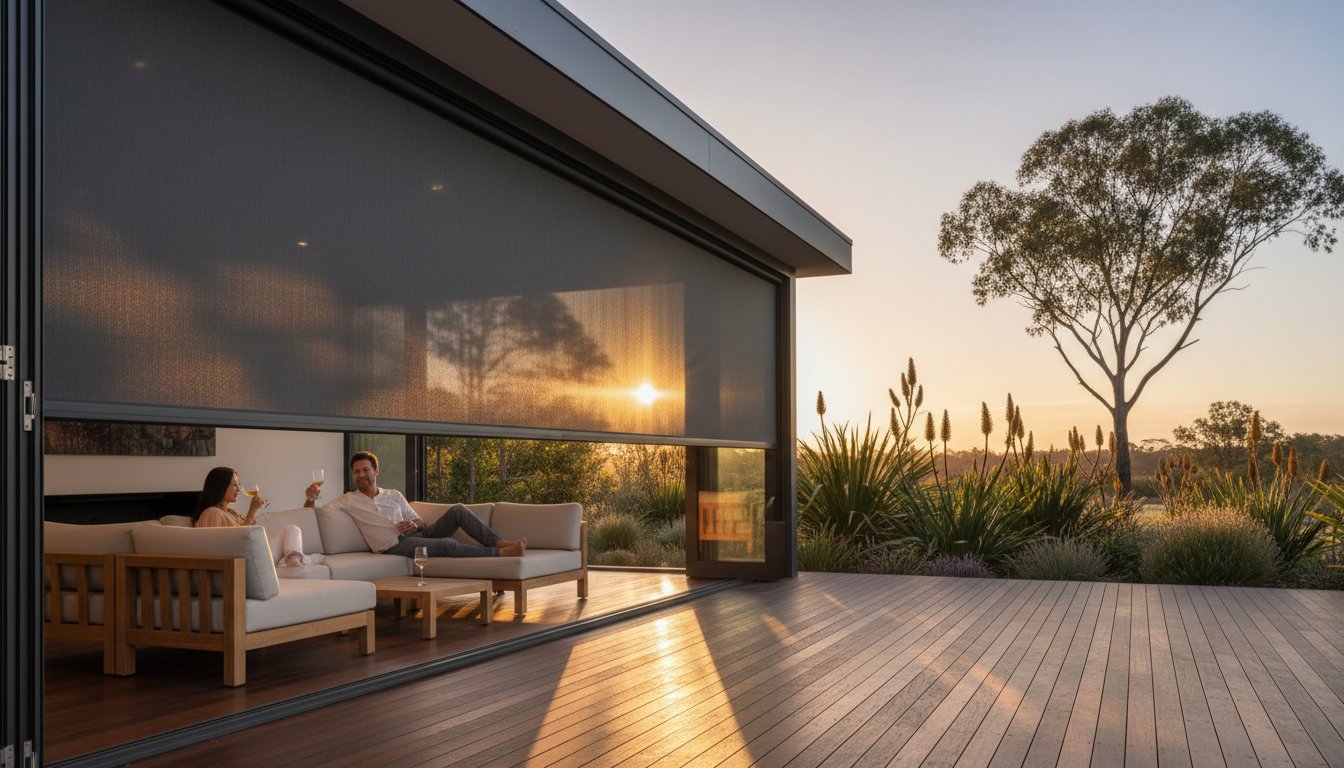
The biggest shift we’re seeing this year is the rise of the “Australian Room.” This concept treats your patio or deck as a natural extension of your indoor living space. By installing high-quality blinds, you aren’t just adding shade; you’re creating a flexible wall that lets you use your outdoor area even when the weather isn’t playing fair. This modern, minimalist design trend has replaced traditional heavy awnings with slimline tracks and concealed fittings that blend perfectly with your home’s architecture.
Beyond the look, the practical benefits are hard to ignore:
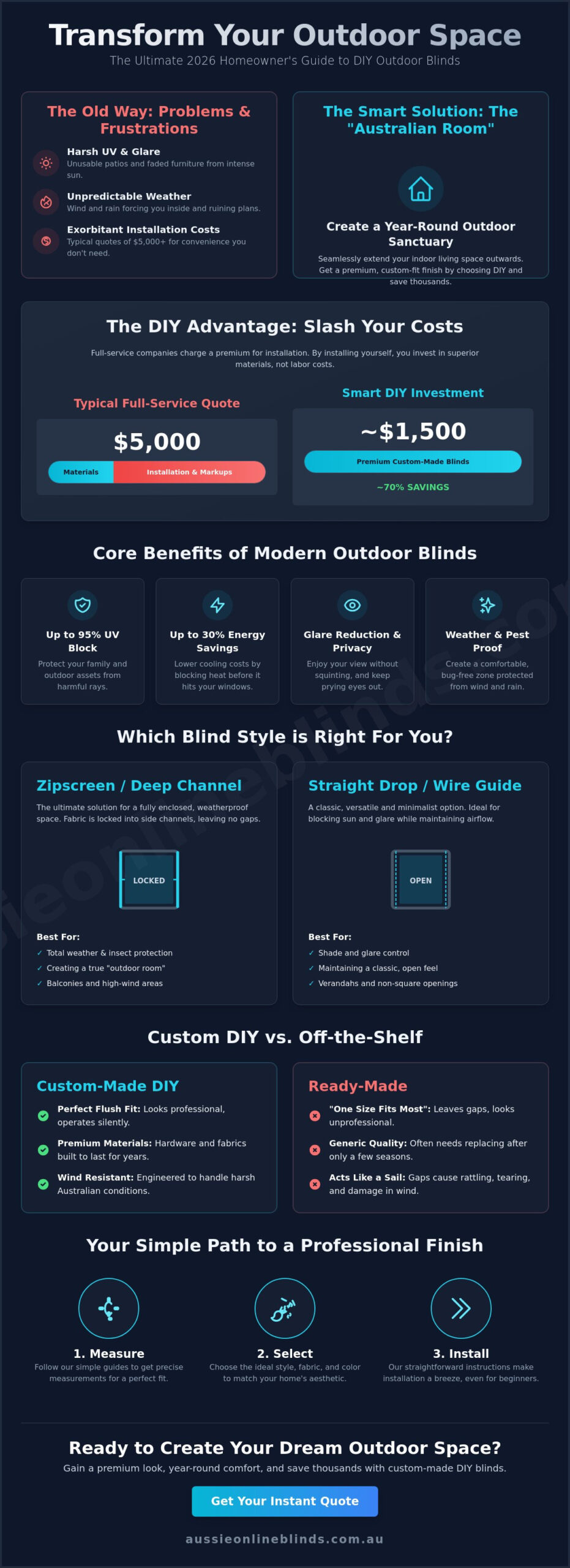
- UV Protection: Modern fabrics can block up to 95% of harmful UV rays, making your patio safe for the kids even in the middle of a summer afternoon.
- Glare Reduction: Say goodbye to squinting while you read or try to use a laptop outside.
- Instant Privacy: You can see out to enjoy your garden, but neighbors can’t see in, giving you a truly private retreat.
The Functional Benefits for Australian Homes
Thermal regulation is a game changer for your wallet. By blocking the sun before it ever hits your glass windows or sliding doors, smart outdoor blinds can reduce home cooling costs by up to 30%. It’s a proactive way to manage your home’s temperature without constantly running the air conditioner. You’re also protecting your most valuable outdoor assets. Constant exposure to the Australian sun and rain will quickly warp expensive timber decks and fade outdoor kitchen finishes. The openness factor refers to the tightness of the fabric weave, which determines exactly how much light filters through while maintaining your view of the backyard.
For those looking to fully automate these systems, Asthome Smart Electrical Supplies provides the necessary high-quality electrical components to integrate your shading into a modern, energy-efficient home.
Ready-Made vs. Custom DIY Outdoor Blinds
It’s tempting to grab a ready-made blind off the shelf at a big-box retailer, but those “one size fits most” solutions often fail in the harsh Australian wind. Because they aren’t built for your specific measurements, they leave gaps that turn the blind into a sail, leading to rattling or even tearing during a storm. A custom-made DIY blind ensures a “flush fit” that looks professional and operates silently. When you choose to measure and install them yourself, you’re investing in premium hardware and fabrics that will last for years, rather than paying for a generic product you’ll likely have to replace after two seasons.
Comparing Popular Outdoor Blind Styles: Which is Right for You?
Choosing the right style of outdoor blinds depends entirely on how you plan to use your space. While some homeowners need a total weather seal to create a year-round dining room, others simply want to block the afternoon glare without losing their view. We see four main styles dominating Australian backyards in 2026, and each serves a very specific purpose. Understanding the mechanics of these systems will help you avoid the frustration of choosing a product that doesn’t quite meet your lifestyle needs.
Zipscreen and Deep Channel Solutions
If your goal is to create a fully enclosed, insect-proof environment, Zipscreen is the gold standard. This system uses a clever side-channel mechanism that locks the fabric into the tracks, leaving no gaps for wind, rain, or pests to enter. It’s the ultimate choice for balconies and alfresco areas where you want to maintain a consistent temperature. If you’re weighing up your track-guided options, our detailed zipscreen vs ziptrak comparison for DIY homeowners breaks down the technical differences, wind performance, and value to help you decide. For a deep dive into this specific technology, check out our custom zipscreen outdoor blinds buying guide to see if it’s the right fit for your home.
Straight Drop and Wire Guide Blinds
For a more classic or minimalist look, you might consider straight drop or wire guide options. Straight drop blinds are incredibly versatile and work well for non-square openings where side channels might be difficult to install. If you prefer a sleek, modern aesthetic for a contemporary architectural home, wire guide systems use discrete stainless steel cables to hold the blind in place. This provides stability in light breezes without the visual bulk of heavy tracks. When choosing these corded or manual styles, always ensure you follow the latest child safety regulations for corded blinds to keep your family safe.
Pivot Arm Blinds for Airflow
Pivot arm blinds are a smart choice for second-storey windows or areas where you need maximum ventilation. Unlike vertical systems, these extend outwards in an arc, allowing air to circulate freely behind the fabric while still blocking over 90% of solar heat. They’re perfect for protecting high-up windows from direct sun without making the room feel closed off. You can choose between a simple manual crank handle or go for a motorised option for effortless control at the touch of a button. Browse our range of outdoor blinds online to see which operating system best suits your daily routine.
Selecting the Best Fabrics and Materials for Durability
When you’re investing in outdoor blinds, the fabric you choose is the most critical decision you’ll make for long-term satisfaction. It’s not just about picking a color that matches your gutters; it’s about understanding how different materials react to the intense Australian sun and coastal salt spray. In 2026, fabric technology has advanced to offer incredible durability without sacrificing the aesthetic of your home. You need a material that won’t just survive a summer heatwave, but will also remain easy to clean and resistant to mold during a wet winter.
Most homeowners gravitate toward sunscreen mesh because it offers a brilliant balance between privacy and visibility. If you want to create a true year-round sunroom that blocks wind and rain entirely, clear or tinted PVC is the way to go. For those seeking a more traditional look with maximum light blockout, premium acrylic fabrics provide a rich, canvas-like texture that’s perfect for pivot arm systems. Whichever you choose, ensure your selection complies with the latest Australian building codes for external shading, especially if you’re installing blinds on a multi-story building where fire safety regulations are strictly enforced.
Understanding Mesh Openness Factors
The “openness factor” refers to how tightly the fabric is woven. A 1% mesh is very tight, offering maximum privacy and UV protection, while a 10% mesh has a looser weave that preserves more of your view. Most Australians find that a 5% mesh is the “Goldilocks” zone for patio areas. Interestingly, darker colors like charcoal or deep bronze actually provide better “view-through” than lighter tones because they absorb light rather than reflecting it into your eyes. You should also keep in mind that a higher mesh density reduces airflow, which significantly increases the wind-load capacity and pressure placed on your mounting points during a storm.
Hardware and Component Longevity
The fabric might be the star of the show, but the hardware is the backbone. We always recommend powder-coated aluminium for all tracks and housings because it won’t rust, which is essential if you live within ten kilometers of the coast. To prevent those ugly rust streaks on your walls, ensure every screw and fixing is made from high-grade stainless steel. A weighted bottom rail is another must-have; it provides the necessary tension to keep the fabric flat and prevents the blind from flapping noisily in a breeze. To keep your system operating smoothly for years to reach, take a look at our blind maintenance guide for simple tips on cleaning and care.
The DIY Advantage: Measuring and Installing Like a Pro
Many homeowners hesitate at the thought of installing their own outdoor blinds, fearing a single millimeter mistake might ruin the whole project. We’re here to tell you that accuracy is easier than you think. By taking charge of the installation, you aren’t just saving money; you’re ensuring the job is done with the care and attention your home deserves. It’s a rewarding weekend project that transforms your living space immediately.
You don’t need a professional workshop to get a trade-quality result. Most projects only require a few basic tools: a reliable power drill with the correct bits, a spirit level to keep things straight, a sturdy ladder, and a helping hand to hold the hardware in place during the initial mounting. Before you pull out the tape, decide on your mounting style. A Reveal Fit sits inside the opening of your patio or window, creating a flush, integrated look. A Face Fit is mounted onto the front of the posts or wall, which is often better if your structure isn’t perfectly square or if you want maximum coverage to block out every bit of light.
Measuring Your Outdoor Space Accurately
Measuring is the most important part of the journey. Always use a metal tape measure for precision, as fabric or plastic ones can stretch over long distances. Check the width at the top, middle, and bottom of your opening, as many Australian homes have slight variations in their posts or beams. If your space is out of alignment, a face fit mount is your best friend. Mastering how to measure for blinds online is the key to ensuring your order is spot on, and for a deeper dive into these techniques, follow our DIY blinds measurement and installation guide to ensure your order is spot on.
Installation Tips for a Professional Finish
To get that professional finish, always pre-drill your holes. This simple step prevents timber from splitting and makes it much easier to drive screws into masonry or metal. Use your spirit level at every stage; if the headrail is even slightly tilted, the fabric will “telescope” or bunch up on one side as it rolls. Once everything is secure, test the tension and locking mechanisms. A well-installed blind should glide smoothly and lock firmly into place, providing a taut, wind-resistant barrier. Ready to start your project? Browse our range of DIY blinds and find the perfect fit for your home today.
Why Custom-Made DIY Blinds are the Smart Choice for 2026
Choosing custom-made outdoor blinds through a DIY model is the smartest move you can make for your home this year. By removing the “middleman” installer, you’re skipping the significant markups that full-service companies charge to cover their labor, vans, and administrative overheads. This price gap is substantial, but it doesn’t mean you’re compromising on the end result. In fact, it’s quite the opposite. Instead of paying for a service, you’re investing that same budget into higher-quality fabrics and sturdier hardware that will stand the test of time.
Quality control is where custom-manufactured solutions really shine over off-the-shelf options. Generic blinds from big-box retailers are built to a price point, often using thinner materials and plastic components that struggle in a proper Australian storm. When you order a bespoke solution, your blinds are built to your exact millimetre measurements. This precision ensures that the tension is perfect and the mechanisms operate without unnecessary friction. Aussie Online Blinds has simplified this entire journey, providing you with the expert guidance needed to move from initial inspiration to a successful installation with total confidence.
The Value of Australian-Made Quality
We take immense pride in supporting local manufacturing and the strength of family-owned business. When you choose our products, you’re getting fabrics and components that have been specifically tested to survive the brutal Australian sun and salty coastal air. These aren’t mass-produced items designed for milder climates; they’re built for our backyard. Our 3-year warranty serves as a standard of confidence, ensuring you have local support if you ever have a question about your outdoor blinds. It’s the kind of peace of mind you only get from a partner who understands the local environment.
Transforming Your Home Today
The return on investment for this project is immediate and impressive. You’ll see a boost in your home’s aesthetic appeal and a noticeable drop in your summer cooling bills. It’s a practical upgrade that turns a simple patio into a high-end retreat you can use every single day of the year. For a deep dive into specific fabric choices and technical specs, take a look at our outdoor roller blinds pillar guide. We encourage you to browse our range and order your free samples today to feel the difference in quality for yourself.
Ready to Create Your Perfect Outdoor Retreat?
Transforming your patio shouldn’t feel like a daunting task or a drain on your savings. You now have the knowledge to select the right style, choose the most durable fabrics, and tackle the installation with confidence. By taking the DIY route, you’re ensuring your outdoor blinds are a perfect fit for your lifestyle while enjoying the satisfaction of a job well done. It’s about more than just shade; it’s about reclaiming your outdoor space for every season of the year.
As an Australian family-owned and operated business, we’re dedicated to providing high-quality custom manufacturing that stands up to our unique climate. Every product we make comes with a 3-year warranty, giving you the peace of mind that your investment is protected. We’re here to support you at every step of your project journey with straightforward advice and premium materials. Browse our range of custom-made Outdoor Blinds and start your DIY project today! You’ve got the tools and the plan; now it’s time to enjoy the resort-style home you deserve.
Frequently Asked Questions
Are outdoor blinds waterproof or just water-resistant?
Most sunscreen mesh products are water-resistant rather than fully waterproof. They’re designed to block wind and light rain while maintaining airflow. If you need a completely waterproof barrier to create a dry sunroom, choose clear or tinted PVC. This material blocks all water penetration, keeping your furniture dry even during a heavy downpour. It’s the perfect solution for creating an all-weather outdoor room.
How do I stop my outdoor blinds from rattling in the wind?
To stop rattling, you should choose a track-guided system like Zipscreen or Deep Channel blinds. These lock the fabric into side tracks so it can’t move. If you have straight drop outdoor blinds, ensure the bottom rail is properly weighted and use the supplied tie-down clips or straps to keep the fabric under tension. This prevents the sail effect that causes noisy flapping during a breeze.
Can I install outdoor blinds on a sloped or uneven ceiling?
You can install blinds on sloped ceilings, but the headrail itself must be perfectly level for the system to roll correctly. If your mounting surface is uneven, you’ll need to use timber spacers or shims to create a level mounting point. This ensures the fabric rolls up straight and doesn’t bunch at one end, which can cause permanent damage to the material over time.
What is the best way to clean bird droppings off outdoor blind mesh?
Use a soft-bristled brush and a bucket of lukewarm, soapy water to gently lift the droppings once they’ve dried. Avoid using high-pressure hoses or harsh chemicals, as these can strip the protective UV coating from the mesh. Rinse the area thoroughly with a garden hose on a low setting and allow the blind to dry completely before rolling it back up to prevent mold growth.
Do I need council approval to install outdoor blinds on my patio?
Most residential installations don’t require council approval because these products are considered non-permanent additions to your home. However, if you live in a strata-managed building or a heritage-listed area, you should check your specific bylaws first. There may be rules regarding the color or style of external coverings to ensure they match the rest of the building’s aesthetic and maintain a uniform look.
Which colour outdoor blind is best for blocking heat but keeping the view?
Darker colors like charcoal, black, or deep bronze are actually the best for maintaining your view while blocking heat. While light colors reflect more heat, they also create more glare, which makes it harder to see through the mesh. Dark mesh absorbs the light and allows your eyes to focus on the garden beyond, providing a much clearer view-through experience for your outdoor blinds.
How long do custom DIY outdoor blinds usually take to arrive?
Custom DIY blinds are typically manufactured and delivered within 2 to 4 weeks from the date you place your order. Because each blind is made to your specific millimetre measurements in our Australian facility, this timeframe allows for precision cutting and quality testing. We’ll always send you a tracking link so you can prepare for your weekend installation project as soon as your order arrives.
Can I motorise my outdoor blinds later if I buy manual ones now?
It’s technically possible but often expensive and complicated to motorise manual blinds at a later date. Most systems require a different internal tube and specific mounting brackets to accommodate the motor. We recommend deciding on motorisation during the initial order phase. This ensures all components are compatible and saves you the labor of dismantling and rebuilding the entire system once it’s already been installed.