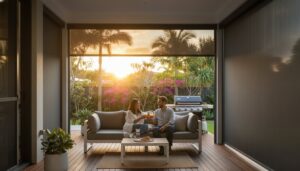

Is your backyard really yours if you feel like the whole street is watching you enjoy your morning coffee? It’s a common frustration for many Australian homeowners who find their outdoor spaces overlooked by neighbours or baked by the relentless afternoon sun. You’ve probably considered putting up a new boundary, but deciding between outdoor blinds vs privacy screen or a traditional timber fence can feel like a bit of a headache.
We know you want a private retreat where you can relax without worrying about nosy onlookers or expensive contractor quotes. We’ll help you choose the perfect solution for your home in 2026 by breaking down the real-world differences in cost, council rules, and lifestyle perks. You’ll discover how to navigate height limits and compare the long-term value of different materials without necessarily needing to lodge a formal development application.
We’re going to dive into the key comparisons so you can reclaim your patio with confidence. Whether you’re looking for a DIY project that saves you money on trades or a sleek way to block 95% of UV rays, we’ll show you how to create a stylish oasis that works for your budget and your backyard.
Key Takeaways
- Understand the structural differences between a fixed boundary fence and a versatile privacy screen for your outdoor space.
- Learn how to navigate council height limits and why many privacy solutions can bypass the need for a formal Development Application.
- Compare outdoor blinds vs privacy screen to determine whether you need a permanent 24/7 barrier or flexible privacy on demand.
- Discover how to maintain airflow and filtered light in your backyard while protecting your family from the harsh Australian sun.
- See how opting for a DIY installation can save you thousands in professional labour costs while still achieving a high-end look.
What Is the Difference Between an Outdoor Privacy Screen and a Fence?
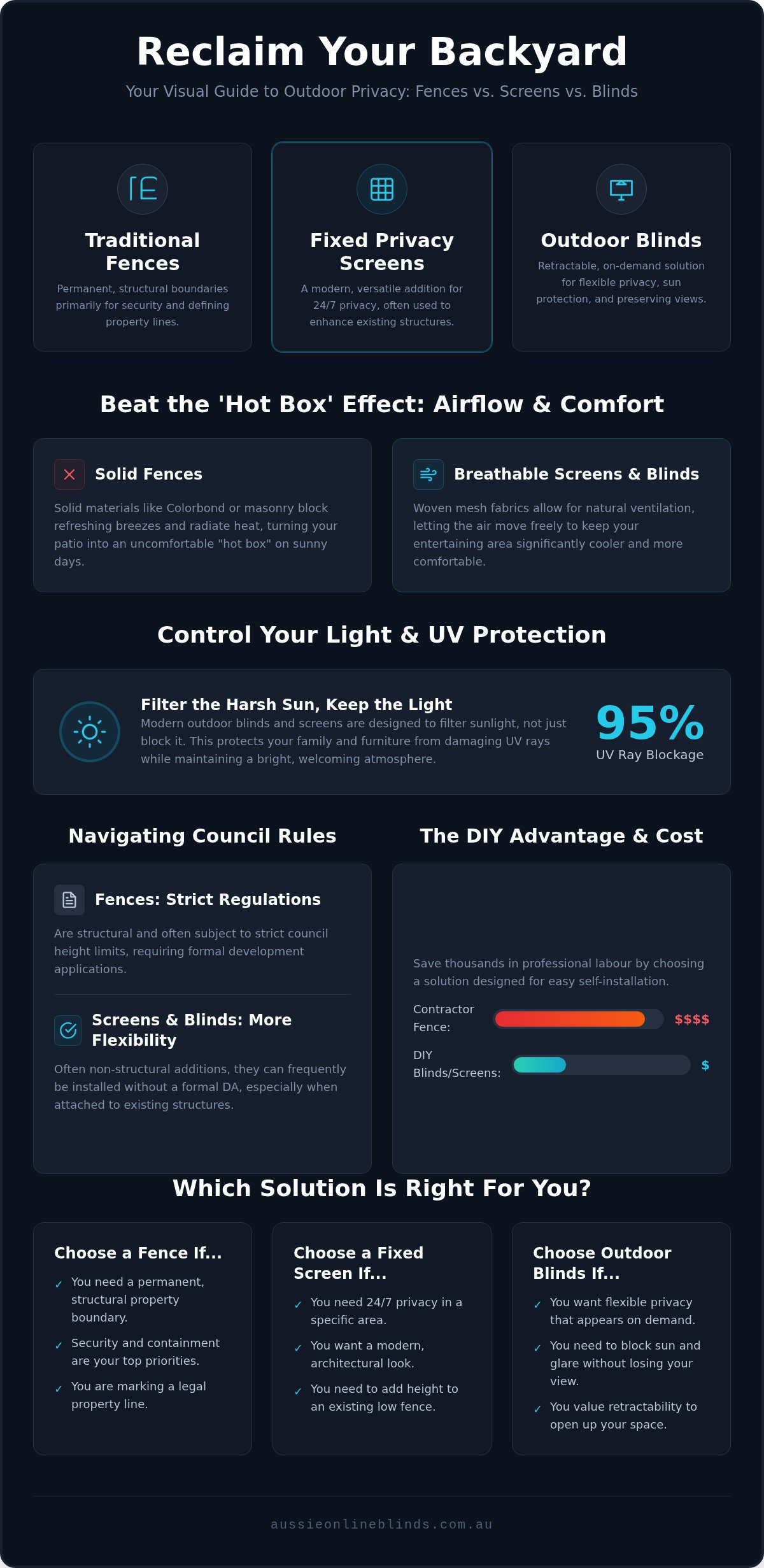
Before you pick up a hammer or place an order, it’s vital to understand that a fence and a privacy screen do two very different jobs. Think of a fence as the permanent boundary of your home. It’s a structural necessity usually fixed deep into the ground with concrete footings. On the other hand, a privacy screen or an outdoor blind is a versatile, lifestyle-focused addition. It’s often non-structural and designed to sit within your existing outdoor living spaces to enhance comfort.
When you’re comparing outdoor blinds vs privacy screen, you’re usually trying to solve a specific problem like a nosy neighbour or a blinding sunset. While a fence marks where your property ends, a screen defines how you enjoy the space inside those lines. Both play a role in your backyard, but they offer different levels of flexibility and protection from the elements. Choosing the right one depends on whether you’re looking for a hard boundary or a customisable sanctuary.
The Structural Role of Fencing
Fencing is all about boundary definition and security. Its main purpose is to keep your kids and pets safely contained while providing a clear barrier between you and the street. Because they are structural, fences need to be sturdy enough to handle high winds and the shifting Australian soil. This is why you’ll see different types of fencing like Colorbond, treated pine palings, or heavy masonry walls used across the country. These materials are built for permanence and require significant ground fixings to stay upright for decades. They aren’t easily moved once they’re in, making them a long-term commitment for your property line.
The Versatility of Privacy Screens and Outdoor Blinds
Privacy screens and outdoor blinds offer a level of adaptability that a static fence simply can’t match. These solutions are often designed to attach directly to your existing pergola, deck, or balcony posts. Outdoor living specialists such as Muskokify demonstrate how motorized screens and custom structures can transform open decks into versatile, sheltered retreats. You aren’t limited to a single height or a fixed location. For example, many homeowners use outdoor blinds vs privacy screen setups to add extra height on top of an existing fence that doesn’t quite block the view from a neighbour’s second-storey window. It’s a clever way to gain privacy without replacing an entire boundary line.
- Fixed Screens: Usually made of aluminium or timber slats, these provide 24/7 privacy and a modern, architectural look.
- Retractable Blinds: Options like Zipscreens allow you to roll the protection away when you want to enjoy the view or pull it down when the sun gets too harsh.
Using diy blinds or screens is a fantastic way to customise your environment without the massive cost of hiring a fencing contractor. It’s about creating a private oasis that suits your specific lifestyle needs while keeping the project manageable and affordable.
Comparing Durability, Airflow, and Maintenance in the Australian Sun
When you’re standing on your patio in the middle of a scorching January afternoon, the difference between a solid fence and a breathable screen becomes very clear. A standard boundary fence acts like a solid wall, blocking not just the view but also the refreshing breeze. While this is great for security, it often turns your outdoor area into a heat trap. Choosing between outdoor blinds vs privacy screen setups often comes down to how you want to manage the light and air in your space. High-quality outdoor blinds and mesh screens are designed to filter the harsh Aussie sun while still letting the air move, keeping your entertaining area much cooler.
Airflow and the ‘Hot Box’ Effect
Solid fences, especially those made of masonry or Colorbond, can absorb and radiate heat back into your living space. This creates a “hot box” effect where the air stays stagnant on your deck or veranda. Breathable fabrics used in modern privacy solutions allow for natural ventilation, which is essential for our climate. You can achieve total blockout privacy if you need it, but most Aussie families find that a 95% UV-rated mesh provides the perfect balance. It keeps the nosy neighbours out without suffocating your patio, allowing you to enjoy a comfortable breeze while you relax.
Longevity and UV Resistance
The Australian sun is brutal on building materials. Timber fences are notorious for warping, rotting, and fading, often requiring a fresh coat of paint or stain every few years to stay looking decent. In contrast, custom-made privacy screens and blinds are engineered specifically for high UV resistance. Our products come with a 3-year warranty because they’re built to handle local conditions without degrading. Maintenance is another big win here; cleaning a blind is usually as simple as a quick hose down or a wipe with a damp cloth, so you won’t be spending your weekends sanding back timber palings.
There is also the matter of wind-load. A static fence has to withstand the full force of a storm 24/7, which can lead to structural lean over time. With retractable options like Zipscreens, you have the flexibility to roll the protection away during extreme weather. This flexibility significantly extends the life of the product compared to a fixed structure that takes a constant beating from the elements. It’s a practical, long-term solution that keeps your home looking sharp with minimal effort.
Navigating Council Rules and Height Restrictions
Boundary fences across Australia usually follow a standard height limit of 1.8 to 2.1 metres. If you’re trying to block a neighbour’s second-storey window or a new development nearby, you might find these limits don’t quite cut it. Going higher with a permanent fence generally requires a formal Development Application (DA), which can be a slow and costly process. When you’re comparing outdoor blinds vs privacy screen options, the legal classification of your privacy solution is a major factor in how quickly you can complete your project.
Why Screens Are the ‘Council-Friendly’ Choice
In many residential zones, a privacy screen is often classified as a non-structural addition rather than a permanent boundary. This means you can often install them up to 2.5 metres high under “exempt development” rules without needing a permit, provided you follow general setback guidelines. Because these are seen as lifestyle enhancements or window coverings, they don’t carry the same heavy regulatory weight as a structural brick or timber wall.
This is a significant advantage for homeowners who want a faster result. A retractable blind or a slat screen attached to an existing structure is an elegant way to solve privacy issues without triggering a council review. By choosing diy blinds, you’re opting for a solution that stays within your property line and attaches to your home, giving you the freedom to customise your space without the red tape.
Common Legal Pitfalls of Fencing
Boundary fencing is governed by state-based legislation like the Dividing Fences Act. This usually means you’ve got to notify your neighbour and discuss shared costs before you change anything. It can lead to long delays if your neighbour doesn’t agree with your choice of height or material. There’s also the risk of blocking their natural light or sightlines, which can lead to disputes that are difficult to resolve. If you’re looking for a stress-free path, a screen is almost always the better choice.
Choosing an outdoor blinds vs privacy screen setup often lets you move forward without the neighbourly disputes that plague permanent fencing. You won’t have to wait for a surveyor or a council officer to sign off on your build. Since these products are designed to improve your existing living areas rather than define a new property boundary, they provide a level of flexibility that permanent construction can’t match. You get the privacy you need immediately without the long-term paperwork.
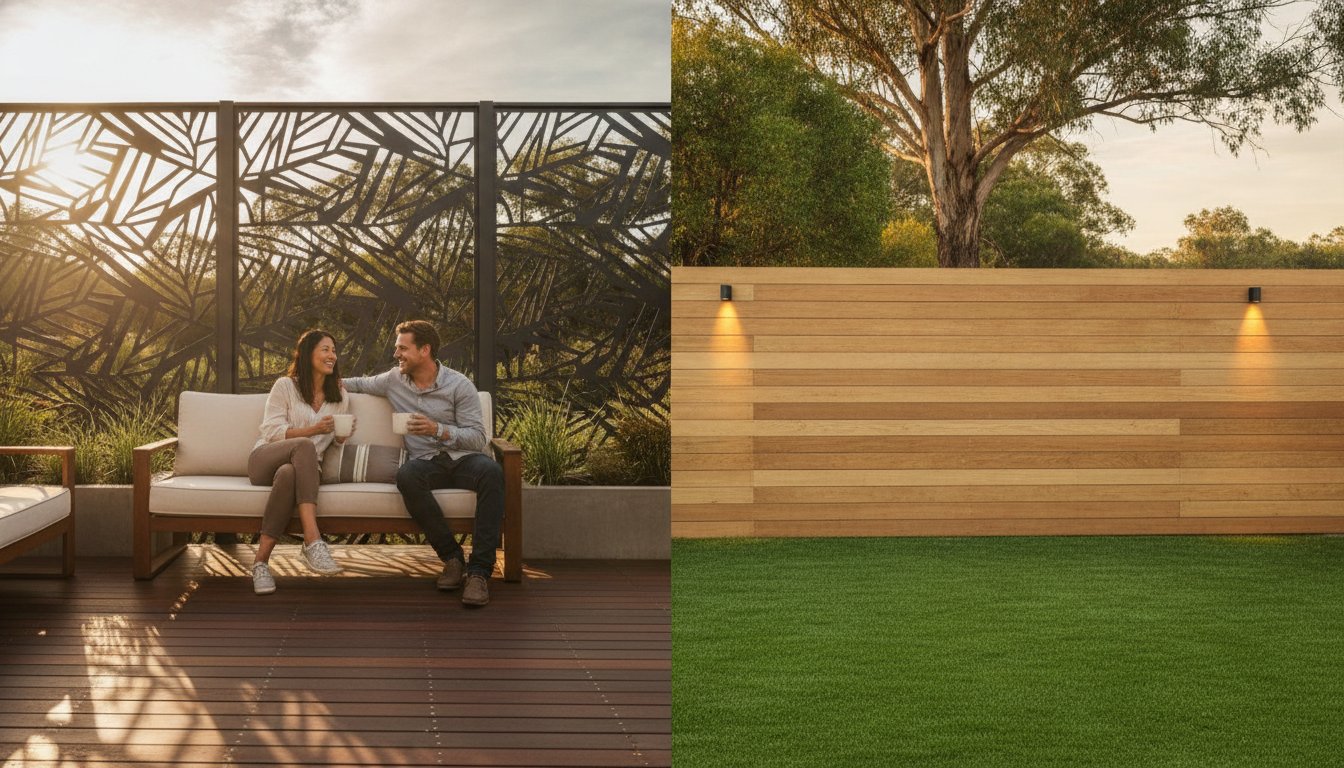
Choosing the Right Solution for Your Outdoor Space
Deciding on the best way to shield your home starts with a simple question: what are you actually trying to achieve? If you’re looking to define the physical edge of your property or secure a pool area, permanent solutions from specialists like Outlook Fencing are the standard tool for the job. However, if your goal is to make your patio more comfortable or block a specific line of sight from the house next door, the choice of outdoor blinds vs privacy screen becomes much more relevant. You need to consider whether you want a permanent barrier that stands 24/7 or the flexibility to change your environment based on the weather or the time of day.
The installation environment also plays a huge role in your decision. Fences require deep footings and are usually restricted to soil-based perimeters. If you’re working with a timber deck, a concrete balcony, or an existing alfresco area, a screen or blind is far easier to integrate. These solutions can be mounted directly to your home’s structure, allowing you to enhance your lifestyle without the mess of digging up the yard. It’s a practical way to add value to your home while maintaining the clean, modern lines of your architecture—and if you are complementing your outdoor setup with dedicated perimeter gates or balcony railings, check out Iron Guys for custom fabrication ideas.
When a Fence Is the Right Call
For most modern Australian backyards, the flexibility of a screen or blind is the superior choice for entertaining areas. If you have a high-set deck or a balcony, a screen allows you to block the view from neighbours without making the space feel claustrophobic. You can even integrate zipscreen outdoor blinds to create a seamless, enclosed room that you can open or close at the touch of a button. This “privacy on demand” is something a static fence can never provide.
When you’re comparing outdoor blinds vs privacy screen, think about the year-round use of your space. A screen can stay in place to provide constant shade, while retractable blinds allow you to flood the area with light during the cooler winter months. If you’re ready to transform your patio into a private oasis, you can browse our range of custom-made DIY solutions to find the perfect fit for your home’s style.
The DIY Advantage: Cost and Installation Comparison
The final piece of the puzzle often comes down to your budget and how much work you’re willing to put in. When you look at the total bill for a professional fencing project, you’re not just paying for the timber or metal. You’re also covering the cost of heavy machinery, site preparation, and the significant labour fees of a specialist contractor. In contrast, choosing between outdoor blinds vs privacy screen for a DIY project allows you to keep those labour costs in your own pocket. By taking a hands-on approach, you can achieve a high-end, custom-made finish for a fraction of the price of a trade-installed boundary.
Taking the DIY route doesn’t mean you have to sacrifice quality. In fact, many Aussie homeowners find that measuring and installing their own privacy solutions leads to a better fit because they’re paying closer attention to the details of their specific space. It’s a practical way to upgrade your home’s value without waiting weeks for a contractor to fit you into their schedule.
Saving on Professional Labour Costs
Professional installation for outdoor blinds across Australia typically ranges from A$250 to A$800 per blind, which adds up quickly if you have a large area to cover. Fencing is even more intensive, with costs often falling between A$75 and A$1,250 per metre depending on the material and site complexity. When you choose diy blinds, you’re skipping these hefty service fees entirely.
Most homeowners already have the tools required for a standard outdoor blinds installation. All you typically need is a power drill, a spirit level, and a sturdy ladder. Because our products are custom-made to your exact specifications, you won’t be struggling with onsite cutting or modifications like you would with off-the-shelf options from a big-box warehouse. It’s a straightforward process that delivers a professional result without the professional price tag.
The ‘Measure Twice, Order Once’ Philosophy
The secret to a stress-free DIY project is all in the preparation. We recommend following our guide on how to measure for blinds online to ensure your new screen fits perfectly the first time. Custom sizing is a game-changer because it eliminates the guesswork. You aren’t trying to make a standard-sized panel fit an awkward gap; instead, the product is built specifically for your home.
Once you’ve placed your order, your customised privacy solution is delivered straight to your front door anywhere in Australia. This convenience saves you from hiring trailers or trying to squeeze long timber palings into the family car. You get the satisfaction of a job well done and a private outdoor oasis that looks like it was installed by the pros, all while saving your hard-earned money for the next backyard BBQ.
Ready to Reclaim Your Private Backyard Oasis?
Creating the perfect outdoor space doesn’t have to mean dealing with expensive contractors or restrictive council permits. While a fence is essential for marking your property line, a privacy screen or outdoor blind is what actually makes your patio a liveable retreat. By choosing the right outdoor blinds vs privacy screen setup, you gain the flexibility of airflow and privacy on demand that a solid wall simply can’t offer.
We’ve seen how easy it is to bypass the stress of a formal Development Application by opting for non-structural solutions that enhance your existing decks and pergolas. As a proudly Australian family-owned business, we’re here to help you get the job done right. Our custom-made products come with a 3-year warranty and easy-to-follow DIY installation guides, ensuring you get warehouse prices without sacrificing a professional look.
Take the first step toward your private sanctuary today. You can browse our range of custom DIY Outdoor Privacy Screens to find the perfect match for your home. It’s time to stop worrying about the neighbours and start enjoying your backyard again.
Frequently Asked Questions
Do I need council approval for a privacy screen in Australia?
In many Australian states, you don’t need council approval for a privacy screen if it meets “exempt development” criteria. For example, in NSW, screens can often be up to 2.5 metres high without a permit, provided they meet specific setback requirements from the boundary. However, regulations vary between different local government areas. It’s always a smart move to check your local council’s residential code before you start your project to ensure you’re compliant.
Is a privacy screen cheaper than a fence?
A DIY privacy screen is typically much more cost-effective than a professional fence installation. While boundary fencing can cost anywhere from A$75 to A$1,250 per metre, you also have to factor in the high cost of professional trades. By choosing a DIY outdoor blinds vs privacy screen solution, you eliminate labour fees that often range from A$250 to A$800 per blind. It’s an affordable way to get custom-made quality at a warehouse price.
Can I attach a privacy screen to my existing fence?
Yes, you can certainly attach a privacy screen to an existing fence to gain extra height or coverage. This is a popular solution for blocking views from a neighbour’s second-storey window. Just keep in mind that the total combined height of the fence and the screen usually needs to stay under 2.5 metres to remain an exempt development. Using lightweight aluminium or fabric screens ensures you don’t put too much structural strain on your original fence posts.
What is the maximum height for a privacy screen without a permit?
The maximum height for a privacy screen without a permit is generally 2.5 metres above ground level in many Australian jurisdictions. This is part of the exempt development rules designed to simplify home improvements. If you plan to go higher than this, or if your screen is very close to a boundary, you might need to lodge a Development Application. Always verify the specific height limits with your local council to avoid any legal headaches or future neighbour disputes.
How do outdoor privacy screens handle high winds?
Outdoor privacy screens and blinds handle wind differently depending on their design. Static slat screens are built to withstand standard conditions, but they can’t be moved during a storm. Retractable options like Zipscreen outdoor blinds offer a distinct advantage because you can simply roll them away when the weather turns nasty. This flexibility protects the fabric and the tracking system from damage, ensuring your investment lasts much longer in the harsh, unpredictable Australian climate.
Will an outdoor blind provide total privacy at night?
An outdoor blind will provide total privacy at night if you choose a blockout fabric. If you opt for a sunscreen mesh, you might experience a “fishbowl effect” where people can see inside your lit patio from the dark outside. For 24/7 seclusion, we recommend high-density fabrics that block the view entirely. When comparing an outdoor blinds vs privacy screen setup, consider how you’ll use the space after the sun goes down to ensure you pick the right transparency.
Can I install a Zipscreen blind myself?
You can definitely install a Zipscreen blind yourself with a few basic tools and a bit of confidence. At Aussie Online Blinds, we specialise in empowering homeowners to manage their own installations. We provide easy-to-follow guides that walk you through the process from start to finish. Because our blinds are custom-made to your measurements, the components fit together perfectly without the need for onsite cutting. It’s a satisfying project that saves you hundreds in labour costs.
What is the best material for a low-maintenance privacy screen?
Aluminium and high-quality synthetic fabrics are the best materials for a low-maintenance privacy solution. Unlike timber, which requires regular sanding, staining, or painting to prevent rot, aluminium slats and UV-resistant meshes only need a quick hose down or a wipe with a damp cloth. These materials are specifically designed to survive the intense Australian sun without warping or fading. Choosing these durable options means you’ll spend more time enjoying your backyard and less time maintaining it.