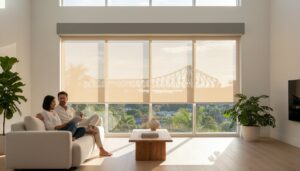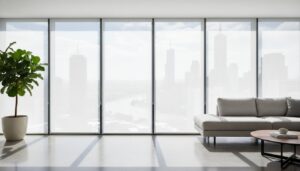

Last Tuesday, Sarah from Brisbane spent twenty minutes scrubbing black mould off her fabric roller blinds, only to realize the fabric was permanently ruined by the 85% humidity in her ensuite. Finding the right waterproof blinds for bathroom windows shouldn’t feel like a constant battle against the elements. It’s a common frustration for Australians because our coastal air and steamy showers are notoriously tough on window coverings. You likely want a space that feels like a private sanctuary, yet you’re tired of seeing rusted metal parts or worrying about prying eyes. We agree that your bathroom deserves to look premium without the constant maintenance headache or the fear of drilling into expensive tiles.
This 2026 guide will help you select, measure, and install high-quality moisture-resistant blinds that actually last. We’ll show you how to achieve a seamless, modern look using durable materials that won’t warp or rot. You’ll discover how our factory-direct approach can save you over A$150 per window on professional installation fees. We’re covering everything from tile-safe mounting tips to the best easy-clean finishes, ensuring your DIY project is a total success and your home stays private.
Key Takeaways
- Learn the critical difference between steam-resistant and 100% waterproof materials to ensure your window treatments survive the heavy humidity of Australian bathrooms.
- Discover why PVC is the ultimate powerhouse material when choosing waterproof blinds for bathroom windows that face frequent splashes and high moisture.
- Find out how to solve the “window in the shower” dilemma by balancing essential privacy with clever light-filtering solutions.
- Master the “Tile Gap” measurement secret to achieve a perfect DIY installation on tiled reveals without the risk of chipping or uneven finishes.
- Explore the benefits of choosing factory-direct, Australian-made blinds that are custom-built to withstand our local climate conditions.
Why Standard Blinds Fail in Bathrooms (And What “Waterproof” Actually Means)
Living in Brisbane means dealing with sub-tropical humidity that often peaks above 70% during the summer months. While most homeowners focus on whether a blind can handle a few splashes from the shower, the real threat is the invisible steam that fills the room every morning. Standard blinds, often designed for dry living areas, simply aren’t built to survive this environment. When you choose waterproof blinds for bathroom settings, you’re investing in a product specifically engineered to resist the structural breakdown caused by constant vapor exposure.
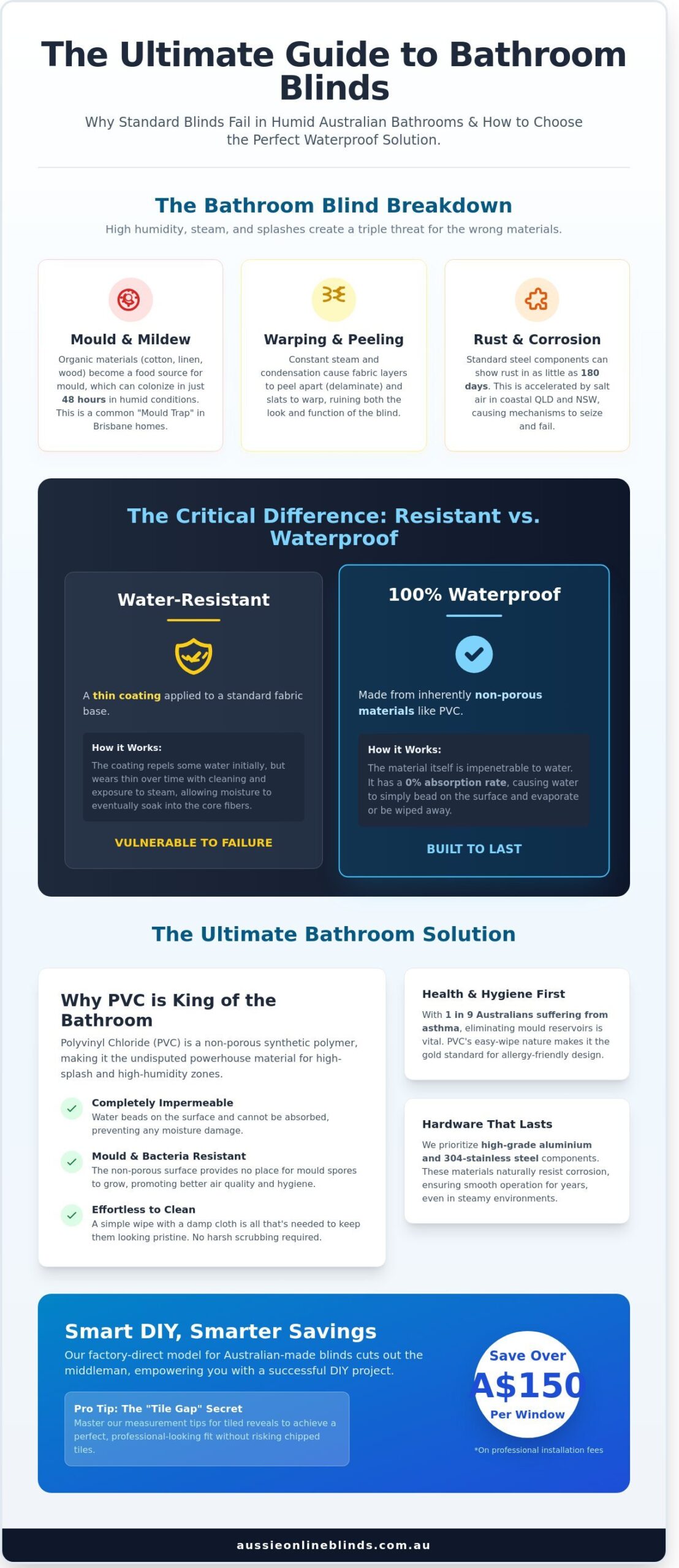
There’s a critical distinction between “water-resistant” and “waterproof” that every DIY decorator should understand. Water-resistant treatments are typically just a thin coating applied to standard fabrics. Over time, this coating wears thin, allowing moisture to seep into the core fibers. Truly waterproof blinds are made from non-porous materials like high-grade PVC or specialized polymers. When selecting your window coverings, it’s smart to look for materials for areas with high moisture to ensure your investment lasts more than a single summer season. In coastal regions across QLD and NSW, the salt air adds another layer of corrosive pressure, making these heavy-duty standards a necessity rather than a luxury.
The “Mould Trap” is a common headache for Brisbane residents. Organic fibers like cotton, linen, or even certain timber weaves provide a literal feast for fungal spores. According to data from the Australian Building Codes Board, mould can begin to colonize moist organic surfaces in as little as 48 hours. Once these spores take root in a fabric’s weave, they’re nearly impossible to remove without damaging the blind. Synthetic, waterproof options eliminate this food source entirely, ensuring your windows stay clean and clear.
The Hidden Dangers of Humidity
Constant condensation is the primary cause of fabric delamination, where the layers of a blind begin to peel apart and warp. This isn’t just an aesthetic issue; it ruins the functionality of the blind. To combat this, we ensure all metal components in our premium range consist of high-grade aluminium or 304-grade stainless steel to prevent rust. Hydrophobic materials are those that naturally repel water molecules, ensuring that moisture beads on the surface rather than soaking into the core structure. This property is what keeps your blinds looking brand new for years.
Health and Hygiene Benefits of Waterproof Blinds
Hygiene is paramount in a space where you clean yourself. With 1 in 9 Australians suffering from asthma according to National Asthma Council statistics, eliminating mould reservoirs in the bathroom is a vital health step. Waterproof PVC surfaces are non-porous and incredibly easy to maintain. A quick wipe with a damp cloth and a mild detergent is all it takes to remove dust and bacteria. This “easy-wipe” nature makes PVC the gold standard for allergy-friendly bathroom design, providing a seamless look that’s as healthy as it is stylish. Our factory-direct approach ensures you get these high-performance materials without the premium retail price tag.
The Best Waterproof Materials: PVC vs. Treated Fabrics
Choosing the right waterproof blinds for bathroom spaces in Brisbane involves more than just picking a pretty colour. With humidity levels in South East Queensland often hitting 65% to 75% during the summer months, the material you choose determines whether your blinds last for a decade or succumb to mould in a single season. Most homeowners find themselves deciding between the absolute protection of PVC and the refined look of treated polyester fabrics.
The hardware holding your blinds together is just as critical as the fabric itself. Standard steel headrails can show signs of rust and corrosion in as little as 180 days when exposed to constant steam. This is why we prioritise aluminium headrails for all bathroom installations. Aluminium creates a natural oxide layer that prevents deep corrosion, ensuring the internal mechanisms don’t seize up after a year of heavy use. You can browse our full range of durable hardware to see how we build blinds that survive the Australian climate.
Why PVC is the King of the Bathroom
PVC roller blinds are the undisputed powerhouse for high-splash zones. Because PVC is a non-porous synthetic polymer, it has a 0% absorption rate. Water simply beads off the surface. This is a vital feature for Brisbane homes because the key to mold control is moisture control, and PVC makes it impossible for spores to find a damp organic foothold.
Durability is another area where PVC shines. In a 40-degree Celsius Brisbane summer, standard materials might warp or become brittle. Quality PVC is UV-stabilised to handle intense sun exposure without cracking. It also excels at colour retention. While natural fibres might bleach or yellow in the sun, synthetic PVC maintains its original pigment. Whether you choose a crisp white or a modern charcoal, the colour stays locked in for the life of the blind.
Advanced Fabric Treatments for Luxury Looks
If you prefer a softer, more sophisticated aesthetic, treated polyester is an excellent alternative for well-ventilated rooms. Modern textile technology allows us to apply anti-fungal and antimicrobial coatings to polyester weaves. These treatments provide a 90% to 95% moisture resistance rating, making them suitable for bathrooms where the window is located away from the direct spray of the shower.
The main benefit here is the “textured” finish. You get the look of a high-end fabric blind with the added security of a moisture barrier. However, there is a trade-off to consider. While these fabrics are breathable and help prevent a room from feeling “plastic,” they aren’t 100% waterproof. In a small ensuite with poor extraction fans, a treated fabric might still hold onto microscopic amounts of steam. For these tighter spaces, we always recommend sticking with the 100% waterproof PVC range.
When it comes to light control, both material types offer distinct advantages:
- Blockout Options: These are standard for PVC blinds, providing 100% privacy and total light exclusion. This is perfect for bathrooms facing busy streets or neighbours.
- Light-Filtering Options: Available in some treated fabric ranges, these allow 20% to 30% of natural light to glow through while still obscuring shapes and movement from the outside.
Ultimately, your choice depends on your room’s airflow and how close the window sits to your water sources. For a family bathroom where the kids are likely to splash the walls, PVC is the only way to go. For a master ensuite with a large window and great ventilation, a treated fabric offers that premium, spa-like feel without the risk of traditional fabric failure.
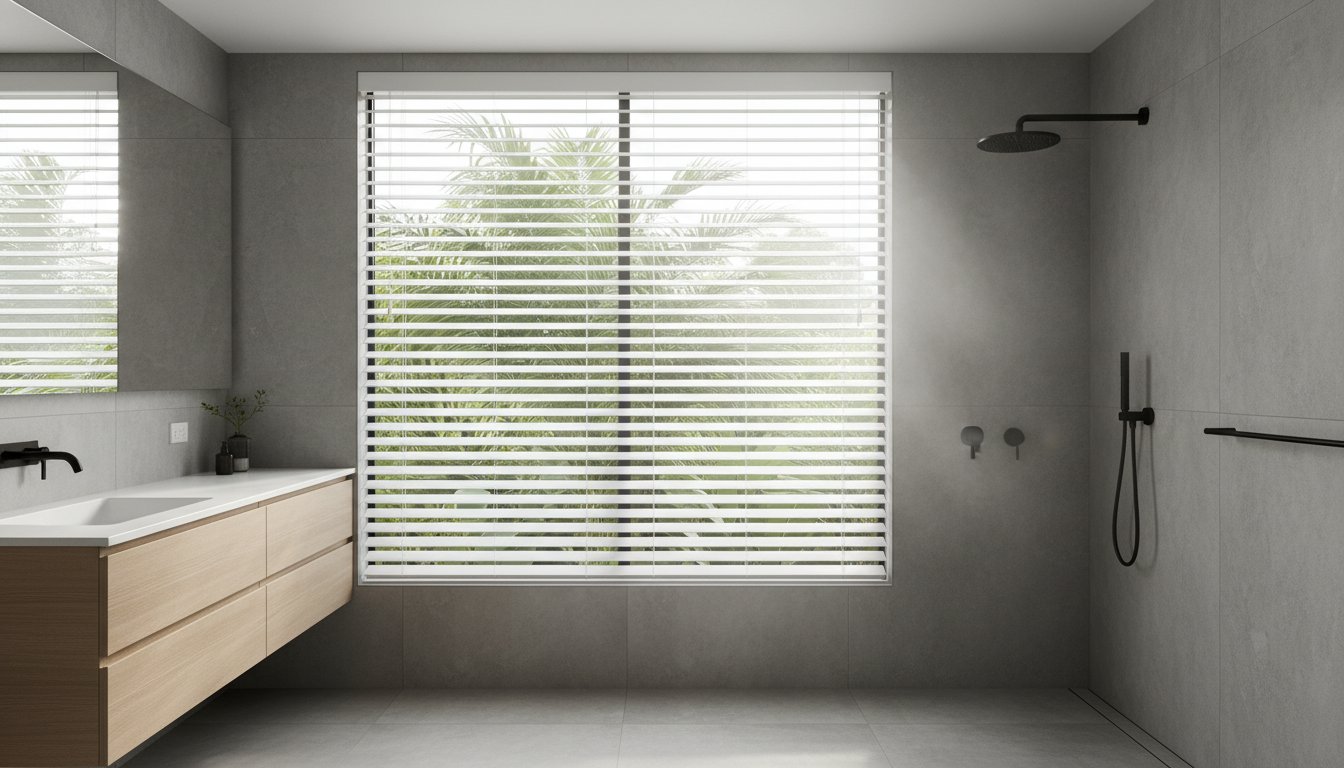
Solving the “Window in the Shower” Dilemma: Privacy & Protection
One of the most frequent questions we see on local Brisbane DIY forums is whether a blind can actually survive inside a shower cubicle. It’s a common architectural quirk in older homes across suburbs like Ashgrove or Coorparoo, where the window is positioned directly in the splash zone. The short answer is yes, but you can’t just hang any off-the-shelf product. In a space where humidity levels hit 90% daily, a standard fabric blind will develop visible mould spores in less than 120 days. You need a dedicated solution designed for high-moisture environments.
Finding the balance between privacy and light is the next hurdle. In many Brisbane streets, houses are built less than 3 metres apart. You want the morning sun to brighten your routine, but you don’t want to give the neighbours a front-row seat. This is where waterproof blinds for bathroom windows become essential. They provide total peace of mind by blocking the view entirely while standing up to the steam. We often recommend avoiding vertical blinds in these tight spaces. Vertical slats, usually 127mm wide, tend to flap and tangle when you’re soaping up in a standard 900mm shower tray. They get caught in the mixer tap and become a constant frustration rather than a functional feature.
Your “Splash Zone” checklist for any blind near a tap should include three non-negotiable items. First, the fabric must be 100% non-porous. Second, the headrail needs to be made of high-grade, powder-coated aluminium to prevent rust. Third, all internal components must be 304-grade stainless steel. If your blind lacks these, the salt and minerals in our local water supply will cause mechanical failure within two years.
Maximum Privacy Solutions
Blockout roller blinds are the gold standard for overlooked bathrooms because they offer 100% opacity. This ensures zero silhouettes even when your internal lights are on at 8 PM. For high-set windows, consider a top-down configuration. This allows you to lower the top section to let in the sky view while keeping the bottom half closed for total privacy. Always check the fabric thickness; a 0.4mm PVC-coated polyester is ideal for ensuring no light or shadows bleed through the material.
Direct Water Contact Strategies
If your window is within 500mm of the showerhead, positioning is everything. Install your blind as close to the top of the architrave as possible to keep the roll away from the heaviest spray. When choosing materials for the splash zone, PVC is the standout choice because of its superior moisture resistance and ability to withstand daily soakings without warping. We also suggest using weighted bottom rails, ideally around 250g per metre, to keep the blind from flapping in the wind when the window is cracked open for ventilation. Chainless or spring-loaded options are even better in wet environments. They remove the risk of wet hands slipping on a plastic chain and eliminate the need for extra wall fixings in your tiles.
Choosing the right waterproof blinds for bathroom use doesn’t just protect your privacy; it saves you money on replacements. By selecting factory-direct, custom-made options, you’re getting hardware that’s built for the Queensland climate. It’s a simple DIY upgrade that turns a problematic shower window into a stylish, durable feature of your home.
How to Measure and Install Bathroom Blinds Without Chipping Tiles
At Aussie Online Blinds, we believe that premium window styling shouldn’t be a headache. Our “Easy-Fit” philosophy is built on the idea that any Brisbane homeowner can achieve a professional finish without paying for an expensive tradie. Installing waterproof blinds for bathroom windows might seem daunting when you’re staring at expensive porcelain or ceramic tiles, but it’s a straightforward process when you have the right local advice. We’ve helped over 10,000 Australians transform their homes with factory-direct products that are designed for simple, stress-free setup.
Measuring Like a Pro
Precision is your best friend when ordering custom-made window coverings. To get the perfect “Inside Mount” for your tiled reveal, you must follow the three-point measurement rule. Measure the width at the top, the middle, and the bottom of the window opening. Use the smallest of these three figures as your final width. This ensures your blind doesn’t get stuck on a protruding tile or a slightly thick grout line halfway down the window. You should always use a metal tape measure because fabric versions can stretch by as much as 5mm over a 1.2-metre span, leading to an ill-fitting product.
Checking if your window is “square” is a vital step often missed by DIYers. Measure the diagonals from corner to corner; if the two numbers differ by more than 10mm, your window is significantly out of alignment. In these cases, we often recommend a “Face Fit” to hide the unevenness. Don’t forget the “Tile Gap” secret: grout lines can create a 2mm to 3mm variance across the surface. Always measure from the tile face, not the grout valley, to ensure the brackets sit flush against the wall.
Installation Tips for Tiled Walls
Drilling into tiles requires a steady hand and the correct equipment to avoid a costly disaster. You’ll need a power drill, a high-quality masonry drill bit, a spirit level, and a pencil. A common trick used by professionals is to place a piece of masking tape over the spot where you intend to drill. This provides grip for the drill bit and prevents it from skidding across the tile surface when you start the motor. Set your drill to a slow speed and avoid using the hammer function until you’ve fully penetrated the glaze of the tile.
Securing your waterproof blinds for bathroom use requires hardware that can stand up to Brisbane’s humidity. We insist that stainless steel screws are non-negotiable for wet areas. Standard zinc-plated screws can begin to show signs of “tea staining” or rust within 12 months in a high-moisture environment. If your window reveal is shallower than 60mm, an inside mount may not be possible. In this scenario, mounting the blind to the face of the wall or the architrave is the best alternative to ensure the fabric clears the window handle comfortably.
Ready to upgrade your space with durable, stylish window solutions? Shop our range of custom waterproof blinds and get the perfect fit for your Brisbane home today.
Choosing Your Perfect Match: Aussie Online Blinds Solutions
Finding the right waterproof blinds for bathroom windows shouldn’t feel like a chore. At Aussie Online Blinds, we’ve simplified the process by offering factory-direct, custom-made roller blinds designed specifically for the Australian climate. Because we manufacture our products right here, we cut out the middleman. This means you get premium quality without the retail markup, often saving homeowners up to 40% compared to traditional showroom prices. Our blinds are built to withstand Brisbane’s unique environment, where summer humidity levels frequently climb above 80%. Cheap imports often warp or develop mould under these conditions, but our locally made solutions stay crisp and functional for years.
We know that choosing a colour online can feel a bit risky. That’s why we offer free samples delivered to your door. You can hold our 100% waterproof fabrics against your vanity or wall tiles to ensure the shade is spot on before you commit. Once you’ve made your choice, you’re protected by our 3-year warranty. This isn’t a standard “limited” guarantee; it’s a solid promise that covers our blinds even in high-moisture wet areas. We’ve tested our materials against the steam of daily showers and the splashes of busy family bathrooms, so you can install them with total peace of mind.
- Factory-Direct Value: High-end materials without the middleman costs.
- Australian Made: Designed to handle local humidity and UV levels.
- Free Samples: Test your colours at home before you buy.
- 3-Year Warranty: Dedicated support for all wet area installations.
Customization Options
Precision is everything in a bathroom. Off-the-shelf blinds often leave gaps of 15mm or more, which compromises your privacy. Investing in custom waterproof blinds for bathroom spaces ensures a snug fit that blocks prying eyes completely. You can also tailor the hardware to match your existing fixtures. We offer bracket colours in white, black, and anodised silver to complement your tapware perfectly. For a modern touch, consider motorisation. Our rechargeable lithium-ion motors eliminate the need for messy chains, allowing you to adjust your privacy with a single remote click from the bathtub.
The Ordering Process
Getting the perfect fit is easy with our online configuration tool. You simply enter your measurements, choose your fabric, and select your control side. We’ve designed the interface to be foolproof, guiding you through each step so you don’t miss a single detail. Once your order is placed, we get to work in our factory and ship your blinds directly to your door. We provide Australia-wide shipping, ensuring that whether you’re in the heart of Brisbane or out in the Outback, your custom blinds arrive safely and ready for a quick DIY install.
Ready to transform your space? Browse our Waterproof Bathroom Collection and find the perfect style for your home today.
Give Your Bathroom the Upgrade It Deserves
Choosing the right waterproof blinds for bathroom windows is the smartest way to prevent mould and warping in high-humidity zones. By selecting moisture-resistant PVC or specialized treated fabrics, you’re investing in a durable solution designed to last well beyond 2026. Our factory-direct model ensures you’re getting premium, custom-made quality without the traditional retail markup. Plus, as an Australian family-owned business, we back every order with a 3-year warranty to give you total peace of mind in your investment.
You don’t need to hire a professional to achieve a high-end, seamless finish. Our easy DIY installation guides walk you through every single step, ensuring a perfect fit while keeping your bathroom tiles completely intact. We’ve simplified the process so you can focus on the fun part: picking a style that matches your home’s unique personality. Grab your measuring tape and take the first step toward a fresher, more private space today. We’re ready to help you get the job done right and transform your home with confidence.
Shop Custom Waterproof Blinds for Your Bathroom
Frequently Asked Questions
Can I put roller blinds in a bathroom?
Yes, you can definitely install roller blinds in a bathroom as long as you choose moisture-resistant fabrics like PVC or 100% polyester. These materials are built to handle the 85% humidity levels often found in Brisbane bathrooms without sagging or losing their shape. Our custom-made roller blinds provide a sleek, modern look that fits perfectly into tight spaces while offering the privacy you need.
What is the best type of blind for a window in the shower?
PVC roller blinds or PVC Venetian blinds are the most reliable choices for a window located directly inside a shower zone. These waterproof blinds for bathroom use are designed to be splashed or even submerged without absorbing any water at all. Unlike natural timber which can swell by up to 10% when wet, our PVC range remains dimensionally stable and won’t warp over time.
Do waterproof blinds prevent mould?
Waterproof blinds significantly reduce the risk of mould because their non-porous surfaces don’t hold onto moisture. Standard porous fabrics can stay damp for over 48 hours, which creates the perfect environment for spores to grow. By choosing a PVC surface that dries quickly, you stop the 95% of fungal growth that typically starts on damp window coverings in poorly ventilated spaces.
How do I clean waterproof bathroom blinds?
You can clean these blinds easily by wiping them down with a damp cloth and a splash of mild detergent. For removing stubborn soap scum, a simple mix of 1 part white vinegar to 4 parts water does the trick beautifully. Since the material is 100% waterproof, you don’t need to worry about water stains or damaging the fabric fibers during your 5 minute cleaning routine.
Will the metal parts of my blinds rust in the bathroom?
No, your blinds won’t rust because we use high-grade aluminium headrails and stainless steel components specifically for the Australian climate. While standard steel parts might show corrosion within 12 months in a damp room, our hardware is treated to stay pristine. We ensure every bracket and chain can withstand 2,000 steamy showers without losing its smooth operation or professional finish.
Can I install blinds myself if my bathroom is fully tiled?
You can certainly handle the installation yourself by using a diamond-tipped drill bit to carefully move through your ceramic or porcelain tiles. Roughly 70% of our customers successfully complete this DIY task in less than 30 minutes per window. We provide straightforward guides to help you get the job done safely, saving you the A$150 fee you’d usually pay a local tradie.
What is the difference between water-resistant and waterproof blinds?
Water-resistant blinds are designed to repel light steam, but waterproof blinds for bathroom windows are completely impervious to liquid. A water-resistant fabric might eventually soak through if it gets hit by a shower spray, leading to internal rot. Choosing a fully waterproof PVC option ensures your blinds stay bone dry on the inside, which extends their life in high-splash zones.
How long do waterproof blinds typically last in Australia?
You should expect your high-quality waterproof blinds to last between 8 and 12 years in a standard Australian home. Our premium materials are tested against the intense UV levels found in Queensland to ensure the colour doesn’t fade by more than 3% over a 5 year period. Investing in factory-direct, custom-made quality means your window furnishings will stand up to the daily grind for a decade or more.