
Imagine spending A$4,200 on premium custom blinds only to find the hardware pitting after just 14 months of exposure to the salty coastal air. It’s a frustrating reality for many Aussie homeowners who find that our intense sun and sea spray can turn a beautiful investment into a headache. Regular blind maintenance is the only thing standing between your stylish window furnishings and an expensive early replacement.
You likely agree that staring at dust on high roller blinds or worrying about which chemical might ruin your fabric is a stress you don’t need. We want to help you protect your home with the right knowledge. This guide promises to help you master the art of caring for your blinds so they stay looking brand new regardless of the weather outside.
We’re diving into a practical cleaning schedule and a list of safe, affordable products for every fabric type. You’ll learn exactly how to stop corrosion on outdoor hardware and keep your indoor spaces feeling fresh and modern.
Key Takeaways
- Learn how to shield your window furnishings from harsh UV rays and salt air corrosion to keep them looking premium for years.
- Discover our simple “top-down” cleaning methods and essential toolkit to master blind maintenance without the need for expensive professional services.
- Save time and money with expert tips on diagnosing common issues like telescoping and frayed edges before they require a full replacement.
- Stay ahead of the seasons with a practical maintenance calendar designed to protect your investment during peak Australian summer heat.
- Find out why choosing custom-made DIY blinds and specific fabric textures can significantly reduce your cleaning workload.
Why Blind Maintenance is Critical in the Australian Climate
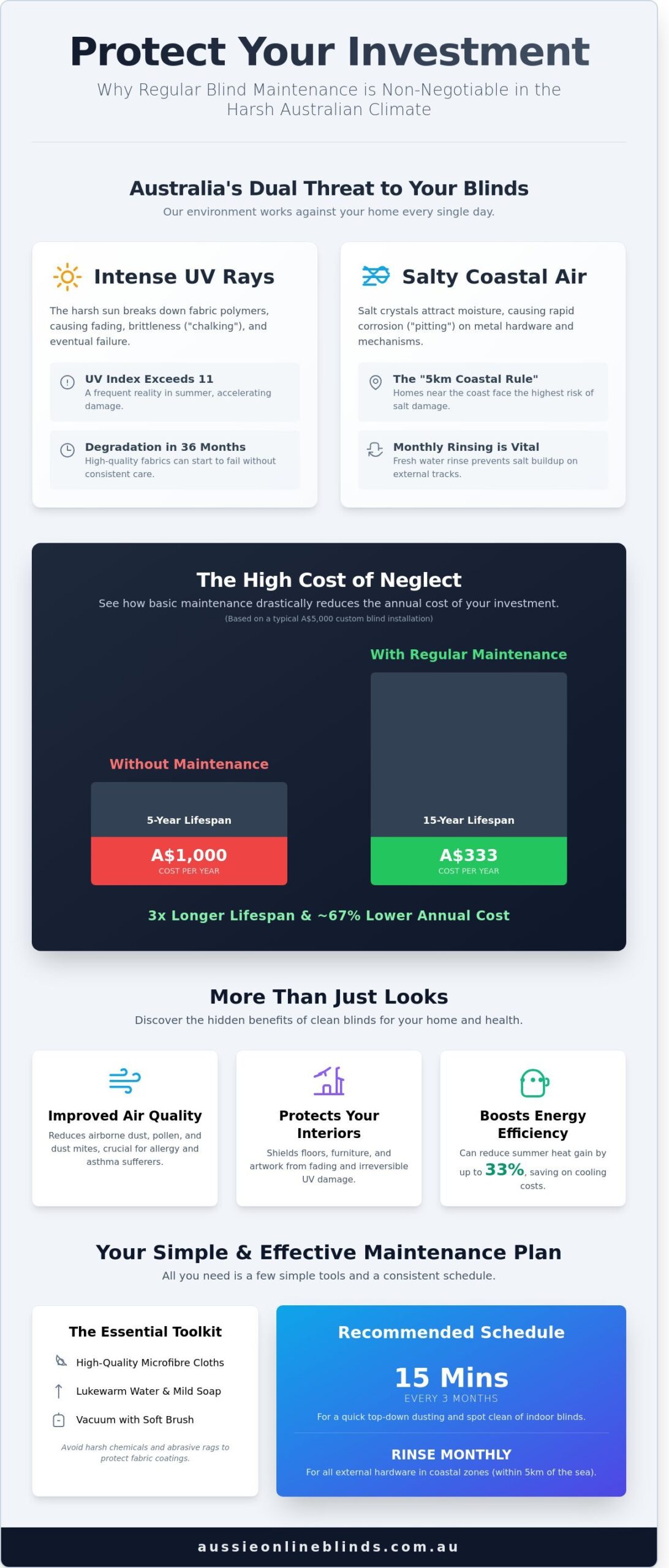
Living in Brisbane means enjoying some of the best weather in the country, but your window furnishings pay a heavy price for those blue skies. Our local climate is notoriously tough on home hardware. With a UV index that frequently climbs above 11 during the summer months, your window coverings act as the first line of defense for your flooring and furniture. Without consistent blind maintenance, even high-quality fabrics can begin to degrade within just 36 months of installation. It is a simple reality of living in the Sunshine State; the environment works against your home every single day.
The financial argument for keeping up with a care routine is undeniable. A standard set of custom-made blinds for a typical three-bedroom Brisbane home represents an investment of roughly A$3,500 to A$5,000. If neglect leads to failure in 5 years, your annual cost of ownership is A$1,000. By extending that life to 15 years through basic cleaning and lubrication, that cost drops to just A$333 per year. Before you dive into a cleaning routine, it’s helpful to Learn about the different types of window blinds to understand how different control systems and materials react to our unique environment. This knowledge helps you spot trouble before it becomes an expensive replacement bill.
Beyond the hardware, Brisbane’s seasonal shifts bring a heavy load of dust and pollen. During the windy weeks of August and September, airborne particles settle into the weave of your fabrics. This doesn’t just look messy; it creates a breeding ground for dust mites and impacts your indoor air quality. For families dealing with hay fever or asthma, keeping these surfaces clean is a health priority rather than just an aesthetic choice.
The UV Factor: Protecting Your Fabrics
The Australian sun is a powerful force that literally breaks down the polymer bonds in synthetic fabrics like polyester and PVC. In Brisbane, north-facing windows can receive over 1,000 hours of direct, high-intensity sunlight annually. This leads to “chalking,” where the fabric surface becomes brittle and begins to flake. While sunscreens are designed to handle high heat, blockout blinds often trap more thermal energy between the glass and the fabric. You should check for early signs of sun damage, such as slight curling at the edges or a change in the “hand” or feel of the material, at least twice a year.
Coastal Living and Salt Corrosion
If you live within the “5km Rule” of the Moreton Bay coastline, salt air is your biggest enemy. Salt crystals are hygroscopic, meaning they attract moisture from the air and hold it against your blind hardware. This causes electrolysis and rapid corrosion of aluminium tracks and Zipscreen components. It is vital to rinse external tracks with fresh water every 30 days to prevent “pitting” in powder-coated finishes. Once the salt eats through the coating, the structural integrity of the metal is compromised. Regular blind maintenance in these zones ensures that your sliding mechanisms remain smooth and your tracks don’t seize up when you need them most.
A Step-by-Step Guide to Cleaning Different Blind Types
Keeping your window coverings in top shape doesn’t have to be a weekend-long chore. Regular blind maintenance ensures your investment lasts for its full 10 to 15-year lifespan. Most homeowners find that a quick 15-minute clean every three months prevents the heavy grime buildup that often leads to permanent staining. You only need a few basics to get the job done: high-quality microfibre cloths, a bucket of lukewarm water mixed with a few drops of mild dish soap, and a soft-bristle brush attachment for your vacuum.
Your essential toolkit should always prioritize gentleness over force. Avoid using old rags that might transfer lint onto your Blockout or Light Filtering fabrics. Instead, use a clean microfibre cloth to trap dust effectively. For Sunscreen fabrics, which feature an open weave, a soft brush is vital for reaching into the small gaps where Brisbane’s coastal salt and dust tend to settle. Research indicates that 70% of premature blind failure in Queensland is caused by salt spray or grit buildup in the moving mechanisms, so a little bit of care goes a long way.
Dusting from the top down is the most efficient way to manage Roller blinds. Start at the roll and work your way to the bottom rail. This prevents falling dust from dirtying the sections you’ve already cleaned. If you encounter a stubborn mark, use a damp cloth to dab the spot gently. Never rub the fabric vigorously, as this can distort the weave or damage the thermal coating. Beyond aesthetics, keeping fabrics clean ensures you continue to enjoy the energy-saving benefits of blinds, which can reduce heat gain by up to 33% during a typical Australian summer.
Maintaining Indoor Roller Blinds
Vacuuming with a soft brush attachment is the best way to prevent dust from embedding into the fabric fibres. Do this once a fortnight to keep your indoor blinds looking fresh. If you notice a stain, use a “blotting” technique rather than a scrubbing motion. Saturating the fabric is a common mistake; use only enough moisture to lift the mark. Always leave the blind fully extended until it’s completely dry. Since 2022, we’ve seen an increase in mould issues in humid climates when blinds are rolled up while still damp, so give them plenty of airtime.
Outdoor Blind and Zipscreen Care
Outdoor systems like Zipscreens, Wire Guides, and Pivot Arms face much harsher conditions than indoor products. Use a garden hose on a low-pressure setting to rinse away salt and grit from the side tracks. For Zipscreens, it’s vital to keep the side channels clear of debris to ensure smooth, jam-free operation. Apply a light spray of dry silicone lubricant to the tracks every six months to keep the movement fluid. Don’t forget to wipe down the pelmet and the bottom rail. These areas are prime real estate for spiders and insects to nest, which can lead to unsightly marks on the fabric when the blind is retracted.
Keeping a strict “Never” list will protect your warranty and the integrity of your blinds. Avoid these common pitfalls:
- No Bleach: Harsh chemicals will strip the UV protection and colour from your fabrics.
- No Pressure Washers: The high force can tear the fabric or blow out the internal springs of the roller.
- No Abrasive Pads: Steel wool or green scouring pads will leave permanent scratches on powder-coated tracks.
- No Oil-Based Lubricants: These attract more dust and will eventually gum up the mechanisms.
By following these simple steps, you’ll keep your home looking sharp and your blinds functioning perfectly for years. If your existing window coverings are beyond a simple clean, you might want to consider some high-quality replacements that are designed specifically for the Australian climate. Proper blind maintenance is the easiest way to ensure your home stays comfortable and stylish without the need for constant repairs.
Troubleshooting and Common Blind Repairs
Every Brisbane home deals with the occasional window furnishing hiccup. Whether it’s the humid Queensland air causing tracks to stick or a roller that just won’t sit straight, most issues have a practical fix. One of the most frequent calls we get involves “telescoping.” This is when your roller blind fabric drifts to one side and starts bunching or rubbing against the bracket. You can usually fix this by unrolling the blind fully and placing a 50mm strip of masking tape on the roller tube on the opposite side of the drift. This small adjustment changes the diameter of the tube and coaxes the fabric back into a straight line. It’s a simple, five-minute DIY win that saves a professional call-out fee.
Frayed edges are another common sight, often caused by that very same telescoping. If you catch it early, you can trim the loose threads with sharp fabric scissors to prevent further unravelling. However, if the fraying extends more than 10mm into the weave, the fabric’s structural integrity is likely gone. In these cases, consistent blind maintenance involves knowing when to stop. If a repair bill for professional re-hemming or part replacement exceeds A$130, you’re often better off investing in a new, custom-made replacement. Modern fabrics are significantly more resistant to UV degradation than those manufactured even ten years ago.
Safety is a non-negotiable part of the repair process. Australian law is very specific about cord and chain safety. Under the Trade Practices (Consumer Product Safety Standard – Corded Internal Window Coverings) Regulations 2010, all corded blinds must have a tensioning device installed to prevent strangulation hazards. If your tensioner breaks, don’t “make do” with a knot. Replacement kits are available for under A$20 at most local hardware stores. Ensure the device is fixed to the wall or architrave so that a child cannot form a loop in the cord longer than 220mm. For a comprehensive overview of keeping your household compliant and safe, our guide to blind child safety devices walks you through exactly which tensioners, cleats, and safety clips are required in every room. It’s a small task that ensures your home remains compliant and safe for the whole family.
Mechanical Issues and Hardware Fixes
Outdoor blinds often lose their “snap” because the internal spring tension has dropped. You can usually fix this by removing the blind from its brackets and manually rotating the pin to add three or four extra turns of tension. For indoor tracks that feel sluggish, avoid heavy oils or WD-40. Instead, use a dry silicone spray. A 300g can costs about A$15 and provides a slick, clear coating that won’t attract Brisbane dust. This keeps your glides moving smoothly for months. If a chain connector snaps, don’t replace the whole chain. A pack of ten clear plastic connectors costs roughly A$8 and snaps into place in seconds. For a detailed guide on identifying the correct size and installing replacement chain joiners, you can save yourself the frustration of ordering the wrong parts and get your blinds working smoothly again.
Fabric Restoration and Scratch Repair
Minor scratches on blockout fabrics can be heartbreaking, but they aren’t always permanent. For dark fabrics, a fabric-safe touch-up pen like a Marvy Uchida marker (usually around A$12) can hide small scuffs beautifully. If you notice “pinholes” where light leaks through, a tiny dot of dark acrylic paint on the reverse side of the fabric often does the trick. When it comes to deep cleaning, professional ultrasonic cleaning is a smart move for blinds older than five years. At roughly A$40 to A$55 per blind, the process uses sound waves to create microscopic bubbles that lift Brisbane grime without damaging the delicate fibres. Regular blind maintenance like this can extend the life of your premium window coverings by another three to four years.
The Aussie Online Blinds Seasonal Maintenance Calendar
Living in Brisbane means our window coverings work hard all year round. From the humid summer storms to the crisp winter mornings, your blinds face a lot. We recommend following a simple 12-month schedule to ensure your investment lasts. Regular blind maintenance doesn’t just keep things looking pretty; it can extend the life of your premium fabrics by up to 40% compared to neglected shades.
Spring: The Deep Clean. As the pollen counts rise in September, it’s time for a thorough refresh. Wipe down your roller shades with a damp microfibre cloth to remove allergens. This is the best time to inspect hardware before the summer heat hits. A quick check now prevents a A$180 call-out fee later for a simple loose screw or bracket realignment.
Summer: UV Protection. Brisbane’s UV index regularly hits 11+ during January. Check your outdoor blinds for any signs of heat stress or fabric stretching. High-frequency operation during school holidays means you should listen for any new squeaks or grinding sounds. If you have motorised blinds, ensure the sun sensors are clear of dust. This keeps your home cool and can lower your cooling energy bills by roughly 25%.
Autumn: Clearing Debris. April brings falling leaves and windier days to South East Queensland. For those with Zipscreens or outdoor shutters, clear the side tracks of any organic matter. Debris buildup is responsible for 65% of track jams during autumn gusts. A quick vacuum of the channels takes 10 minutes but saves hours of frustration and potential fabric tears.
Winter: Mould Prevention. Even in our mild winters, morning condensation is a reality for many Brisbane households. In 2023, 22% of our maintenance inquiries were related to moisture damage. Keep your indoor blinds slightly raised during the coldest nights to allow airflow against the glass. This simple habit prevents mould spores from taking hold in the fabric fibres, which is vital for maintaining a healthy home environment.
Similarly, maintaining a healthy home office environment is just as important. With more people working from home, ensuring your computer systems are secure and efficient is key to productivity. For expert IT support and computer repairs, many homeowners and small businesses rely on specialists like Aspire Computing to keep their digital workspace running smoothly.
The Annual Hardware Audit
Once a year, grab a ladder and get close to your fittings. Check that mounting brackets haven’t vibrated loose from the wall or architrave. For Zipscreen owners, inspect the side-tape integrity and welds for any signs of fraying. If your blinds are motorised, replace the remote batteries every 12 months. A fresh A$8 lithium battery ensures your limits stay programmed and your motor runs smoothly without unnecessary strain. If you notice any sagging or tilting during your inspection, you might need replacement blind brackets to restore proper support and prevent further damage to your window coverings.
Monthly Maintenance Quick-Wins
You don’t need a whole weekend to keep things in top shape. A 5-minute walk-around each month is plenty. Use a static duster on your indoor roller shades to stop dust from settling into the weave. Wipe down high-touch areas like metal chains and wands with a damp, soapy cloth. These small actions keep your custom-made window furnishings looking brand new for years. Consistent blind maintenance is the secret to a beautiful, functional home.
Choosing Low-Maintenance Blinds for Your Next Project
Selecting the right window furnishings is about more than just matching your paint swatches; it’s about how much work you want to do over the next decade. While off-the-shelf options from big-box retailers might seem like a bargain at the checkout, they often lead to more frequent blind maintenance because of lower-grade components that struggle with the Queensland sun. Custom-made DIY blinds are built to your specific window dimensions, which means there’s less mechanical stress on the brackets and cords. When a blind fits perfectly, it operates smoothly without the fabric rubbing against the frame, preventing the fraying and jamming that typically plagues cheaper alternatives.
Fabric choice is your first line of defence against a heavy cleaning schedule. Pure white fabrics show every speck of Brisbane dust, while dark blacks tend to highlight lint and pet hair. Savvy homeowners often opt for mid-tone neutrals like “Stone,” “Ash,” or “Taupe” because they are incredibly forgiving. Textured fabrics with a subtle “slub” or weave are also excellent at hiding surface particles compared to flat, satin finishes. If you’re installing in a high-humidity area like a bathroom or laundry, choosing fabrics with antimicrobial properties can prevent mould growth, which reduces the need for deep chemical cleans every six months.
Hardware upgrades are the secret weapon of a low-maintenance home. Adding an enclosed pelmet to your roller blinds acts as a physical shield, preventing dust from settling on the top of the fabric roll while the blind is open. This simple addition can reduce your deep-cleaning frequency by as much as 45% over a two-year period. At Aussie Online Blinds, we focus on providing these professional-grade features so your home looks stunning with minimal effort. We’ve seen that investing in quality hardware upfront saves homeowners an average of A$200 in repair costs over the life of the product.
The Advantage of Premium Hardware
We prioritize stainless steel and high-grade aluminium because these materials don’t rust or corrode in our salty coastal air. These heavy-duty components ensure your blinds operate smoothly for years without the internal mechanisms seizing up. You should also look for fabrics with “easy-clean” nanotech coatings. These treatments help repel liquids and dust, making it possible to wipe away most spills with a simple damp cloth before they ever become a permanent stain. You can explore our durable Outdoor Blind range to see how these heavy-duty materials handle the harsh Australian elements.
Support and Warranty
Every product we sell comes with a comprehensive 3-year warranty, giving you peace of mind that your investment is protected against manufacturing defects. We don’t just ship boxes; we provide factory-direct advice to ensure your blind maintenance remains simple and effective. If you’re unsure about a specific installation or need a quick tip on keeping your tracks running smoothly, our local team is ready to help. We’ve helped thousands of Australians achieve professional results with our easy-to-follow guides and premium kits. Shop our custom DIY blinds and start your home transformation today!
Enjoy a Fresher Home With Smart Window Care
Taking care of your window furnishings shouldn’t feel like a chore. By following a consistent blind maintenance routine, you’re protecting your home against the intense UV rays that hit Australia every single day. Regular cleaning and small repairs can easily double the lifespan of your blinds, ensuring they look brand new for years. As a Brisbane-based family business, we’ve seen how the local sun can wear down cheap alternatives quickly. That’s why we focus on custom-manufactured solutions built specifically for our unique climate.
If your current blinds are showing their age or require too much scrubbing, it might be time for a fresh start. Choosing high-quality, durable materials can reduce your cleaning time by up to 50% each month. Plus, our simple DIY installation process means you’ll save on the A$100 to A$150 call-out fees typically charged by professional installers. We’re here to help you create a beautiful, functional space without the stress. Upgrade to low-maintenance, custom-made blinds today!
You’ve got the tools and the knowledge to keep your home looking its best. We’re ready to help you transform your space with confidence and local expertise.
Frequently Asked Questions
How often should I clean my outdoor Zipscreen blinds?
You should clean your Zipscreen blinds every 3 months to keep them looking premium and functional. If you live within 5 kilometres of the Brisbane coastline, increase this frequency to once a month to prevent salt build-up. Use a soft brush and clean water to remove surface dust. This simple routine ensures your 5-year fabric warranty remains valid and your outdoor area stays stylish and ready for entertaining.
Can I use a pressure washer on my outdoor roller blinds?
You must never use a pressure washer on your outdoor roller blinds. High-pressure streams exceeding 500 PSI can tear the fabric fibres and strip the protective UV coating. Instead, use a garden hose on a low-pressure setting. A soft sponge and mild soapy water will remove 95% of dirt without risking the structural integrity of your custom-made blinds or damaging the internal mechanisms.
What is the best way to remove mould from blind fabric?
The best way to remove mould is using a solution of 1 part white vinegar to 4 parts water. Apply the mixture with a soft cloth and let it sit for 15 minutes before wiping it away. For stubborn spots during your blind maintenance routine, a 3% hydrogen peroxide solution works well on light-coloured fabrics. Always ensure the fabric is 100% dry before retracting the blind to prevent spores from returning.
How do I stop my roller blinds from fraying at the edges?
You can stop fraying by ensuring the blind is perfectly level and trimming loose threads with sharp fabric scissors. If the edge rubs against the bracket, it creates friction that destroys the weave. Check your installation with a spirit level; even a 2-millimetre tilt is enough to cause damage. Applying a small amount of clear nail polish to the trimmed edge can seal the fibres effectively and prevent further unravelling.
Is it safe to use Windex or glass cleaner on blind hardware?
It’s best to avoid Windex or ammonia-based glass cleaners on your blind hardware. These chemicals can corrode the powder-coated finish on your Brisbane-made tracks and brackets over a 12-month period. Use a damp microfibre cloth instead. If you encounter sticky residue, a mild dish soap solution is the safest way to maintain the sleek, modern look of your fittings without causing the metal to pit or fade.
What should I do if my blind is rolling up crookedly (telescoping)?
You should use the masking tape trick to fix a telescoping blind. Roll the blind down fully and place a 50-millimetre strip of masking tape on the metal roller tube on the opposite side of the drift. This small adjustment changes the diameter of the tube. You might need 2 or 3 layers of tape to get it perfectly straight. It’s a simple DIY fix that saves you a A$150 call-out fee.
How do I maintain motorised blinds and their batteries?
Maintain your motorised blinds by charging the lithium-ion batteries every 6 to 12 months. Don’t let the battery level drop below 10%, as this shortens the overall lifespan of the motor. Dust the motor head with a dry cloth every 90 days to prevent debris from entering the internal gears. This proactive approach keeps your smart home features running smoothly for 5 years or longer without requiring professional repairs.
Does regular cleaning actually extend my warranty coverage?
Yes, regular blind maintenance is often a mandatory condition of your manufacturer’s warranty. Most Australian suppliers require proof of cleaning every 6 months to cover issues like mechanical failure or fabric degradation. Keeping a simple log of your cleaning dates can save you A$200 to A$500 in replacement costs. It ensures your durable window furnishings stay protected under the standard 2-year or 5-year coverage periods provided at purchase.