
Did you know your windows are responsible for almost 90% of your home’s heat gain during a typical Australian summer? It’s a staggering statistic from Energy.gov.au that explains why your air conditioner often struggles to keep up. If you’re tired of living in a sauna and dreading the next power bill, choosing the right energy efficient blinds for summer heat is the most practical move you can make. We understand the frustration of trying to decode technical jargon while your living room swelters, and we’re here to help you make sense of it all.
You deserve a home that stays naturally cool without costing a fortune to run. We promise to show you exactly how to reclaim your comfort and slash those cooling costs by using the “first line of defence” rule. This 2026 guide simplifies the process, focusing on high-performance DIY solutions like outdoor zipscreens and blockout roller blinds that you can install yourself. We’ll walk through the most effective materials and smart automation trends that can keep your rooms up to 7°C cooler, helping you achieve a professional look without the professional price tag.
Key Takeaways
- Learn how to block solar radiation before it hits your glass, keeping your living spaces significantly more comfortable.
- Discover why North and West-facing windows are your top priorities when choosing energy efficient blinds for summer heat.
- Understand the difference between sunscreen and blockout roller blinds and how to use them together for a 24-hour thermal buffer.
- Master the “Morning Routine” and other simple operational habits that help you get the most out of your window treatments.
- Find out why a precise DIY fit is essential for creating a thermal seal that rivals expensive professional installations.
What Are Energy Efficient Blinds and How Do They Work?
Energy efficient blinds for summer heat are much more than just a way to keep the sun out of your eyes. They are technical window treatments specifically engineered to minimize solar heat gain and improve your home’s thermal insulation. When you’re browsing for options, you’ll likely see references to the Solar Heat Gain Coefficient (SHGC). This is a simple rating that tells you how much solar radiation passes through the window and the blind combined. A lower SHGC means the product is better at keeping your rooms cool. While you might be asking what are window blinds in the context of energy savings, the answer lies in how they manage the sun’s energy before it turns your living room into a sauna.
Many homeowners rely on standard curtains, but these often fail during a brutal Australian summer. Curtains usually hang loosely, leaving a large gap where heat builds up against the glass. This creates a pocket of trapped, hot air that eventually spills into your room. Specialized energy efficient blinds for summer heat perform better because they fit closer to the window frame. They work by using three distinct methods: reflecting heat away from the glass, absorbing a portion of the energy within the fabric, and insulating your interior against the remaining warmth. By combining these three functions, high-quality DIY blinds provide a much stronger barrier than traditional fabrics ever could.
The Science of Summer Heat Transfer
Heat enters your home through three main paths: conduction, convection, and radiation. Radiation is the most common culprit in summer. The sun’s rays hit your window, and the glass acts like a magnifying glass, intensifying the heat as it enters your home. Conduction occurs when the glass itself heats up and passes that energy to the air inside. Convection is the movement of that hot air as it rises and circulates through your rooms. Thermal resistance is the ability of a material to block this heat flow. Without a proper barrier, your windows become the weakest point in your home’s cooling strategy.
Key Features to Look For in 2026
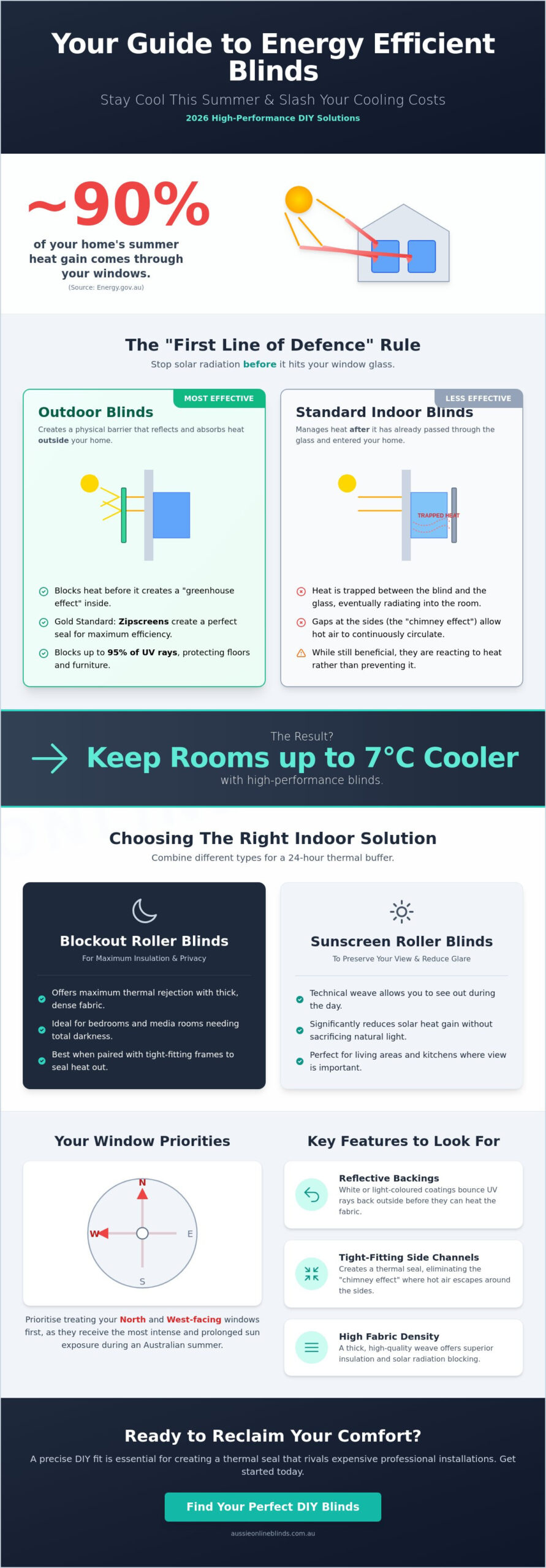
Modern blinds have come a long way, and the 2026 standards focus on high-performance features you can easily manage yourself. Look for reflective backings, which are often white or light-coloured coatings on the side facing the window. These backings bounce UV rays back outside before they have a chance to warm up the fabric. Another essential feature is the use of tight-fitting side channels, found in products like Zipscreen Outdoor Blinds or Deep Channel Blinds. These channels create a seal that eliminates the “chimney effect” where hot air escapes around the sides of the blind. Finally, pay attention to fabric density. A thick Blockout Roller Blind offers maximum thermal rejection, while a technical Sunscreen Roller Blind weave allows you to keep your view without sacrificing your comfort.
Outdoor Blinds: Your First Line of Defence Against Heat
While indoor solutions are helpful, the real secret to a cool home is stopping the sun before it even touches your glass. This is what we call the “Stop it at the Glass” principle. Once the sun’s rays pass through your window, they create a greenhouse effect that traps heat inside your rooms. By installing outdoor blinds, you create a physical barrier that reflects and absorbs solar radiation outside the building. This method is significantly more effective than trying to manage heat once it’s already entered your living space. According to the U.S. Department of Energy, energy-efficient window coverings like external shades are one of the best ways to reduce solar heat gain. When you’re searching for energy efficient blinds for summer heat, starting with an external solution is the most impactful choice you can make.
Beyond just temperature control, these external shields play a massive role in preserving your interior. The Australian sun is notorious for bleaching timber floors and fading expensive upholstery. High-quality outdoor mesh can block up to 95% of harmful UV rays. This means your furniture stays looking new for longer while you enjoy a much cooler environment. It’s a win for your comfort and your home’s long-term value. You don’t have to sacrifice your view to get these benefits, as modern mesh materials allow you to see out while keeping the heat at bay.
Zipscreen: The Ultimate Thermal Barrier
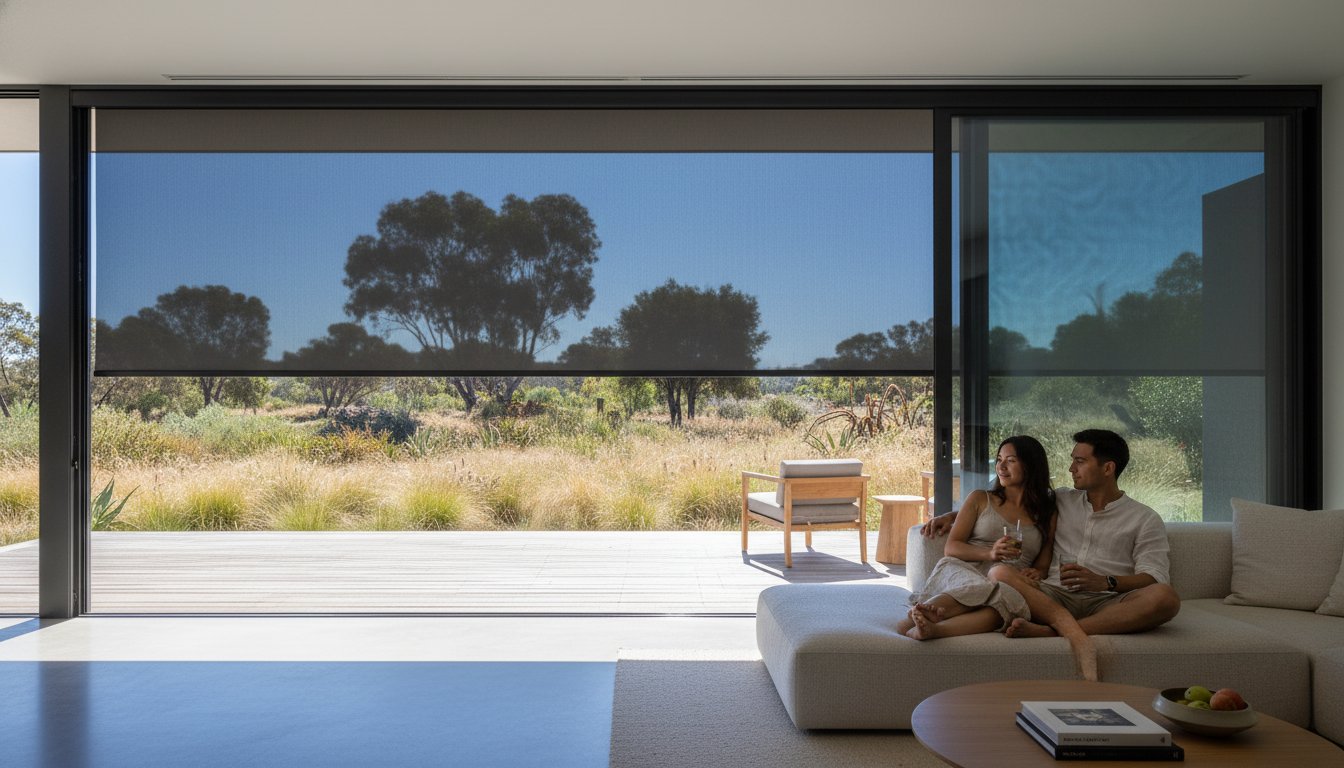
If you’re looking for the gold standard in heat protection, zipscreen outdoor blinds are the answer. These systems use a unique track-guided technology that locks the fabric into side channels. This creates a complete seal that prevents hot air from seeping around the edges of the blind. Because the fabric is held taut, it creates a stable insulating air pocket between the blind and the window, which acts as a powerful thermal buffer. Choosing these as your energy efficient blinds for summer heat ensures that no gaps are left for the sun to exploit. If you want to see how these fit your space, you can browse our range of blinds online to find the perfect match for your home’s exterior.
Pivot Arm and Straight Drop Options
Not every window requires a full seal, and that’s where other designs shine. Pivot Arm blinds are fantastic for windows that need to stay open for airflow. They project the fabric out at an angle, blocking direct vertical sun while still allowing breezes to circulate underneath. For large porches or alfresco areas, Straight Drop blinds offer a simple and cost-effective solution. When choosing your fabric, consider the mesh percentage to find your perfect balance:
- 1% Mesh: Provides maximum heat rejection and privacy, though your visibility is slightly more limited.
- 5% Mesh: This is the popular “sweet spot” that balances excellent heat protection with a clear view of the garden.
- 10% Mesh: Better for shaded areas where you want maximum airflow and aren’t as worried about intense afternoon sun.
Indoor Solutions: Blockout vs. Sunscreen Roller Blinds
While we’ve established that stopping the sun outside is your best move, indoor energy efficient blinds for summer heat act as your home’s vital second line of defence. They trap any residual warmth that manages to pass through the glass, creating a pocket of still air that acts as a thermal buffer. This secondary layer prevents hot air from circulating freely through your living spaces. According to the Australian Government, choosing the right energy efficient window coverings is essential because windows can account for up to 90% of heat gain during the peak of summer. By layering your window treatments, you ensure your air conditioner doesn’t have to work overtime.
The “Double Roller” strategy is the most effective way to manage these layers. This setup involves pairing two different fabrics on a single window. You use a sunscreen fabric during the day to maintain your view while blocking the majority of the heat, and then drop a blockout blind in the evening or during the hottest part of the day for maximum insulation. It’s a practical, DIY-friendly approach that gives you 24/7 control over your home’s climate. Unlike heavy curtains that can feel bulky and trap dust, these sleek roller systems provide a clean look and high-performance thermal rejection.
Why Blockout Roller Blinds Win for Bedrooms
North-facing bedrooms often become heat traps because they soak up the sun’s intensity all day long. This is where blockout roller blinds really shine. They use thick, multi-layered fabrics to provide total light control and significant heat rejection. When you’re choosing your fabric, always check the reverse side. A white or light-coloured backing is a secret weapon for energy efficiency. It reflects solar radiation back toward the window rather than absorbing it into the fabric and radiating it into your room. To maximize this effect, ensure your blinds are measured for a tight fit within the window reveal. This minimizes the “chimney effect” where heat leaks around the edges of the fabric.
Sunscreen Blinds for Living Areas
You shouldn’t have to choose between a cool house and a beautiful view. Sunscreen roller blinds are designed with a specialized weave that diffuses harsh sunlight and eliminates glare on your TV or computer screens. These blinds can cut up to 95% of the sun’s heat while still allowing you to see outside. Because they let in soft, natural light, you won’t need to turn on your lamps during the day. This reduces your reliance on artificial lighting, which keeps your rooms even cooler and helps lower your energy consumption. They’re a savvy choice for kitchens and lounge rooms where you spend most of your daylight hours.
How to Choose the Right Energy Efficient Blinds for Your Home
Choosing the right energy efficient blinds for summer heat involves more than just picking a pretty colour. You need to look at your home like a thermal map. Your North and West-facing windows are the heavy hitters. North windows soak up the sun all day long, while West-facing glass catches that brutal, low-angle afternoon heat that often makes sleep impossible. Prioritising these areas first ensures you get the biggest drop in your power bills for every dollar you spend. We’ve seen homeowners transform their comfort levels just by tackling these high-priority zones first.
Precision is your best friend here. A blind that’s even half a centimetre too small creates a gap where hot air can circulate freely. This is why we always recommend a custom fit over off-the-shelf options. When you measure for your own windows, you ensure a tight thermal seal that keeps the cool air in and the summer heat out. It’s a simple step that makes a massive difference in how your home feels on a 40-degree day. You don’t need a degree in engineering to get it right; you just need a steady hand and a good steel measuring tape.
The DIY Advantage for Australian Homeowners
One of the smartest ways to upgrade your home’s efficiency is to take the reigns yourself. By choosing diy blinds, you effectively cut out the middleman markup and expensive labour fees. This isn’t just about saving money, it’s about value. You can take those saved labour costs and reinvest them into premium, high-performance solar fabrics that might otherwise be out of reach. Custom-made blinds offer a level of precision that mass-produced products simply can’t match. This ensures your energy efficient blinds for summer heat perform at their absolute peak for years to come. You get the satisfaction of a job well done and a better product for your budget.
Material Matters: PVC, Polyester, and Coatings
The Australian sun is tough on fabrics, so durability is a top priority. Look for materials that are UV-stabilised to prevent the fabric from becoming brittle or fading over time. A blend of high-quality polyester and PVC is often the best choice for functional longevity. Colour also plays a significant role in thermal performance. Lighter shades like white, cream, or light grey reflect a higher percentage of solar radiation away from your home. If you live near the coast, look for easy-clean fabrics that won’t be damaged by salt air or dust buildup. Keeping your blinds clean actually helps maintain their reflective properties over time. If you’re ready to start your project, you can explore our custom blind range to find the perfect material for your specific climate.
Maximising Your ROI: Installation and Maintenance
Investing in energy efficient blinds for summer heat is a savvy move that pays dividends long after the initial purchase. To get the best return on your investment, you need to focus on two things: a precise installation and consistent, smart operation. When you handle the installation yourself, you have the unique advantage of ensuring every bracket is perfectly aligned for a gapless fit. This creates the tight thermal seal necessary to prevent warm air from creeping into your living spaces. Beyond the immediate relief of a cooler home, these high-quality window treatments add tangible value to your property. In 2026, energy efficiency is a top priority for Australian buyers, and having a complete system of solar-effective blinds can significantly boost your home’s appraisal and market appeal.
The secret to long-term performance lies in how you care for the technical fabrics. Most energy-efficient materials rely on specialized coatings or reflective backings to bounce UV rays away from your glass. If these surfaces become coated in thick dust or grime, their ability to reflect heat diminishes. By keeping your blinds clean, you ensure they continue to perform at their peak for years to come. It’s a simple case of protecting your assets so they can keep protecting your comfort.
Smart Operation for Summer Savings
Getting the most out of your blinds requires a proactive approach. We recommend adopting a “Morning Routine” where you close your blinds before the sun actually hits the glass. If you wait until the room feels hot, the greenhouse effect has already started. If you’re often away from home, consider smart motorization. Automated schedules can adjust your blinds based on the time of day, which can reduce cooling costs by up to 30% according to industry data. Don’t forget the “Night Flush” technique, either. Once the outside temperature drops below your indoor temperature in the evening, open your blinds and windows to let trapped heat escape and allow the evening breeze to cool your home’s thermal mass.
Cleaning for Longevity
A little bit of regular care goes a long way in the harsh Australian climate. Following a simple blind maintenance routine will prevent dust from settling into the weave of your solar fabrics. For those living near the coast, salt air can be particularly tough on hardware. We suggest wiping down your outdoor blind tracks and zips every few months to ensure they remain smooth and continue to provide a perfect seal. If you have Zipscreen Outdoor Blinds, keeping the side channels free of debris ensures the fabric remains taut and effective. A quick vacuum with a soft brush attachment on your indoor roller blinds is usually all it takes to keep them looking fresh and functioning perfectly.
Reclaim Your Comfort and Beat the Heat
Taking control of your home’s temperature doesn’t have to be a complicated or expensive ordeal. You now have the roadmap to transform your living space from a sweltering heat trap into a cool, energy-smart sanctuary. The key is a strategic combination of external shading to stop the sun at the glass and high-performance indoor layering to seal in the comfort. By choosing energy efficient blinds for summer heat that are custom-sized for your specific windows, you ensure the best possible thermal performance for your family.
We are a proud Australian family-owned and operated business, and we’ve designed our range to be custom-manufactured for the unique challenges of our harsh climate. Every custom product comes with a 3-year warranty, so you can take on your project with total confidence. You’ve got the knowledge to make a real difference in your home’s efficiency and your summer power bills. We are ready to help you bring that vision to life with quality, DIY-friendly solutions.
Browse our custom-made, energy-efficient blinds and start your DIY project today! It’s time to enjoy a cooler, more comfortable home on your own terms.
Frequently Asked Questions
Do energy efficient blinds really work for summer heat?
Yes, energy efficient blinds for summer heat are highly effective at reducing indoor temperatures. By creating a physical barrier between the sun and your living space, they can keep your home 5 to 7 degrees cooler on a hot day. This is because they significantly lower your home’s Solar Heat Gain Coefficient (SHGC), which is the measure of how much solar radiation enters through your windows.
Which is better for heat: internal or external blinds?
External blinds are generally more effective because they block solar radiation before it even touches the glass. This prevents the greenhouse effect from starting inside your room. While internal options like blockout roller blinds provide an excellent secondary thermal buffer, external systems like Zipscreen outdoor blinds are your primary line of defence for maximum temperature reduction.
Can I install energy efficient outdoor blinds myself?
You can definitely install energy efficient outdoor blinds yourself with the right guidance. Our DIY blinds are designed specifically for homeowners to measure and fit without needing a professional. We provide straightforward instructions for products like Zipscreen and Pivot Arm blinds. This approach allows you to achieve a high-end, professional result while saving on labour costs.
What colour blind is best for reflecting heat?
Lighter colours are the best choice for reflecting heat away from your home. Shades like white, cream, and light grey have higher solar reflectance; they bounce UV rays back outside rather than absorbing them. If you prefer a darker look for your interior, choose a blockout roller blind with a white or light-coloured backing to get the best of both worlds.
How much can I save on my energy bills with thermal blinds?
You can reduce your cooling costs by up to 30% when using smart motorized blinds that adjust to weather conditions. Even standard manual energy efficient blinds for summer heat make a massive difference by reducing the workload on your air conditioner. By keeping the heat out naturally, you don’t have to run your cooling systems as hard or as often during the peak of summer.
What is the difference between blockout and thermal blinds?
Blockout blinds focus primarily on light control, while thermal blinds prioritize heat rejection. However, high-quality blockout roller blinds often serve both purposes. They use multi-layered fabrics that provide excellent insulation. The main difference lies in the technical backing and the fit. A tight-fitting blockout blind creates a seal that offers superior thermal performance compared to standard window treatments.
Are honeycomb blinds better than roller blinds for summer?
Honeycomb blinds provide excellent insulation due to their cellular structure, but outdoor roller blinds are often the superior choice for the Australian summer. External blinds stop the sun’s rays before they hit the glass; this is far more effective than trying to insulate against heat that is already inside. For living areas, a sunscreen roller blind allows you to keep your view while still blocking 95% of solar heat.
How do I measure my windows for the best thermal fit?
Always use a steel tape measure and record the width and height at the top, middle, and bottom of the window reveal. Use the smallest width measurement to ensure your blind fits perfectly without any gaps. A snug fit is vital for energy efficiency because it prevents the “chimney effect” where hot air circulates behind the blind. Taking these three measurements ensures your custom DIY blinds provide a professional thermal seal.