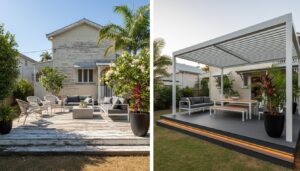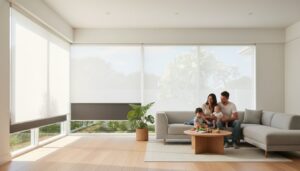

What if your patio wasn’t just a slab of concrete, but a flexible “second skin” for your home that adapts to the weather as quickly as you do? Many Australians are discovering that the right alfresco screening ideas can turn a scorching, exposed deck into a functional outdoor room that feels like a natural extension of the house. We know how it feels when the harsh afternoon sun makes your backyard unusable or when you lack the privacy needed to truly relax. It’s a common hurdle, especially since over one in three Australian households invested in home improvements through 2025 to better enjoy their living spaces.
We’re here to show you that a stylish, private sanctuary is well within reach without needing a professional crew. This guide will walk you through the best ways to block the wind, shade your windows to lower cooling costs, and keep the rain off your furniture. You’ll learn about durable, high-quality solutions like Zipscreen outdoor blinds and DIY privacy screens designed specifically for our local climate. From choosing the right materials to understanding how to zone your space for maximum utility, we’ll help you find a practical solution that makes your outdoor lifestyle better than ever.
Key Takeaways
- Learn how to transform your patio into a functional “outdoor room” using creative alfresco screening ideas that block the sun without sacrificing your view.
- Compare the flexibility of adjustable outdoor blinds against fixed decorative panels to see which solution best fits your daily lifestyle and home aesthetic.
- Identify the specific materials and hardware needed to protect your investment in harsh coastal environments or high-wind zones.
- Discover the secret to achieving a perfect, gap-free fit by following simple, professional measuring techniques for your DIY blinds.
- Save on total project costs by choosing a direct-to-consumer model that empowers you to install high-quality, bespoke screens on your own schedule.
Why Every Australian Home Needs Alfresco Screening
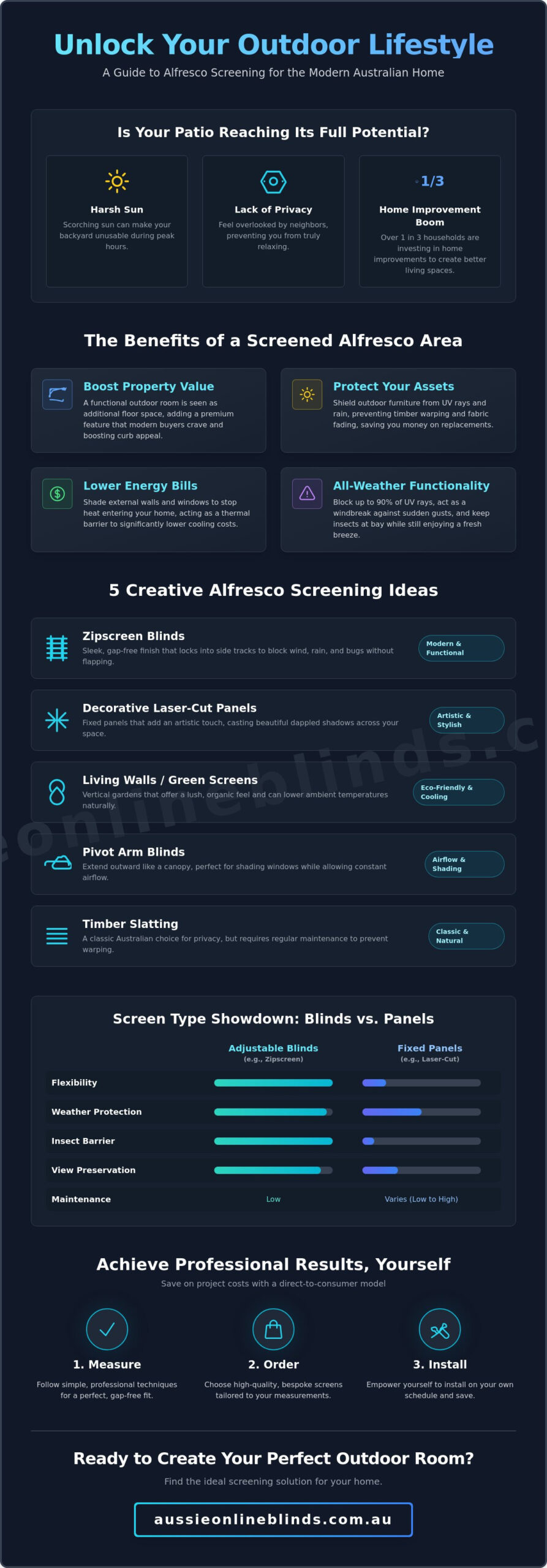
Living in Australia means we cherish our backyards, but the reality of the climate often makes them hard to enjoy. In 2025, over one in three Australian households undertook home improvement projects to better adapt their living spaces. This shift has turned the traditional patio into a sophisticated “outdoor room.” By exploring different alfresco screening ideas, you can create a space that feels like a natural extension of your home rather than just an exposed deck. It’s about taking control of your environment so you don’t have to retreat inside the moment the sun gets too hot or the wind picks up.
One of the most overlooked advantages of installing outdoor blinds or screens is the impact on your energy bills. When you shade your external walls and windows, you stop heat from entering your home in the first place. High-quality retractable solar shade screens and deep channel blinds act as a thermal barrier, significantly lowering your indoor cooling costs during those scorching January afternoons. Beyond the financial savings, there’s a huge psychological benefit to having a private sanctuary. In our busy suburban environments, a screened-off alfresco area provides a quiet retreat where you can unwind without feeling like the neighbors are watching every move.
Your outdoor furniture is also an investment that deserves protection. Constant exposure to UV rays and rain can cause timber to warp and fabrics to fade long before their time. A durable screening solution keeps your setting looking brand new for years, saving you money on replacements and maintenance. It’s a practical way to ensure your outdoor lifestyle is as stress-free as possible.
Beyond Privacy: The Functional Benefits
Modern alfresco screening ideas offer much more than just a visual barrier. With the right fabric choice, you can block up to 90% of harmful UV rays, making it safe for the kids to play outside even during peak sun hours. These systems also act as a windbreak, so your Sunday barbeques aren’t ruined by a sudden gust. If you choose a mesh with a tighter weave, you’ll also keep pesky insects at bay while still enjoying a fresh, natural breeze through your living area.
Boosting Your Property Value
A well-designed alfresco area counts as additional floor space in the eyes of many buyers. It creates an immediate aesthetic impact that boosts your home’s curb side appeal. By choosing low-maintenance, durable options like Zipscreen outdoor blinds or aluminum privacy screens, you’re adding a feature that modern homeowners crave. It shows that the property is versatile, weather-ready, and designed for a premium lifestyle, which can be a major selling point if you ever decide to move on.
5 Creative Alfresco Screening Ideas for Privacy and Style
Finding the right balance between a clear view and total privacy can be a challenge. When you’re exploring different alfresco screening ideas, it’s helpful to think about how you use your space at different times of the day. For broader home design inspiration to match your new outdoor space, ozkahome.com is a helpful resource. Here are five ways to transform your patio into a functional, stylish retreat.
- Zipscreen Blinds: These offer a sleek, gap-free finish that keeps out wind, rain, and bugs. Unlike traditional shades, they lock into side tracks so there’s no flapping in the breeze.
- Decorative Laser-Cut Panels: For those wanting a touch of art, these panels provide stunning creative screening ideas that cast beautiful dappled shadows across your deck.
- Living Walls: Vertical gardens or “green screens” can lower ambient temperatures through natural transpiration. They’re a top choice for homeowners who love biophilic design and want a lush, organic feel.
- Pivot Arm Blinds: These are perfect for areas that need constant airflow. They extend outward like a canopy, allowing air to circulate while still shading your windows from the harsh sun.
- Timber Slatting: This remains a classic Australian choice. It looks fantastic when first installed, but keep in mind it requires regular staining to prevent warping and silvering in our intense UV conditions.
High-Tech Solutions: The Rise of Zipscreen
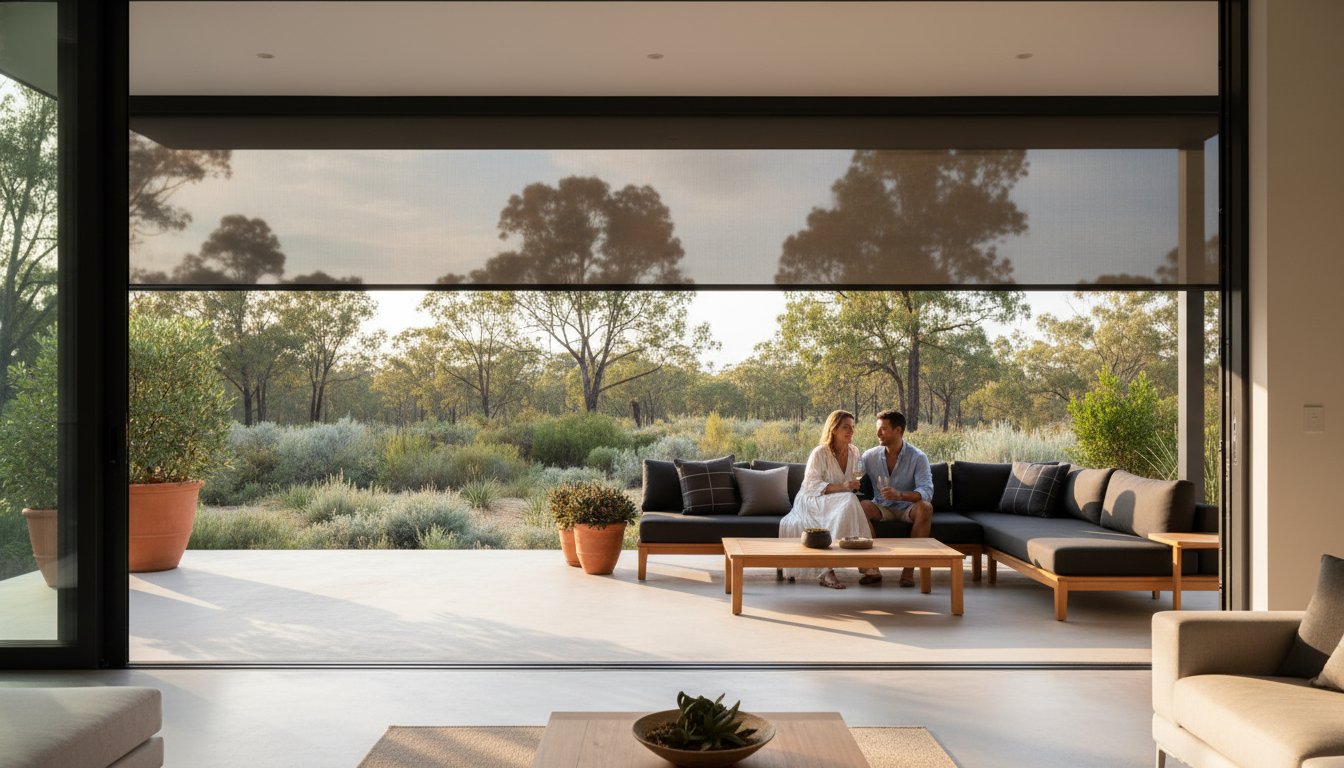
Zipscreen has quickly become the gold standard for modern Australian homes. It’s often referred to as “invisible” protection because you can maintain your view while blocking intense glare and heat. These zipscreen outdoor blinds are designed to be unobtrusive, retracting into a discreet headbox when you don’t need them. They’re the ideal choice for creating a seamless transition between your indoor kitchen and the outdoor dining area.
Natural vs. Synthetic Screening
Choosing between natural materials like timber and synthetic outdoor fabrics usually comes down to maintenance and longevity. While timber offers a warm feel, it often struggles with UV degradation over a five-year period. On the other hand, durable outdoor fabrics used in roller blinds are engineered specifically for our climate. In 2025, 40% of renovation projects included eco-friendly upgrades; choosing high-performance shade fabrics is a great way to join that trend by reducing your reliance on indoor air conditioning. If you’re ready to see how these options look in a real-world setting, you can browse a wide range of blinds online to find your perfect match.
Comparing Screen Types: Outdoor Blinds vs. Fixed Decorative Panels
When you’re weighing up different alfresco screening ideas, the biggest decision usually comes down to movement versus permanence. Fixed decorative panels look great as a permanent architectural feature, but they can’t adapt when the afternoon sun starts hitting your eyes or the wind begins to blow rain onto your lounge. That’s where the flexibility of adjustable systems really shines. Being able to open your space to catch a summer breeze or seal it tight to keep the warmth in during winter transforms your patio into a truly year-round room. The Australian climate changes fast, and your screening should be able to keep up.
From an installation perspective, there’s a world of difference between these two options. Heavy metal or glass panels often require structural reinforcements and can be quite a challenge to align perfectly on your own. In contrast, modern DIY blinds are designed specifically for the home handyman. They’re lightweight, come with straightforward instructions, and offer a minimalist look that doesn’t overwhelm your home’s existing style. While a bold laser-cut panel makes a big architectural statement, it’s always there, whereas a blind can disappear into its headbox when you want to maximize your view.
When to Choose Outdoor Blinds
Outdoor blinds are the best choice for areas that face the brunt of the elements. If your alfresco area gets hit by direct western sun or strong coastal winds, you need a solution that you can deploy at a moment’s notice. These outdoor blinds provide a versatile shield that protects your furniture and keeps your cooling costs down without blocking the scenery on those perfect, calm days. They’re also much easier to maintain than timber, requiring just a quick wipe down rather than regular sanding and painting. It’s a practical choice for busy families who want style without the ongoing chores.
When to Choose Fixed Decorative Panels
Fixed panels have their place, especially for boundary screening where privacy from neighbors is a 24/7 requirement. They work beautifully as a permanent backdrop for an outdoor kitchen or as a structural support for climbing plants. If you’re planning a DIY privacy screen project using timber or composite slats, you can create a high-end look that adds a lot of character to a plain wall. Many savvy homeowners are now opting for a hybrid approach: using fixed panels on the sides for permanent privacy and installing adjustable blinds across the main opening to maintain that essential connection with the backyard. It’s the best of both worlds, giving you a sturdy frame with the functional versatility of a retractable screen.
How to Choose the Right Screen for Your Climate
Choosing the right alfresco screening ideas isn’t just about matching your home’s color palette. It’s about understanding how your specific local weather will test your installation over time. What works for a sheltered balcony in Melbourne might not survive a summer on the Gold Coast. Australia’s climate is diverse, and your screening needs to be tough enough to handle everything from salt spray to intense inland heat. By selecting materials designed for your specific environment, you ensure your outdoor room remains a comfortable sanctuary for years to come.
If you live within a few kilometers of the ocean, salt air is your primary concern. It can corrode cheap hardware in months. You should prioritize rust-resistant aluminum components and marine-grade fabrics that won’t degrade in high humidity. For those in high-wind zones, Zipscreen and Wire Guide systems are essential. These designs keep the fabric locked tight within side tracks or stainless steel cables, preventing the blind from acting like a sail and damaging your home’s structure during a storm. If you frequently deal with summer afternoon rain, a deep channel system can help create a dry, enclosed space so you don’t have to scramble to move your cushions inside.
Understanding Fabric and Material Ratings
The “openness” factor of your screen fabric is a vital technical detail. A 1% openness weave blocks more UV rays and provides better rain protection, but it also restricts airflow. A 5% openness weave is often better for inland areas where you need a cooling breeze to stay comfortable. Color also plays a surprising role in thermal performance. While light colors reflect more heat, darker fabrics are actually better for maintaining your view of the garden because they reduce glare. In 2025, 40% of Australian renovation projects included eco-friendly upgrades; choosing a high-performance sunscreen fabric is a smart way to join this trend by naturally lowering your home’s internal temperature.
Durability and Warranty
Australian-made products are generally superior for our conditions because they’re tested against our unique UV levels. When you’re comparing options, look for powder-coated aluminum components rather than plastic ones, as plastic will quickly become brittle in the sun. A solid warranty is your best indicator of quality. It should cover both the fabric’s fade resistance and the mechanical parts of the system. Investing in high-quality hardware now prevents the frustration of parts seizing up after just one or two seasons. If you’re ready to protect your home with a solution built for the local sun, explore our range of durable outdoor blinds today.
DIY Alfresco Screening: High-End Results on a Budget
You’ve explored the best alfresco screening ideas and visualized how they’ll transform your backyard. Now, it’s time to talk about making that vision a reality without breaking the bank. Choosing the DIY route is the smartest way to get a premium look for a fraction of the cost. By skipping the expensive professional installation fees, you can redirect your budget toward higher-quality fabrics or motorized options. Most homeowners find that they can save a substantial amount on their total project cost simply by handling the assembly themselves. It’s a rewarding process that gives you total control over the final result.
The secret to a professional, gap-free fit isn’t magic; it’s precision. When you’re ready to order, always use a high-quality metal tape measure rather than a fabric one, as fabric can stretch and lead to inaccurate numbers. Measure your width and height in three different spots: top, middle, and bottom. This accounts for any slight “wonkiness” in your home’s structure, which is more common than you might think. Getting these measurements right ensures your new screens slide perfectly into place with no annoying light gaps at the edges.
Demystifying the DIY Process
There’s a common myth that custom screening is too complex for the average person to install. In reality, modern systems are designed for the home handyman. When you order diy blinds, they arrive as a complete kit with all the specialized hardware you need. You won’t need a workshop full of expensive gear. A power drill, a spirit level, a ladder, and a helping hand are usually enough to finish the job in a single Saturday. We’ve seen thousands of Australians successfully upgrade their homes this way, proving that professional results are attainable for everyone.
Achieving the Designer Look
To get that high-end “architectural” finish, pay close attention to your color choices. Match your screen’s headbox and side tracks to your existing window frames or gutters. This small detail makes the screening look like a built-in feature of the house rather than an afterthought. If you are considering a full exterior refresh to match your new installation, you can learn more about Deluxe FX Painting & Decorating for professional guidance. You can also boost the evening ambiance by integrating some simple outdoor lighting. Soft LED strips placed near the screens can create a warm glow that’s perfect for late-night entertaining. With a bit of patience and the right tools, you’ll be sitting back with a cold drink behind your new screens before the first sunset of the weekend.
Ready to Reclaim Your Outdoor Sanctuary?
We’re proud to be an Australian family-owned and operated business dedicated to helping you achieve high-end results on a DIY budget. With nationwide shipping across Australia and a 3-year warranty on all custom products, you can shop with total confidence. It’s time to stop letting the weather dictate when you use your backyard. Design your dream alfresco space with our custom DIY outdoor blinds and start enjoying your outdoor room today. You’ve got the plan and the inspiration; now it’s time to bring your vision to life.
Frequently Asked Questions
What is the best material for alfresco screening?
High-quality synthetic fabrics like PVC-coated polyester are generally the best choice for our local conditions. These materials are engineered to resist UV degradation and moisture, unlike timber which can warp or silver over time. When you are exploring different alfresco screening ideas, look for fabrics with a high UV block-out rating. This ensures you protect your furniture and lower your cooling costs while still allowing for natural airflow through the mesh.
Can I install alfresco screens myself to save money?
Yes, you can absolutely install these screens yourself to save on professional labor costs. Modern DIY blinds are designed for straightforward home assembly using basic tools like a power drill and a spirit level. We provide clear guidance to help you measure and fit your custom screens perfectly. This makes the process manageable for any homeowner who wants a high-end look without the extra expense of a professional crew.
Do alfresco screens block the wind and rain?
Most outdoor blinds are highly effective at blocking wind and light rain, which helps create a dry and comfortable environment. Systems like Zipscreen or deep channel blinds are particularly good because they seal the edges. This prevents gusts and splashes from entering your living space. While they aren’t designed to be completely waterproof in a heavy storm, they’ll keep your patio usable during typical summer showers and breezy afternoons.
Will an outdoor screen make my patio too dark?
Not necessarily, as the level of light depends on the “openness” factor of the fabric you choose. Sunscreen fabrics with a 5% openness rating block the majority of heat and glare while still letting in plenty of natural light. If you want a brighter space, you might choose a lighter fabric color. However, keep in mind that darker colors are actually better for reducing glare and maintaining a clear view of your garden.
How do I clean and maintain my alfresco screens?
Maintaining your screens is simple and only requires a regular wipe down with a soft cloth and lukewarm soapy water. You should avoid using harsh chemicals or high-pressure hoses, as these can damage the fabric’s protective coating. For the hardware, keep the side tracks clear of dirt and occasionally use a dry silicone spray to ensure the blinds glide smoothly. This easy routine helps your alfresco screening ideas stay looking fresh for years.
Do I need council approval for alfresco screening?
In most cases, installing retractable outdoor blinds or non-permanent screens does not require council approval. However, regulations can vary significantly depending on your local government and state. In Victoria, specific privacy screen rules apply if you’re within a 9-meter radius of a neighbor’s habitable window. It’s always a smart move to check with your local council’s planning department before starting any project that might be considered a permanent structure.
How much does it cost to screen a standard alfresco area?
The total cost varies based on the size of your area and the specific products you select. While we don’t provide fixed dollar amounts here, choosing DIY blinds is a proven way to keep your project on budget by removing professional installation fees. Generally, basic manual screens are the most cost-effective option. Motorized Zipscreen systems represent a higher initial investment due to their advanced technology and specialized hardware components.
What is the difference between Zipscreen and standard outdoor blinds?
The main difference lies in how the fabric is held in place along the sides. Zipscreen outdoor blinds use a unique technology that locks the fabric into side tracks, creating a totally sealed, gap-free barrier against wind and insects. Standard straight drop or wire guide blinds are excellent for sun protection, but they don’t offer the same level of total enclosure because the fabric isn’t physically locked into a track system.