
The best blinds for sliding glass doors aren’t always the ones that block the most light. Panel glide blinds move in sections across wide openings, while roller and vertical blinds offer different ways to balance privacy, light and access. For a busy doorway, how neatly a blind clears the opening matters as much as the fabric.
Choosing a style can feel like a trade-off: you want a comfortable room and privacy, but you don’t want to make the door awkward to use. This guide compares the main blind styles and fabrics, explains how panel glide blinds manage light, and outlines what affects blind costs when ordering through Aussie Online Blinds.
Use the practical checks below to narrow down options based on your door, the room and how you use the space. That makes it easier to choose a blind suited to everyday life, not just appearance.
Key Takeaways
- Choose a blind with the doorway’s everyday traffic in mind: styles that stack or lift away can help keep the opening clear.
- Panel glide blinds suit wide doors, but need wall space at the stacking side and won’t provide complete darkness.
- Compare how roller, vertical and Roman blinds handle access, privacy and light before settling on a style.
- Fabric choice affects the feel of the room and the light you let in, so weigh privacy and brightness alongside appearance.
- Use the Adelaide cost comparisons to understand how blind style and features can affect the overall budget.
Best Blinds for Sliding Glass Doors Cost in Adelaide
Roller blinds suit minimalist rooms, but their price depends on dimensions, fabric and operating options. Roman blinds are better suited to sliding doors with little or no foot traffic, as raised fabric can make frequent access less convenient.
Compare like with like: supply-only prices exclude installation, and custom sizing affects the final cost. A wide opening may need a different configuration from a narrow doorway. For roller blinds, consider whether one blind or multiple blinds suit the opening, and whether a double roller’s separate layers meet your light and privacy needs. Motorisation is another cost factor, with the total depending on the blind and selected system.
| Option | Supply-only cost | Useful comparison |
|---|---|---|
| Vertical blinds | Flexible access across the doorway | |
| Panel glide blinds | Broad fabric panels move along a track | |
| Roller blinds | Depends on specification | Simple, streamlined appearance |
| Roman blinds | Depends on specification | Better for lower-traffic doors |
Match the price to your priorities: frequent door use favours easy clearance, while a minimalist design may favour a roller blind.
For homes with children or pets, prioritise a design whose operating controls can be kept out of reach. Keep loose cords away from areas where children play or pets move, and follow the product’s safety instructions. A sleek appearance alone doesn’t make a blind the safest choice; the operating system and its position matter too.
Blinds can be installed without drilling only when their mounting system is designed for that method and suits the door frame. Sliding-door tracks commonly need secure fixing, so a no-drill option may not suit every opening. In a rental, get the property owner’s approval before making holes or permanent changes.
Roller blinds suit rooms where a clean, uncluttered look matters. A double roller adds a second layer for managing light and privacy, while a vertical blind’s separate vanes can move aside for access. Check how each design fits the recess and door handles before comparing specifications. For a motorised roller, include the motor and controls in the total rather than comparing fabric prices alone.
Before deciding, note the opening width, available recess and how often people pass through the doorway. Then compare the chosen blind’s full specification, operation, fabric and written guarantee. This gives you a more useful cost comparison than choosing by the lowest starting price alone.
Panel glide blinds for sliding glass doors and patio doors
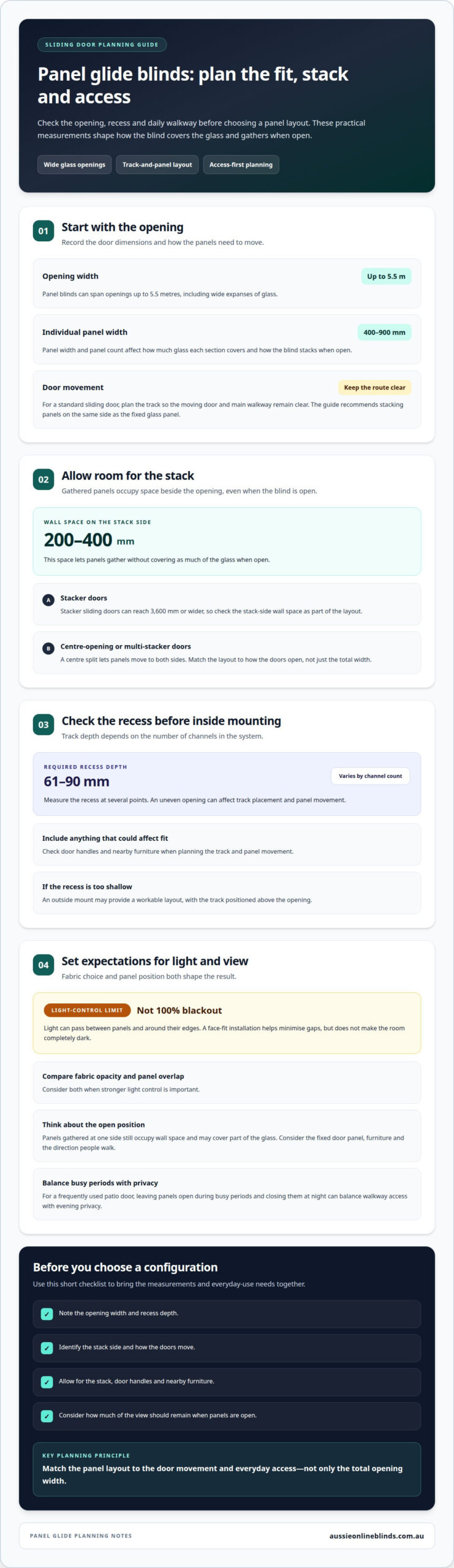
Panel glide blinds use broad fabric panels that travel along a track, making them a practical option for wide glass expanses. In Australia, panel blinds can span up to 5.5 metres, so they can cover openings that would need several narrower window treatments. Individual panel widths can range from 400mm to 900mm. The number and width of panels affect how much of the glass each section covers and how the blind stacks when open.
Operation is straightforward: slide the panels along the track to cover the glass or gather them at one side. For a standard sliding glass door, the track layout should leave the moving door and main walkway clear. The guide recommends stacking panels on the same side as the fixed glass panel. This keeps the access side more open when the panels are drawn back.
Wide doors need a little more planning. Stacker sliding doors can reach 3,600mm or wider, and panel glide systems need 200 to 400mm of wall space on the stack side. This space lets the panels gather without covering as much of the glass when open. For centre-opening or multi-stacker doors, a centre split lets the panels move to both sides. The layout should match how the doors open, not just the total width.
Recess depth matters for inside mounting. Panel glide tracks need 61mm to 90mm, depending on the number of channels. Measure the recess at several points, since an uneven opening can affect track placement and panel movement. Also account for door handles and any nearby furniture. If the recess is too shallow, an outside mount may provide a workable layout, with the track positioned above the opening.
Before settling on a configuration, note the opening width, recess depth, stack side and door movement. Then consider how much of the view you want to retain when the panels are open. Wider fabric panels mean fewer divisions across the glass, while a multi-channel track lets separate panels travel along different paths. These choices shape both the appearance and everyday operation.
For a patio opening with heavy daily traffic, prioritise an arrangement that clears the access route. If you’re comparing alternatives for your home, explore sliding-door blind options alongside the space and light-control needs you’ve identified.
Do panel glide blinds block out all the light?
No. Panel glide blinds don’t provide 100% total darkness, because light can pass between panels and around their edges. A face-fit installation helps minimise gaps around the blind, but it doesn’t make the room completely dark. If you need strong light control, compare the fabric’s opacity and the way the panels overlap before choosing a setup.
Traffic matters too. Panel blinds aren’t ideal in a busy doorway unless you leave them open during busy periods and close them at night. For example, a family using a patio door throughout the day may prefer clear access, then draw the panels for evening privacy. This routine balances a usable walkway with cover when the door sees less activity.
Width and stacking affect the view. When panels gather at one side, they still occupy wall space and may cover part of the glass. Consider the position of furniture, the fixed door panel and the direction people walk. A centre-opening layout can split the stack to both sides, while a single-side stack suits an opening with room on one side.
Privacy and glare are separate needs. A fabric that softens daylight may still let people see shapes from outside, while a more opaque fabric can reduce both the view and incoming light. Consider the room’s use: a living area may benefit from daylight and an outward view, while a bedroom may need greater privacy after dark. Fabric colour affects the room’s appearance, but doesn’t determine darkness by itself.
Veri Shades are another style to consider for a glass door. Compare how their sections move and how much of the opening remains covered when you walk through. As with panel glide blinds, weigh the fabric and gaps against your privacy needs. Shutters and curtains can also cover glass, but their panels or gathered fabric may affect access differently.
Smart blind controls can make opening and closing easier, especially when reaching the track is inconvenient. They change how you operate the blinds, not how much light the fabric blocks. Set a simple routine, such as opening the covering before using the door and closing it at night. The fabric, panel overlap and fit still determine light control.
To compare options, first decide whether daytime access, privacy or reduced glare matters most. Then assess light gaps, the view and stack position against that priority. For example, if you want a clear daytime view, choose a setup that gathers neatly; if nighttime privacy matters more, focus on coverage and fabric opacity.
Blind types listed for sliding doors
A sliding door needs a covering suited to its width, traffic and available space. Options include vertical blinds, panel blinds, roller blinds, Roman blinds, timber-look Venetian blinds and plantation shutters. Each handles the opening differently. Before choosing a style, compare how it moves, where it sits when open and whether it suits the room’s everyday use.
Vertical blinds suit broad openings and can span up to 5.5 metres in one blind. Their blades turn to adjust light, then move aside to open the doorway. Blade widths of 89 mm or 127 mm create different looks across the glass. Chainless versions use sewn-in weights instead of traditional bottom chains. This style is worth considering when a wide door needs adjustable coverage.
Panel blinds use fabric sections that glide along a track. Their broad panels create a contemporary look across a patio door, but need wall space to gather. The stack position affects how much glass remains covered when open. For example, a doorway beside a wall may suit a one-sided stack, while a centre-opening layout can split panels across both sides.
Roller blinds roll fabric above the glass when raised, giving the room a streamlined appearance. Custom roller blinds can span up to 3 metres in one blind. If the opening is wider, the door’s overall width becomes an important part of choosing the arrangement. Fabric selection also shapes the balance between privacy, light and view, so consider the room’s use before settling on a finish.
Roman blinds fold fabric as they lift and are better suited to sliding doors with no or low traffic. In Australia, they most often span up to 2500mm, with some exceptions. Compare that width with the glass area and think about how often the doorway is used. A frequently used door may be less convenient if the blind needs to be raised clear for access.
Timber-look Venetian blinds have adjustable slats, but custom-made versions can span up to 2700mm. Check the opening width against that limit when considering a single blind. Plantation shutters offer a structured look, but their panels take up room space. They’re not ideal for high-traffic sliding doors where people regularly pass through.
Use the door’s width and daily traffic as your first filters. Vertical blinds suit broad spans, while panel blinds offer wide fabric sections. Roller blinds provide a clean profile, and Roman blinds are better for low-traffic openings. Consider timber-look Venetians within their span, and avoid shutters where their panels could obstruct movement.
What are the pros and cons of roller blinds, cellular blinds and curtains for sliding glass doors?
Roller blinds, cellular blinds and curtains solve different problems across a large glass door. Compare how each handles insulation, light and everyday access before choosing. Cellular blinds provide strong insulation because their structure traps air. Thick blockout curtains can also insulate a large expanse of glass. Roller blinds offer a simpler profile, but fabric choice affects light control.
Roller blinds keep the covering close to the window when raised, which suits a neat, uncluttered room. Blockout fabric helps reduce incoming light, while sunscreen fabric maintains more daylight and an outward view. A double roller combines two layers for different light-control needs. The trade-off is coverage: check how the blind fits the door and whether its operating position leaves enough clear access.
Cellular blinds are worth considering when insulation is the priority. Their cellular structure traps air, helping create a barrier across the glass. That makes them an option to compare in a room that feels uncomfortable beside a large glazed opening. Their appearance and operation differ from a roller blind, so consider how they sit beside the door and whether the fabric suits the room’s light and privacy needs.
Curtains can provide better insulation over a large glass expanse when they’re made from thick blockout fabric. They also create a softer, fuller finish than a roller blind. The main drawback is the fabric stack: bunched curtain fabric can permanently obscure 20% of a sliding glass door. That lost glass area matters if you want an open view or a clear path through the doorway.
Use the room’s main need to guide your comparison. For insulation, start with cellular blinds, then consider thick blockout curtains for broad coverage. For a streamlined look and adjustable light control, compare roller fabrics. If retaining the view matters, factor in how much fabric or blind remains across the glass when open. For frequent access, prioritise the option that clears the doorway most effectively.
Before deciding, compare these points for your specific door:
- Insulation: cellular blinds trap air; thick blockout curtains cover a larger glass area.
- View: check how much fabric remains across the glass when each option is open.
- Light: match roller fabric opacity to your privacy and daylight preferences.
- Access: consider where curtains gather or a blind sits beside the doorway.
If a streamlined covering suits your room, compare blockout roller blind options against your light-control and access needs.
Aussie Online Blinds
Aussie Online Blinds can help you consider blind options when your sliding glass doors open onto a patio or outdoor area. If your priority is shade or privacy outside the home, compare Outdoor Blinds, Zipscreen Outdoor Blinds, Deep Channel Blinds and Pivot Arm Blinds. Each option addresses an outdoor setting, so start by identifying whether you want to screen the opening or shade the space beyond it.
Keep indoor and outdoor needs distinct: a blind covering the room’s glass door serves a different purpose from an outdoor blind across a patio opening. Once you know which area you want to address, explore the relevant option and how it suits your space.
For help with your outdoor blind choice, contact Aussie Online Blinds.
Make your next choice with confidence
The right choice starts with how you want the room to feel and function. Before deciding, picture a typical day: how often the door opens, whether you want a clear view outside, and when privacy matters most. These priorities help you weigh style against everyday use, rather than choosing by appearance alone. The best blinds for sliding glass doors are the ones that work naturally with your space and routines.
Next, note the opening’s layout and practical details, such as available wall space and the direction the door moves. Keep those details alongside your priorities as you explore suitable options. A clear starting point makes it easier to focus on what matters and avoid choices that don’t fit your home.
If you’re ready to take the next step, talk with Aussie Online Blinds about your project. A considered choice can help your doorway feel more comfortable and work better every day.
Frequently Asked Questions
What sort of blind should I put on a sliding door?
Choose a blind that clears the doorway in the way your household uses it. For a busy family entrance, consider how the covering moves aside and whether it obstructs the path. For a wide opening, panel blinds or vertical blinds provide coverage across a broad span. If a streamlined appearance matters most, a roller blind may suit. The best blinds for sliding glass doors depend on access, privacy and light priorities.
Can I Install Blinds Inside the Recess of Sliding Doors?
Yes, an inside mount can work if the recess has enough depth for the chosen track and doesn’t obstruct the door. Requirements differ by style: vertical blind systems need at least 33mm, while panel glide tracks need 61mm to 90mm, depending on channel count. Allow for handles and moving panels too. A recess that can’t accommodate the track may require an outside mount instead.
What types of blinds work best for sliding glass doors in Australia?
Vertical blinds, panel glide blinds and roller blinds are common styles to compare for Australian sliding doors. Choose based on the opening’s width, traffic and desired light control, rather than selecting by appearance alone. For example, a frequently used patio entry benefits from a covering that moves clear of the walkway. A bedroom door may need greater privacy. Fabric and track layout also shape the result.
Are vertical blinds or panel glide blinds better for sliding doors?
Vertical blinds suit wide openings and let you adjust light by turning the blades. Panel glide blinds use broader fabric sections that slide across a track, creating a different look. Compare how each stacks when open: panel systems need 200 to 400mm of wall space at the stack side. The better option depends on the wall area available and whether you prefer adjustable blades or larger fabric panels.
How much do sliding door blinds cost in Australia, including installation?
At Aussie Online Blinds, estimated supply-only starting prices are approximately $150 to $300 for standard vertical blinds and $300 to $600 for panel glide blinds, depending on dimensions. These figures generally exclude professional installation. An installed total depends on the blind configuration, the opening and the work involved in fitting it. Compare quotes by checking whether they include the blind, track, installation and any selected operating upgrades, so you’re comparing the same scope.
Which blinds are best for blocking heat, glare and UV on Australian sliding doors?
For insulation, cellular blinds trap air in their structure. To manage glare while retaining daylight, consider sunscreen fabric. Sunscreen fabric for roller blinds is described as providing 80-97% UV protection when drawn. Blockout fabric prioritises limiting incoming light, while sunscreen fabric balances light and view differently. Match the fabric to the room’s exposure and use, such as reducing glare in a sunny living area.
How should blinds be measured and fitted for a sliding glass door?
Take three width measurements and three height measurements, then use the smallest measurement for a recess fit. Check that the frame is even and note handles or other obstructions before choosing the mount. For a face fit, measure beyond the glass area to reduce edge gaps. Follow the fitting instructions for the selected system, since track placement and required clearance vary between roller, vertical and panel designs.
Do sliding door blinds need to stack on the opening side, and how much space do they require?
They don’t have to stack on the opening side. For a sliding door, stacking on the same side as the fixed glass panel helps keep the walkway clear. Panel glide systems need 200 to 400mm of wall space on the stack side. For centre-opening or multi-stacker doors, a centre split lets panels move to both sides. Choose the layout around the door’s movement and nearby furniture.