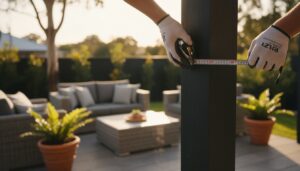

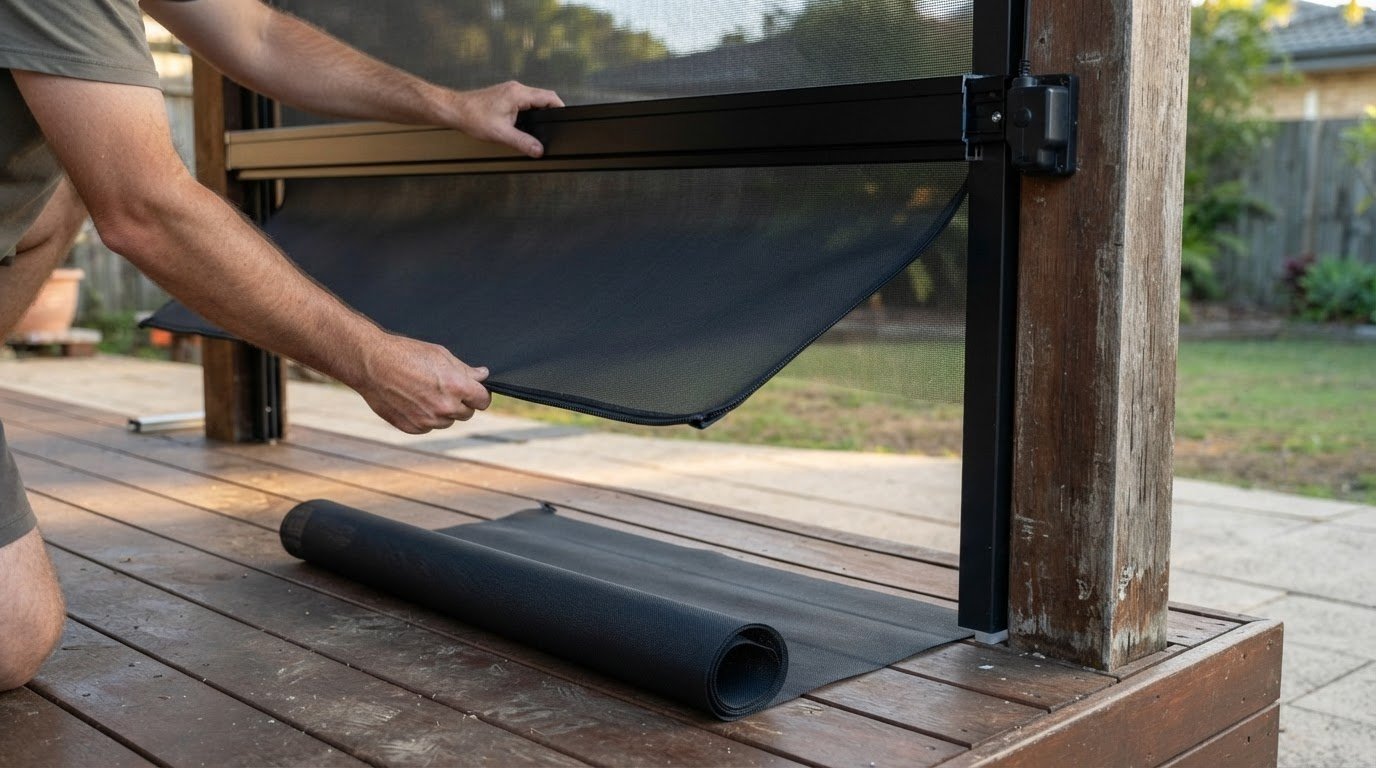
Replacing the fabric doesn’t always mean replacing the whole blind. A zipscreen fabric panel may be replaceable if the existing hardware, attachment method and replacement material are compatible. The system’s condition and configuration help determine whether a fabric-only replacement is practical.
If your zipscreen fabric is worn or damaged, you may be wondering whether the rest of the blind needs replacing too. This guide explains what affects fabric replacement, how crank, spring and motorised controls work, and what installation involves. It also covers how fabric choices affect light, views and shelter, and what to consider in wind and rain.
Key Takeaways
- Fabric replacement may be possible without replacing a zipscreen system; hardware, attachment method, condition and replacement material all matter.
- Compare crank, spring and motorised controls by how you want to operate the blind and the requirements of the chosen setup.
- Installation depends on suitable supporting structure, while hardwired motor installation requires a professional electrician.
- Wind-test results don’t make a zipscreen a weatherproof enclosure; fabric, roof, sides, floor and installation affect the shelter it provides.
- Aussie Online Blinds offers Zipscreen Outdoor Blinds, with other outdoor blind options to suit different openings and needs.
Concealed z-LOCK fabric retention
A guided outdoor blind holds its fabric differently from a free-hanging screen. In the z-LOCK system, a zip-guided edge runs inside side channels, helping retain the fabric along both sides. This concealed arrangement guides the edges as the blind moves, rather than leaving them free to swing outside the channels.
That retention detail matters when you’re considering replacing an existing panel. Fabric replacement may be possible, depending on the blind’s hardware, how the fabric attaches, the system’s condition and whether the replacement material suits it. Don’t assume a panel designed for one guided system will fit another. Check the system type and attachment method together, not just the fabric’s appearance or measurements.
Fabric tensioning also contributes to a neat fit. Ultra-Lock is associated with fabric tensioning, but it isn’t interchangeable with z-LOCK retention. One describes tensioning; the other describes zip-guided side retention. A replacement panel must suit the hardware and sit evenly within its channels. A loose edge, uneven tracking or fabric that pulls awkwardly can signal a mismatch or a problem that needs attention.
Material choice changes how an opening feels. Mesh filters light while preserving some view, depending on the fabric and lighting. At night, interior or alfresco lights can make a mesh screen less private from outside. Clear PVC provides a different view and shelter experience, and needs different care from mesh. Its behaviour can also vary with temperature, so choose a material that suits how you use the space.
Panel construction can vary to suit the opening. A fabric panel may be single, joined in the middle or wing-joined to suit the required measurements. The existing layout matters when assessing a replacement: a new panel needs to suit the opening and system, not simply resemble the old one. Separated joins, worn edges or fabric that no longer tracks smoothly are all relevant signs of the blind’s condition.
Strength figures also need context. A fabric sample tested by Rollease Acmeda’s Innovation and Design team exceeded a load of 400 kg. That result describes the tested sample, not a guarantee that every installed blind withstands the same load. Fabric, joins, channels and installation all form part of the working system.
Unlike shutters, zip-guided blinds use a flexible fabric panel rather than rigid slats. Unlike flyscreens, their fabric can also filter light and provide some shelter. They differ from ordinary outdoor blinds that don’t have guided side retention.
Common concerns include fabric damage, poor tracking and wear around the edges or joins. Warranty terms depend on the product and its stated coverage. Read the specific exclusions and conditions before arranging repairs or replacement.
Crank, spring and motorised controls
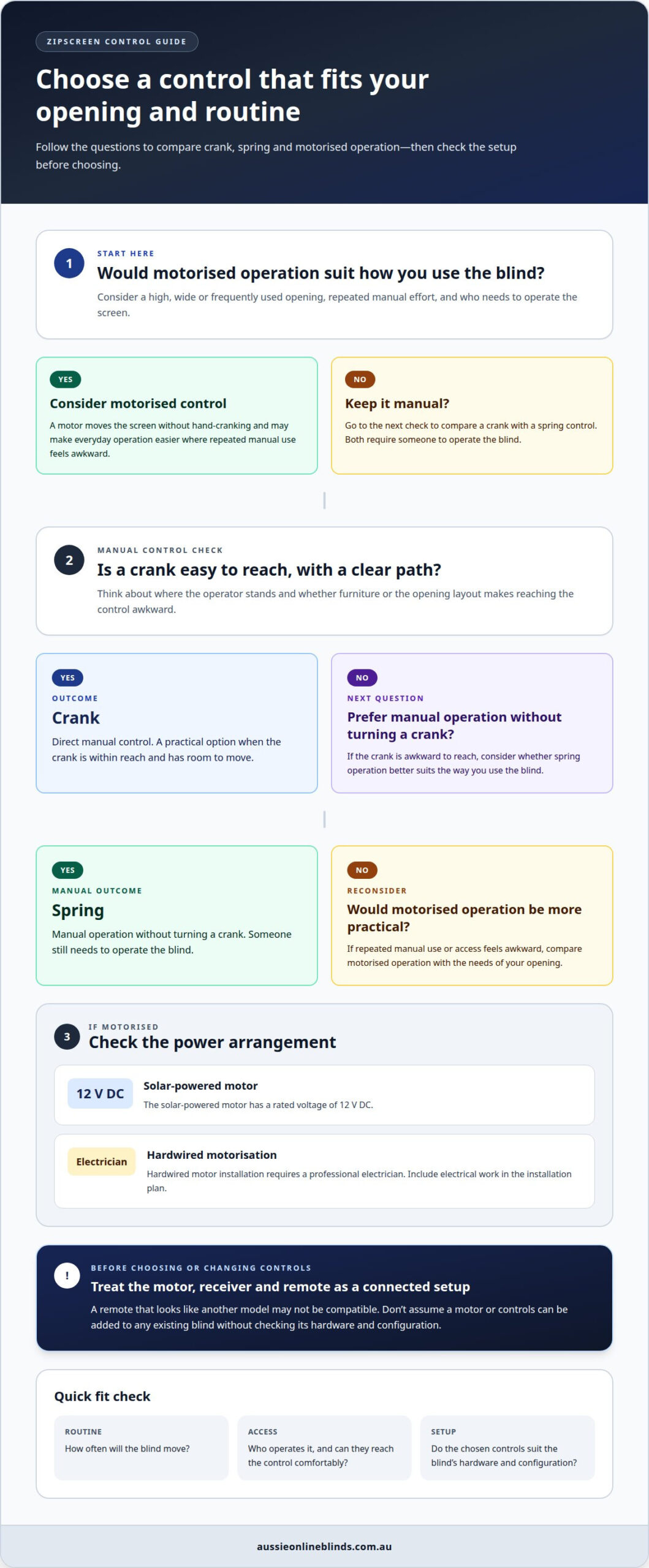
Crank, spring and motorised controls are available for Zipscreen systems. Each changes how you raise and lower the blind, so consider the opening and the people who will use it. A crank provides direct manual control. A spring option is also operated manually, while a motor moves the screen without hand-cranking. The right choice depends on your routine, access and preferred operating method.
For an opening you use less often, manual controls may suit a simple raising and lowering routine. Check that the crank is within reach and has a clear path. A spring control avoids turning a crank, but still requires someone to operate the blind. For a high, wide or frequently used opening, motorisation may make everyday operation easier. Consider these needs when choosing a zipscreen setup.
Motorised systems also have different power arrangements. A solar-powered motor has a rated voltage of 12 V DC. Hardwired motorisation is another option, with electrical installation needs addressed separately. Choose based on how the opening is used and the control method that fits your space. Don’t assume a motor or its controls can be added to any existing blind without considering its hardware and configuration.
- Crank: Choose this for manual operation when the control is easy to reach.
- Spring: Consider this when you prefer manual operation without turning a crank.
- Motorised: Consider this for convenient operation, especially where repeated manual use feels awkward.
Accessibility involves more than choosing a control type. Consider who will operate the screen, where they’ll stand and whether they can reach the control comfortably. For example, a crank positioned behind outdoor furniture may be awkward to use. Motorised control can reduce repeated manual effort, but the control itself still needs to suit its users. Think through the whole routine, from reaching the control to moving the blind through its travel.
Take care when choosing a remote. A remote that looks like another model isn’t necessarily compatible with the motorisation hardware. The remote and motor need to be compatible parts of the chosen setup. When replacing or changing controls, treat the motor, receiver and remote as a connected system. Matching by appearance alone can leave your zipscreen with incompatible components.
For a new opening, compare manual and motorised outdoor blind options against the way you’ll use the space each day. Consider who needs to operate it, how often it will move and which control feels practical. These points help narrow your choice before selecting a zipscreen control arrangement.
Installation and supporting structure
A guided blind needs sound support at its mounting points. Before installation, identify where the headbox and side channels will attach. The surface could be a wall, post or beam, and must suit the fixing method. A level, unobstructed opening also helps the blind travel properly. If the structure is uneven or weak, address the mounting plan before fitting begins.
Hardwired motor installation requires a professional electrician. Include the electrical work in the installation plan, rather than treating it as part of the blind’s mechanical fitting. A solar-powered motor has a rated voltage of 12 V DC, so its power arrangement differs from a hardwired setup. The motor type, access to power and mounting position all affect the installation sequence.
For Australian properties, whether building rules, council approval or strata by-laws apply depends on the property and proposed work. Consider these separately before installation, especially in shared buildings or when making visible exterior changes. A strata by-law can apply to a unit even when the work seems limited to one opening.
Cost depends on the opening’s width and drop, the chosen configuration and any site work. Motorisation can also involve a separate electrical allowance. Ask for a written quote that separates the blind, fitting work and any electrical component, so you can compare like with like. There is no single fixed cost for every opening or installation.
To get a useful Australian installation quote, prepare the details that shape the job:
- Opening: Provide the width, drop and number of openings.
- Mounting: Describe the fixing surface and any obstructions, such as beams or outdoor lights.
- Controls: Specify crank, spring or motorised operation.
- Power: State whether you’re considering a hardwired motor or a solar-powered option.
- Scope: Ask the quote to separate blind supply, installation and electrical work.
These details help installers assess the opening and define what their quote covers. A quote should reflect the actual site, not just the blind’s nominal size. For example, a clear opening with an accessible mounting surface presents different installation needs from a narrow space with an obstructing beam.
Installation resources can help you plan the sequence and understand the product components. Follow the instructions for the specific system, since parts from guided blinds aren’t automatically interchangeable. For a DIY installation, confirm the fixing surface, mounting positions and available working space before starting. Stop if the structure or fitting method is unclear, particularly around electrical work.
Good preparation brings together the opening, support structure and control choice. A careful site assessment can reveal issues before fitting, while a clearly scoped quote makes the proposed work easier to understand.
Manual and motorised operation
Smooth operation starts with a clear path. Before raising or lowering a zipscreen, move furniture, pot plants and loose items away from its travel area. Watch both side channels as the fabric moves. If an edge catches or the blind stops moving smoothly, pause rather than forcing it. A sudden pull can put extra strain on the fabric or operating parts.
Operate a manual blind with its crank or spring control as designed. Keep the movement steady and avoid pulling the fabric by hand. If a crank feels unusually stiff, for example, stop and look for an obstruction instead of pushing harder. A change in effort may point to something affecting the blind’s movement, not a need to use more force.
- Before moving: Clear objects from the blind’s path and check the opening.
- During movement: Operate the control smoothly and watch for uneven travel.
- If movement changes: Stop, note what happened and consult the product instructions.
Motorised operation uses a motor and control system instead of hand movement. Use the supplied control for the intended blind, rather than assuming a similar-looking remote will work. For instance, a remote from another room’s blind may look familiar but still be incompatible. If the blind doesn’t respond, check the control’s instructions and the system’s power arrangement before trying repeated commands.
Cleaning helps maintain smooth movement, but the method should suit the fabric and hardware. Keep loose leaves and dust clear of the side channels. Clean accessible surfaces according to the care instructions for the specific fabric. Mesh and clear PVC have different care needs, so don’t assume the same method suits both. Avoid pushing debris deeper into a channel or applying a product without checking that it’s suitable.
Pay attention to changes in motor operation. A motor that pauses, sounds different or moves the blind unevenly needs attention. Stop operating it repeatedly, then note whether the issue occurs while raising, lowering or both. That detail can help identify whether the control, power supply or blind’s movement may be involved. Hardwired systems require a professional electrician for electrical installation and work.
Keep the system instructions with the remote or crank. They help identify the control type, explain how to operate it and guide routine care. If you’re considering a replacement remote or motor, match it to the existing hardware rather than relying on appearance. A compatible control supports predictable operation; an incompatible one can leave the blind unresponsive.
For everyday use, keep the track clear, operate the blind gently and stop if its movement changes. These simple steps help protect the fabric and operating system.
What about wind and rain?
A guided outdoor blind can reduce exposure, but it isn’t a weatherproof wall. The Rollease Acmeda Zipscreen System withstood wind speeds of up to 140 km/h during independent testing at the Monash University Wind Tunnel facility. That result describes a tested system under test conditions. It isn’t a promise that every installed blind or opening will handle the same wind.
Wind affects the whole installation, not just the fabric. The blind’s side channels, fixings and supporting structure all form part of the system. The opening’s exposure and surrounding layout matter too. A sheltered patio beside a house faces different conditions from an exposed deck with open sides. Consider where gusts reach the blind and how the structure supports it.
Rain protection has limits too. Don’t assume a guided screen will make an alfresco area completely waterproof. The fabric, gaps at the sides, floor conditions, roof coverage and installation all affect how much shelter the space provides. For example, rain can still enter through an open side or reach the area beneath the blind. A screen can help moderate exposure, but it doesn’t replace a weatherproof building enclosure.
Fabric choice affects the experience in wet weather. Mesh filters light while preserving some view, depending on the material and lighting. Clear PVC offers a different view and shelter experience, with different care needs and temperature-related behaviour. Neither choice changes the basic limits of an open-sided outdoor area. Consider the roof, floor drainage and likely direction of rain alongside the fabric.
- Check the setting: Note open sides, nearby walls and the roof over the opening.
- Consider rain paths: Look at how water may enter around edges or reach the floor.
- Choose fabric thoughtfully: Balance view, light filtering and shelter needs.
- Understand the test: Treat the Monash University result as test information, not a site-specific rating.
For practical decisions, distinguish wind testing from weatherproofing. The 140 km/h test result doesn’t establish that an individual blind can remain deployed safely in every storm. Conditions vary with the opening, the installation and the supporting structure. Use the operating and care guidance supplied for the particular system, and consider how you’ll manage the blind when local weather changes.
Before choosing a screen, assess the whole outdoor area. A deep roof may shelter the opening from rain above, while open sides can still let wind-driven rain enter. A hard floor may drain differently from a deck. These details help set realistic expectations for comfort and protection.
Explore outdoor blind options to find a screen suited to your opening and exposure.
Aussie Online Blinds: Zipscreen Outdoor Blinds
Aussie Online Blinds offers Zipscreen Outdoor Blinds for homeowners planning a guided screen for an outdoor opening. When comparing options, consider how you use the opening, how much shelter you want and whether fabric replacement or a new blind makes more sense.
Outdoor Blinds provide another way to create shade and shelter. Deep Channel Blinds and Pivot Arm Blinds offer different approaches for outdoor spaces. Match the option to your opening and everyday needs, keeping in mind that wind and rain protection depends on the whole setting, not the blind alone.
To take the next step, narrow down your preferred blind type, fabric and control style. Contact Aussie Online Blinds to discuss your outdoor blind options.
Make the next choice work for your space
Changing the fabric can be an opportunity to rethink how the opening serves your home. Before choosing a replacement, picture an ordinary day: how you use the area, what you want to see through the screen and how often you’ll operate it. These priorities can help you choose a setup that works in practice, not just one that resembles the existing blind.
For an existing zipscreen, let the system’s condition guide your decision about keeping its hardware or choosing a new blind. Knowing what outcome you want also makes the next step more useful. Note what matters most, such as preserving a view, improving shade or making operation more convenient. Then consider which option best supports that goal in your outdoor area.
Ready to explore a suitable option? Contact Aussie Online Blinds to discuss your outdoor blind needs and take the next step with confidence.
Frequently Asked Questions
Can I replace the fabric without replacing the system?
Yes, fabric-only replacement may be possible if the existing blind’s hardware and attachment method suit the new panel. For example, a panel with different joins or edge construction may not work with the original side channels. The system’s condition matters too: replacing the fabric alone may not address worn or damaged components. Identify the system and panel configuration before deciding which replacement route suits.
Can a guided blind make my alfresco completely waterproof?
No. A guided blind isn’t a substitute for a weatherproof building enclosure. Rain can enter through open sides or reach the floor, even when the screen is lowered. For example, a covered patio with open ends has different exposure from an enclosed area. The fabric, roof, side gaps, floor and installation all affect the level of shelter, so assess the whole alfresco area, not just the blind.
What is a Ziptrak-style outdoor zip screen and how does it work?
A zip-guided outdoor screen has fabric edges that travel within side channels, helping guide and retain the panel as it moves. The term “Ziptrak-style” doesn’t mean different guided systems share compatible parts. A Zipscreen is a distinct system, and its components shouldn’t be assumed to fit another brand or setup. Identify the system before ordering replacement fabric or components, especially if an existing blind needs repair.
What are zip screens used for in Australian homes?
Australian homeowners use guided outdoor screens to create shade and added shelter around openings such as patios, balconies and verandas. Depending on the fabric, a screen can also help define an outdoor area while preserving some view. For example, it may suit a patio where you want filtered light without closing the space with a solid wall. Choose according to how you use the area and what you want from the view.
Which Australian zip screen brands and products are available?
Available products include Zipscreen Outdoor Blinds and other outdoor blind styles. Aussie Online Blinds also offers Outdoor Blinds, Deep Channel Blinds and Pivot Arm Blinds. These are distinct options, not interchangeable names for the same system. To narrow down your choice, consider the shape of the opening and how you want the blind to operate. Choose a product type that suits the space, not just one that sounds familiar.
What fabrics and mesh options are available for zip screens, and how much light and airflow do they allow?
Fabric choices include mesh and clear PVC, which provide different views and shelter. Mesh filters light and preserves some view, depending on the fabric and lighting. The exact light level varies by material, so a general description can’t predict the result for every screen. Mesh privacy can also change at night when the outdoor area is lit. Airflow depends on the material and screen setup.
Can zip screens withstand wind, rain and coastal conditions in Australia?
Wind and rain performance depends on the complete installation and the opening’s exposure. Don’t treat wind testing as a rating for every home or coastal site. A blind also can’t make an open alfresco area fully waterproof. Consider the supporting structure, roof, side exposure and floor conditions together. For a coastal opening, choose according to its actual exposure and intended use rather than assuming every guided screen is equally suitable.
What are the installation steps and lead times for zip screens?
A DIY order generally follows four stages: choose a style, measure the opening, customise and order online, then install using the product guide. For motorised blinds with hardwiring, electrical installation requires a professional electrician. Customer reviews report delivery within 8-9 days, but that refers to delivery, not an installation appointment or guaranteed timeframe. Allow for the product’s made-to-measure process and delivery arrangements when planning your project.