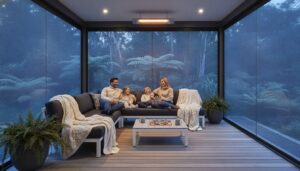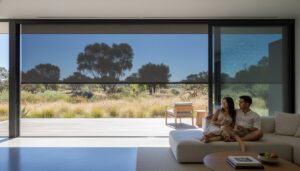

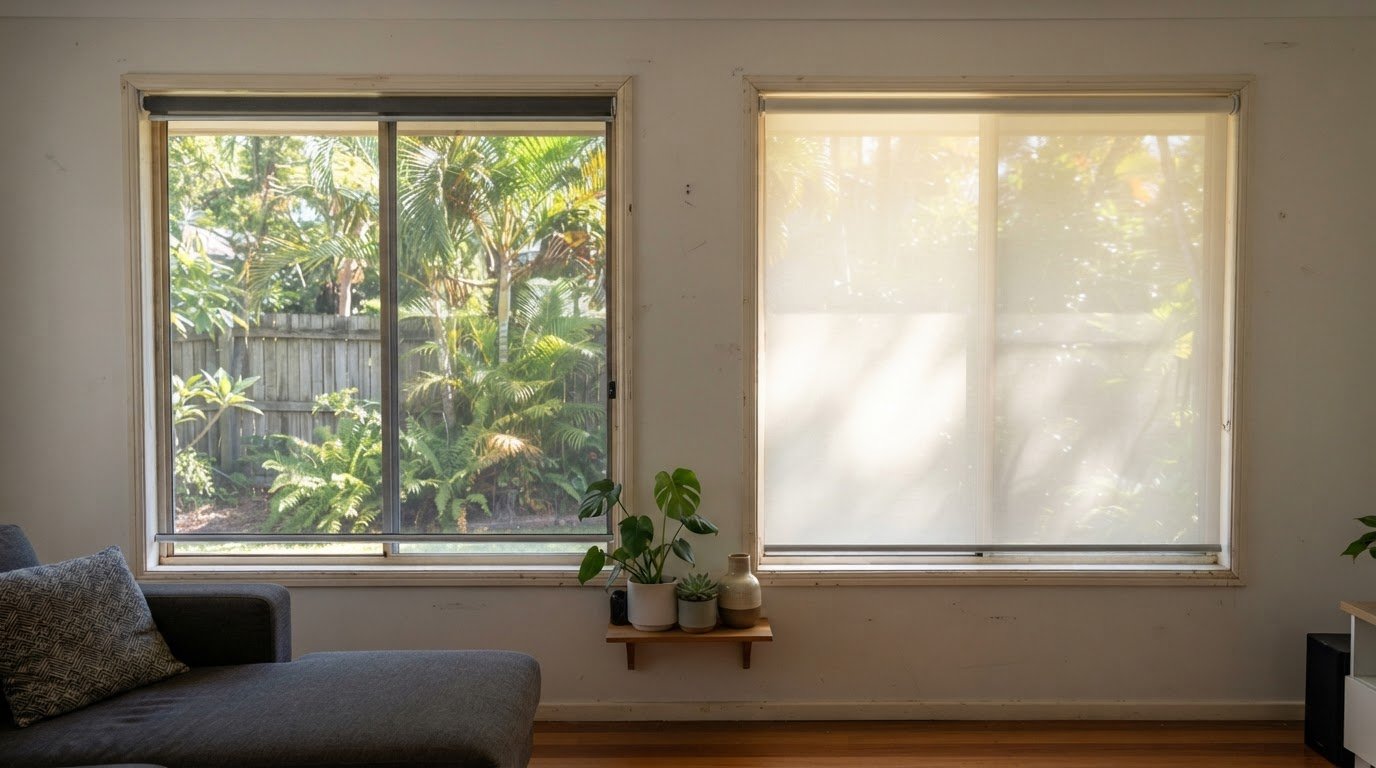
A clearer view isn’t always the better fit. Choosing between light filtering vs sunscreen blinds comes down to whether you value an outdoor outlook or softer, more diffused light. Sunscreen fabric lets you see outside and helps reduce glare, while light-filtering fabric softens daylight and obscures the view in both directions. Neither provides blockout, and privacy can change after dark when indoor lights are on.
It’s easy to assume both fabrics do much the same job because they let daylight into a room. The difference is how they manage it: sunscreen fabric’s open weave keeps the outlook clearer, while light-filtering fabric diffuses incoming light for a softer feel and generally offers more daytime privacy.
This guide compares the two fabrics for privacy, daylight, glare, heat and room brightness, and explains which rooms may suit each. You’ll also see when neither is likely to meet your needs, such as when you want a dark room or dependable privacy at night. Understanding these trade-offs makes it easier to choose a blind for your home.
Key Takeaways
- Match the fabric to what matters most in each room: a clearer outlook, softer daylight or extra daytime privacy.
- Use the weave’s openness as a guide: a tighter sunscreen weave can reduce glare, while a more open one keeps the view clearer.
- For darkness and privacy after dark, consider whether a blockout layer is needed rather than relying on either fabric alone.
- Choose fabric colour with room brightness in mind, as lighter and darker shades affect the feel of incoming light differently.
- Learn how light-filtering fabric diffuses daylight, and where its balance of brightness and privacy may suit your home.
What’s the difference between Sunscreen and Light Filter roller blind fabrics?
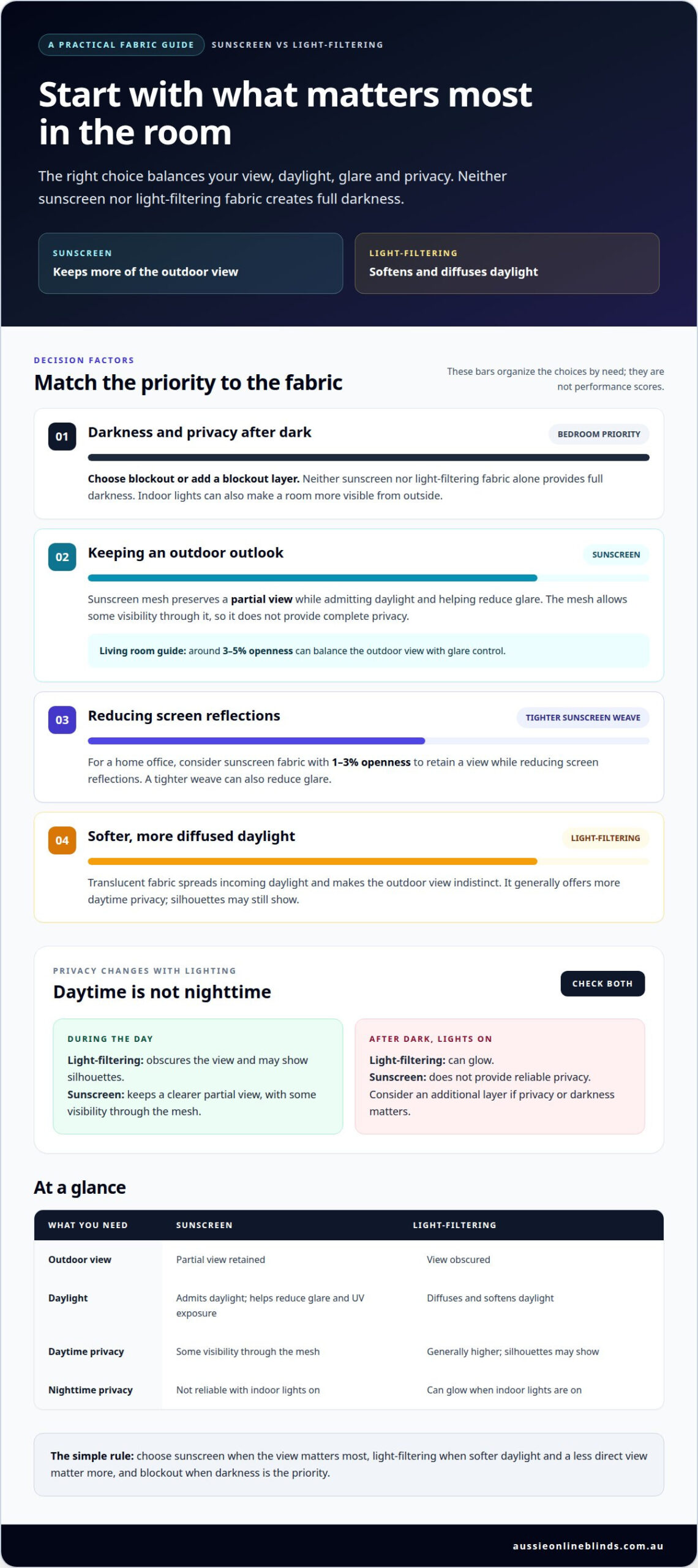
Both fabrics admit daylight, but their weaves affect the view, privacy and light differently. The main choice is between a clearer outlook and softer, more diffused light.
Light-Filtering Fabric
Light-filtering fabric is translucent, spreading incoming daylight rather than blocking it completely. In a dining room, it can soften bright window light and make the view outside indistinct. During the day, people outside may see silhouettes rather than clear details. After dark, indoor lights can make the fabric glow, so it shouldn’t be treated as blockout or as providing complete nighttime privacy.
Sunscreen Fabric
Sunscreen fabric is a woven mesh with small openings. It preserves a partial outdoor view while helping reduce glare, heat and UV exposure. In a living room, you can see outside more clearly through sunscreen fabric than through a light-filtering blind. It offers daytime privacy, but the view works both ways to some extent, and indoor lighting can make the room more visible at night.
In practical terms, light-filtering fabric obscures the view in both directions and diffuses daylight; sunscreen fabric preserves more of the outdoor view and reduces harsh sunlight. Neither creates full darkness like blockout fabric. The difference is in the weave: a translucent surface spreads light, while mesh openings allow a clearer line of sight.
| Fabric | Outdoor view | Daytime privacy | Light and glare | Nighttime privacy |
|---|---|---|---|---|
| Light-filtering | Obscured | Generally higher; silhouettes may show | Softens and diffuses daylight | Can glow when indoor lights are on |
| Sunscreen | Partial view retained | Daytime privacy with some visibility through the mesh | Reduces glare and UV while admitting daylight | Doesn’t provide reliable privacy with lights on |
| Blockout | Blocked when closed | Complete privacy | Blocks light through the fabric | Provides darkness and privacy |
Choose light-filtering fabric for softer daylight and a less direct view into the room; choose sunscreen when keeping an outdoor outlook matters more.
Do Australian window blinds need to meet any safety or building regulations? Requirements depend on the blind and its installation, not just whether the fabric is sunscreen or light-filtering. Fabric alone doesn’t establish that a particular blind or installation meets applicable Australian requirements.
How much do light-filtering and sunscreen roller blinds cost in Australia? There isn’t one set price: cost depends on the blind’s dimensions, fabric and configuration. Compare options based on the window and the light and privacy you need.
How do you measure, install, and clean light-filtering and sunscreen blinds? Measure the window opening and decide whether the blind will sit inside the recess or cover it. Install it according to the supplied instructions, then gently remove dust with a soft brush or cloth. Avoid soaking the fabric, which can affect its finish.
Choosing based on privacy, daylight and darkness
Choose based on the window’s main purpose: preserving an outlook, softening daylight or creating darkness. Remember that privacy changes between daytime and night-time.
During the day, light-filtering fabric obscures the view and may show silhouettes; sunscreen mesh preserves a clearer outdoor view. At night, indoor lighting can affect how private a room feels, so consider whether you need an additional layer.
For bedrooms, choose blockout fabric or add a blockout layer if darkness and privacy matter for sleep. Living rooms often suit sunscreen when the view matters, while home offices can use a tighter sunscreen weave to reduce screen reflections.
Privacy ratings need a day-or-night context: a daytime rating doesn’t show how the fabric performs after dark. Read the rating for the specific fabric and lighting condition, then consider what the window faces. A street-facing window, for example, may need more daytime screening than one facing a private garden.
Think about the room’s daily routine. In daylight, consider how much of the outdoor view you want to keep and how much visibility into the room you’ll accept. After sunset, turn on the room lights and consider whether silhouettes or a visible interior would feel comfortable. A blind that feels private in bright daylight may not feel private once the room is lit against a dark exterior.
- Bedroom: choose blockout when darkness is the priority; a light-filtering or sunscreen blind alone won’t provide full darkness.
- Living room: choose sunscreen if you want to retain an outdoor view, or light-filtering fabric for more diffused daylight.
- Home office: consider sunscreen fabric with 1-3% openness to retain a view while reducing screen reflections.
For a living room, sunscreen fabric around 3-5% openness offers a balance between view and glare control. The right choice still depends on where you want privacy most, and how much daylight you want to keep. A blockout layer can add darkness when daytime fabric alone won’t suit the evening routine.
For a window that needs a daytime outlook and extra cover after dark, consider a second layer for darkness. Matching the blind to the room’s use helps balance daytime comfort with nighttime privacy.
Reducing sunlight glare and heat
Both fabric types can soften strong daylight, but they manage glare, visibility and solar heat differently. Choose by considering the window’s sun exposure and the room’s need for natural light.
Glare and UV Reduction
Sunscreen fabric’s woven mesh filters direct sunlight while preserving a view outside. Its openness affects the balance: a tighter weave reduces glare more, while a more open weave admits more light and retains a clearer outlook. Sunscreen roller blinds are commonly described as blocking about 95% of UV rays, though the precise result depends on the fabric.
For a home office, a sunscreen fabric with 1-3% openness can help reduce reflections on a computer screen while retaining some view. A 5% openness fabric offers a middle ground between view and glare control. Light-filtering fabrics work differently: they diffuse incoming daylight across the room, softening harsh patches of sun without maintaining the same clear view through the fabric.
Heat Control
Sunlight entering through glass can warm a room, especially during an Australian summer. Sunscreen mesh is designed to reduce heat and glare while still admitting natural light. Both sunscreen and light-filtering fabrics have insulating properties that can help keep rooms cooler in summer and warmer in winter, but neither creates the full darkness of blockout fabric.
Fabric openness changes the trade-off. A 10% sunscreen weave has larger openings than a 5% weave, so it allows a clearer view and more light and heat through. A tighter weave reduces glare more strongly, but also limits the view. This makes the window’s direction and the time of day useful considerations when choosing a roller blind.
Light-filtering fabric spreads incoming light rather than leaving a direct view through mesh openings. It can suit a room where softer daylight matters more than seeing outside. In a bathroom, for example, translucent fabric can filter daylight while obscuring the view, though privacy changes after dark when indoor lights are on.
For stronger heat control, remember that internal blinds act at the window, after sunlight has reached the glass. External shading, such as awnings or external screens, can block heat before it reaches the glass. Pairing an internal blind with exterior shading can address both direct glare and heat entering through a sunny window.
Use the fabric’s openness as a practical starting point: tighter mesh favours glare control, while more open mesh favours visibility and brightness. Then decide whether diffused daylight or a clearer outdoor view will make the room more functional.
Colour choices and room brightness
Fabric colour changes how a blind affects daylight. Light-coloured fabrics reflect light and heat, helping a room stay brighter; darker fabrics absorb light, softening brightness and reducing glare. A light shade can suit a study where you want to keep the space bright, while a darker shade may feel more comfortable beside a sunny television screen.
Start with the room’s existing colours. Look at the walls, floor and larger pieces of furniture, then decide whether the blind should blend in or create contrast. A pale blind against a light wall keeps the window area visually quiet. A darker blind against pale walls makes the window more prominent and can soften strong daylight.
Colour and fabric type work together, but they do different jobs. Light-filtering fabrics diffuse incoming light, while sunscreen fabrics preserve more of the outdoor view. A lighter sunscreen fabric can help maintain a bright feel; a darker one absorbs more light and can make the outlook feel less prominent. The weave’s openness still matters, so colour alone won’t determine visibility or glare control.
Consider how the room looks at different times of day. In a bright living room, lighter fabric can reflect light and support an airy feel. In a home office, darker fabric may soften light around a screen. Check the window in morning and afternoon light, because the direction and strength of sunlight change how the chosen colour appears against furniture and walls.
A double roller setup can combine sunscreen fabric with a blockout layer. Use the sunscreen blind for daytime light and the blockout blind when you want more darkness. Two layers give you flexibility as daylight changes, rather than asking one colour and fabric to suit every condition. Curtains may also affect a room’s look, but a roller blind’s colour remains visible at the window when lowered.
- For a brighter feel: choose a light-coloured fabric that reflects light and heat.
- For softer light: consider a darker shade, which absorbs light and reduces glare.
- For changing needs: use a double roller arrangement to switch between sunscreen and blockout layers.
Before deciding, compare the colour with your walls and furniture, then picture it in the room’s brightest conditions. A light shade can help a small or shaded space feel brighter, while a dark shade may suit a sunlit room where glare feels distracting. With sunscreen fabrics, weigh colour alongside the weave: openness affects the view, while colour affects how light feels in the room.
How light-filtering blinds work
Light-filtering roller blinds use translucent, semi-opaque fabric to change how daylight enters a room. Light passes through, but the material diffuses it, spreading brightness rather than leaving a clear view through the window. Picture sunlight falling as a soft wash across a dining table instead of a sharp patch in one spot. The fabric changes the quality of the light, not simply whether the blind is open or closed.
The practical difference between light filtering vs sunscreen blinds starts with the fabric structure. Light-filtering material obscures the view through the blind, while sunscreen mesh has small openings that preserve a partial outdoor view. During the day, someone outside may see shapes or silhouettes through light-filtering fabric rather than clear details. That can suit a street-facing window where softened daylight matters more than seeing the garden.
Diffusing light isn’t the same as blocking it. A light-filtering blind still lets daylight into the room, so it won’t create the darkness of blockout fabric. In a home office, softer light can reduce harsh contrast around a desk, while a closed blind still leaves the space bright enough for daytime use. It can be a useful choice when you want gentler light without making the room dark.
Privacy changes after sunset. If a living room is lit while it’s dark outside, the fabric may glow and show silhouettes. Indoor light reaches the translucent surface from behind, making movement easier to notice from outside. A light-filtering blind can obscure details, but it shouldn’t be treated as complete nighttime privacy or as a substitute for blockout fabric when darkness is needed.
Consider the room’s purpose before choosing this fabric. It can work well in a dining room, bathroom or home office where diffused daylight is useful. Bedrooms often need a darker environment for sleep, so a light-filtering blind alone may not meet that need. A blockout layer can provide darkness when the blind is closed.
- For softer daylight: lower the blind to diffuse incoming light across the room.
- For an outdoor view: remember that light-filtering fabric obscures visibility, unlike sunscreen mesh.
- For darkness: choose a blockout layer rather than expecting translucent fabric to stop light completely.
In Australian homes, the choice between light filtering vs sunscreen blinds comes down to what you want the fabric to do. Light-filtering material manages the quality of daylight, spreads incoming light and obscures the view. Room lighting also affects how private the window feels after dark. Match the fabric to the window’s everyday purpose, such as softening daylight over a dining area or reducing direct visibility into a home office.
Explore light-filtering fabric choices for windows where diffused daylight is the priority.
Aussie Online Blinds: Sunscreen Roller Blinds
Aussie Online Blinds offers Sunscreen Roller Blinds for rooms where you want to reduce glare while keeping an outdoor view. If softer, diffused daylight and more daytime privacy matter more, Light Filtering Roller Blinds may suit your window better. The right choice depends on the room’s purpose, the outlook and how much light you want to retain.
For outdoor areas, Outdoor Blinds and Zipscreen Outdoor Blinds offer alternatives to an indoor roller blind. Consider which space you’re shading and whether preserving a view or filtering daylight is your priority, then explore the option that suits your needs.
Contact Aussie Online Blinds to discuss which blind may suit your space.
Make the next choice fit your home
Think beyond one window. A blind can shape how you use a room as light, routines and privacy needs change, so consider the whole space before settling on a fabric. The choice between light filtering vs sunscreen blinds is a useful starting point, but the best fit also depends on whether the window faces a living area, a work zone or an outdoor space.
Aussie Online Blinds offers options for different settings, including Outdoor Blinds, Zipscreen Outdoor Blinds and Deep Channel Blinds. These can help you consider shading beyond indoor windows when planning how your home connects with an outdoor area.
If you’re ready to take the next step, contact Aussie Online Blinds to discuss an option for your space. A considered choice can make your home feel more comfortable and work better for everyday life.
Frequently Asked Questions
Can I see outside through a sunscreen blind?
Yes, sunscreen fabric lets you see outside through its woven openings, though the view depends on the fabric’s openness. A more open weave gives a clearer outlook, while a tighter weave makes the view less distinct. In a daytime living area, this can help keep the garden visible while reducing direct sun. The view is partial, not the same as looking through an uncovered window.
Can people see through roller blinds at night?
People may see shapes or silhouettes when a room is lit and it’s dark outside. The effect depends on the fabric and how brightly the room is illuminated. For instance, a lamp beside a window can make someone standing near it more visible through translucent fabric. If evening privacy matters, use a blockout layer rather than relying on a sunscreen or light-filtering blind alone.
What does openness percentage mean on a sunscreen blind?
Openness describes how open the sunscreen fabric’s weave is. A 5% openness fabric has a tighter weave than a 10% option, so it allows less view and daylight through. More open fabrics provide a clearer outlook and let more light and heat pass. Use the percentage to compare the balance you want, rather than treating it as a measure of privacy by itself.
What are light-filtering blinds?
Light-filtering blinds use translucent fabric to soften daylight as it enters a room. They suit spaces where you want natural light without a sharp beam falling on a screen or table. For example, a dining area can feel bright while the window view appears blurred. The fabric doesn’t create full darkness, so choose a blockout option if the room needs to be dark for sleeping.
What are sunscreen blinds?
Sunscreen blinds use woven mesh that lets some daylight through and retains a partial view outside. They’re useful in a living room or workspace where you want to see the outlook while reducing direct glare. The weave matters: a tighter fabric prioritises sun control, while a more open one offers clearer visibility. Daytime performance doesn’t mean the blind provides privacy after dark.
Which type of blind blocks more UV rays and protects furniture from fading?
Sunscreen fabric is designed to reduce UV exposure, and sunscreen roller blind fabrics are commonly described as blocking about 95% of UV rays. This can help reduce the sunlight reaching furniture near a window, but it doesn’t stop all light. A sofa in direct sun may still receive daylight through the fabric, so consider how much sun reaches that spot during the day.
How much heat do light-filtering and sunscreen blinds reduce in Australian homes?
The effect on heat depends on the fabric weave and the amount of sun reaching the window. A tighter sunscreen weave admits less light and heat than a more open one, while light-filtering fabric diffuses incoming daylight. For an exposed window, compare the weave and light control first. External shading can stop sunlight before it reaches the glass, while an internal blind manages light at the window.
Can you see through sunscreen blinds from outside at night?
Yes, a lit room can be visible from outside after dark because the mesh doesn’t become opaque when the light changes. Someone outside may notice movement or shapes, especially near the window. For example, a bright kitchen with a lowered sunscreen blind can still reveal activity. Close a blockout blind for stronger nighttime privacy rather than expecting sunscreen fabric to provide a one-way view.