

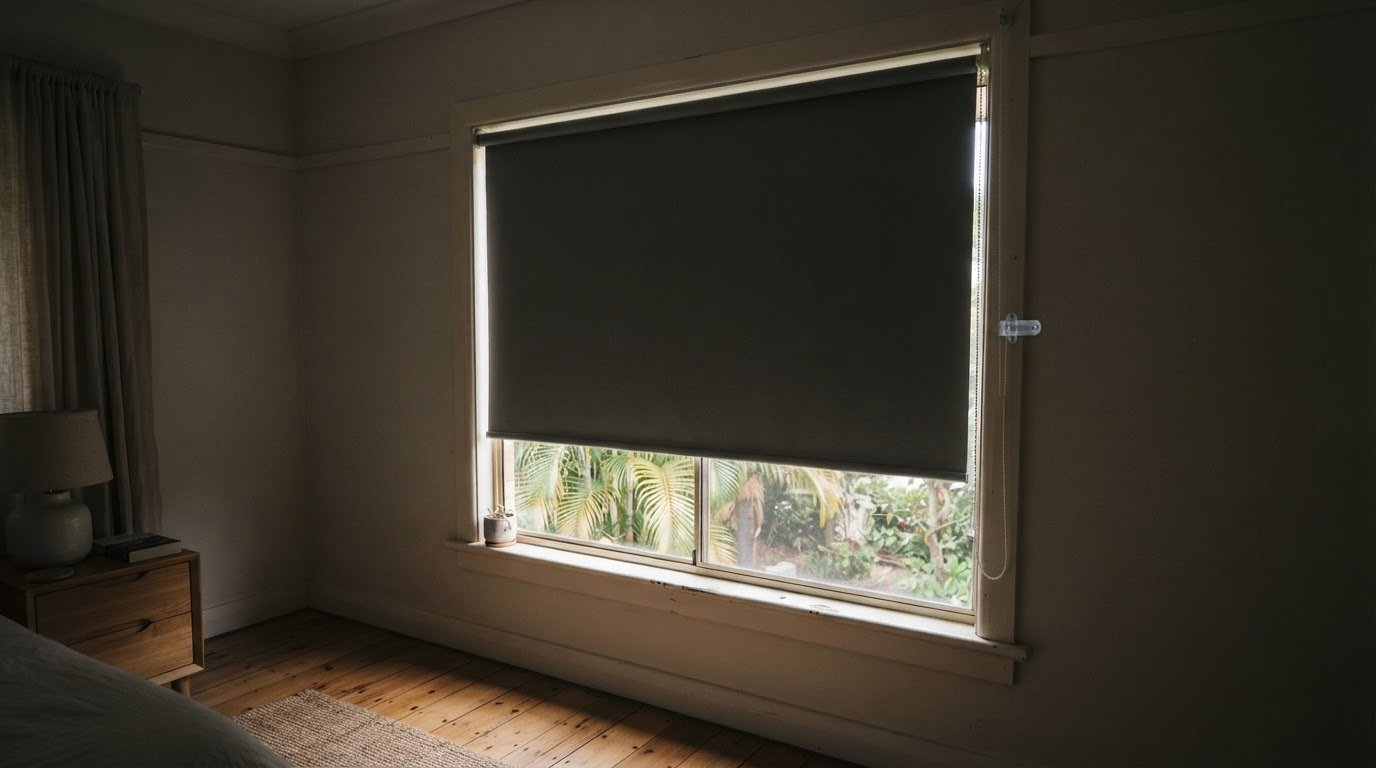
The fabric isn’t the whole story: block out roller blinds use 100% blockout fabric, while total blockout blinds add a fully enclosed frame with integrated side tracks to enhance light control and privacy. The frame helps limit light around the edges, so the two options can feel different in a bedroom or media room. Your choice depends on how much light control you want and how the blind will fit your window.
It’s easy to assume blockout fabric alone will make a room completely dark. In practice, fit and design matter too: even a blockout blind can let light in around the edges.
This guide explains how blockout and total blockout blinds differ, how custom sizing and retrofit options work, and what to consider when choosing between blockout, sunscreen and light-filtering fabrics. You’ll also learn how fabric choice affects daylight and UV protection, helping you match a blind to the room and how you use it.
Key Takeaways
- Choose blockout fabric when you want to limit light; total blockout adds an enclosed frame and side tracks to reduce light gaps.
- Match the fabric to the room: sunscreen blinds filter sunlight and block 95% of UV rays, while light-filtering fabrics soften incoming daylight.
- Consider the window recess and mounting position when planning a retrofit, as fit affects how much light can enter around the blind.
- For a darker result, an outside mount or pairing the blind with curtains can help reduce light around the edges.
- Compare how each fabric balances privacy, daylight and UV protection before choosing the right blind for your space.
What is the difference between blockout and total blockout roller blinds?
Block out roller blinds use fabric designed to block light across a window, while total blockout designs add a frame with integrated side tracks. The tracks cover the sides, helping limit light gaps and improve privacy. When choosing, consider more than appearance: think about how much daylight you want, how you use the room and how the blind will fit the window.
Fabric type changes the feel of a room. Blockout fabric is designed to block light, while light-filtering fabric softens incoming daylight rather than making a room dark. Sunscreen fabric filters sunlight while preserving a view outside; it blocks 95% of UV rays. For a bedroom, blockout may suit sleep and privacy. In a living area, light filtering can keep the space bright without direct glare.
Fabric samples make it easier to compare options. Hold a sample against the window in daylight and again in the evening, then compare its colour and texture with nearby walls and furnishings. Pale fabric can look different in strong summer sun than under indoor lighting. A sample also lets you assess the material’s feel before choosing a finish.
Lynx Blockout is a named roller-blind fabric to consider when comparing options. The name identifies it as blockout fabric, but doesn’t establish its composition, width or performance details. Check these against your window dimensions and intended use. Fabric width affects how material can be cut and fitted, while composition influences its appearance and handling.
Frame and fabric colours create different visual effects. Match the frame to the window trim for a subtle finish, or contrast it with the fabric to define the edges. Textured fabric adds visual interest, while a smooth surface creates a simpler look. Compare the two together, since the frame remains visible around the fabric.
Are there child safety rules for corded roller blinds in Australia? Corded blinds raise child-safety concerns. Keep cords secured and out of children’s reach, and follow the safety instructions supplied with the blind.
How much do blockout roller blinds cost in Australia? The cost depends on the window dimensions, fabric and blind design. Custom sizing and a total-blockout frame affect which product suits your needs, so compare options against your requirements rather than assuming one price applies to every window.
What are block out roller blinds and how do they work? They use a roller mechanism to raise or lower light-blocking fabric across a window. How effectively they limit light also depends on the fit and whether the design has side tracks.
How do you clean and maintain blockout roller blinds? Dust the fabric regularly or gently wipe it with a damp cloth. Avoid scrubbing, which can affect the fabric’s surface.
Custom sizing and retrofit installation
Custom sizing helps a roller blind suit both the window opening and your preferred mounting position. Measuring carefully also helps you choose between fitting the blind inside the recess or covering it from outside.
Custom Measurement and Sizing
First decide where the blind will sit: inside the window recess or outside it. Measure the relevant width and height, and note handles, trims or other features that could obstruct the blind. If the recess is uneven, measurements at different points can show where it narrows. Follow the sizing instructions for your chosen blind, as fitting allowances depend on its design.
Custom sizing is useful when a window doesn’t match a standard dimension. Keep measurements for each window separate, especially when ordering for several rooms. A kitchen window beside a tiled splashback, for example, may need different clearance from a bedroom window with a deep sill.
Retrofit and Standard Installation
A retrofit installation adds a blind to an existing window without replacing it. The mounting position, available fixing surface and nearby handles all affect the installation. An inside mount sits within the recess; an outside mount covers the opening and may suit a recess that can’t accommodate the blind.
Click2Fit blinds are designed to install without drilling into the window recess. That can suit a retrofit where avoiding recess holes matters. Check the product’s fitting instructions and compare the available space with the blind’s components before starting. Standard mounting methods may require suitable surfaces and fixings, so the window structure matters.
DIY Measuring and Installation
DIY measuring and installation can work well when you follow the product instructions step by step. Record measurements clearly, identify the mounting position and gather the supplied components before starting. During installation, keep the blind level and secure its brackets firmly. A second person can help hold a longer blind steady while you position it.
Take care with outside mounts. Leave enough clear space for the blind to lower without catching on a handle, curtain rod or nearby furniture. For an inside mount, check that the recess has room for the blind and its operating parts.
Before ordering, compare your measurements with the selected blind’s sizing guidance. Don’t assume two nearby windows are identical, even in the same room. If you’re choosing DIY roller blinds, the fitting method and the window measurements are useful starting points for selecting a suitable option.
Total blockout roller blind design and light control
Total blockout designs pair fabric with an enclosed frame and integrated side tracks. This construction helps limit light gaps and supports privacy at the window.
Light Control and Privacy
The side tracks run alongside the fabric, covering gaps that can remain beside a standard roller blind. This makes total blockout a design to consider for bedrooms, nurseries or media rooms where stray light matters. The enclosed frame also helps screen views through the sides. Choose the fabric and frame finish together so the assembled blind suits the room.
For daytime privacy, consider when the room is brightest and which direction the window faces. A lowered blind covers the glass, while side tracks address gaps at the edges. The result depends on fit and mounting position, so assess the whole window opening, not just the fabric panel.
Room Darkening and Light Gaps
“Total blockout” describes the frame design, but doesn’t mean every room will become completely dark. Light can still enter around the top or bottom, or through other uncovered windows. To reduce light around the edges, consider an outside mount or pairing the blind with curtains.
Before choosing, identify where daylight enters. A bedroom with a bright window beside the bed, for example, may benefit from covering more of the opening. An outside mount extends beyond the recess, while an inside mount follows the window space. The best position depends on the window and how much coverage you want.
Light Blocking and Heat Control
Blocking sunlight changes how much direct light reaches a room, but doesn’t guarantee a particular indoor temperature. Conditions also depend on the window, sun exposure and ventilation. If summer glare is your main concern, consider when sunlight reaches the glass and whether you need full coverage throughout the day.
Fabric and frame work as a system: the fabric covers the glass, while the tracks help reduce side gaps. For motorisation, it’s available for blockout roller blinds 550 mm and wider. This can suit a window that’s awkward to reach, though it doesn’t change the blind’s light-blocking design.
Compare the complete finish with the window trim and surrounding walls. A frame that blends with the trim can make the tracks less noticeable; a contrasting finish defines the window edge. Check how the assembled design will sit beside handles, sills and other fittings. This practical check helps you weigh privacy, light control and appearance before deciding.
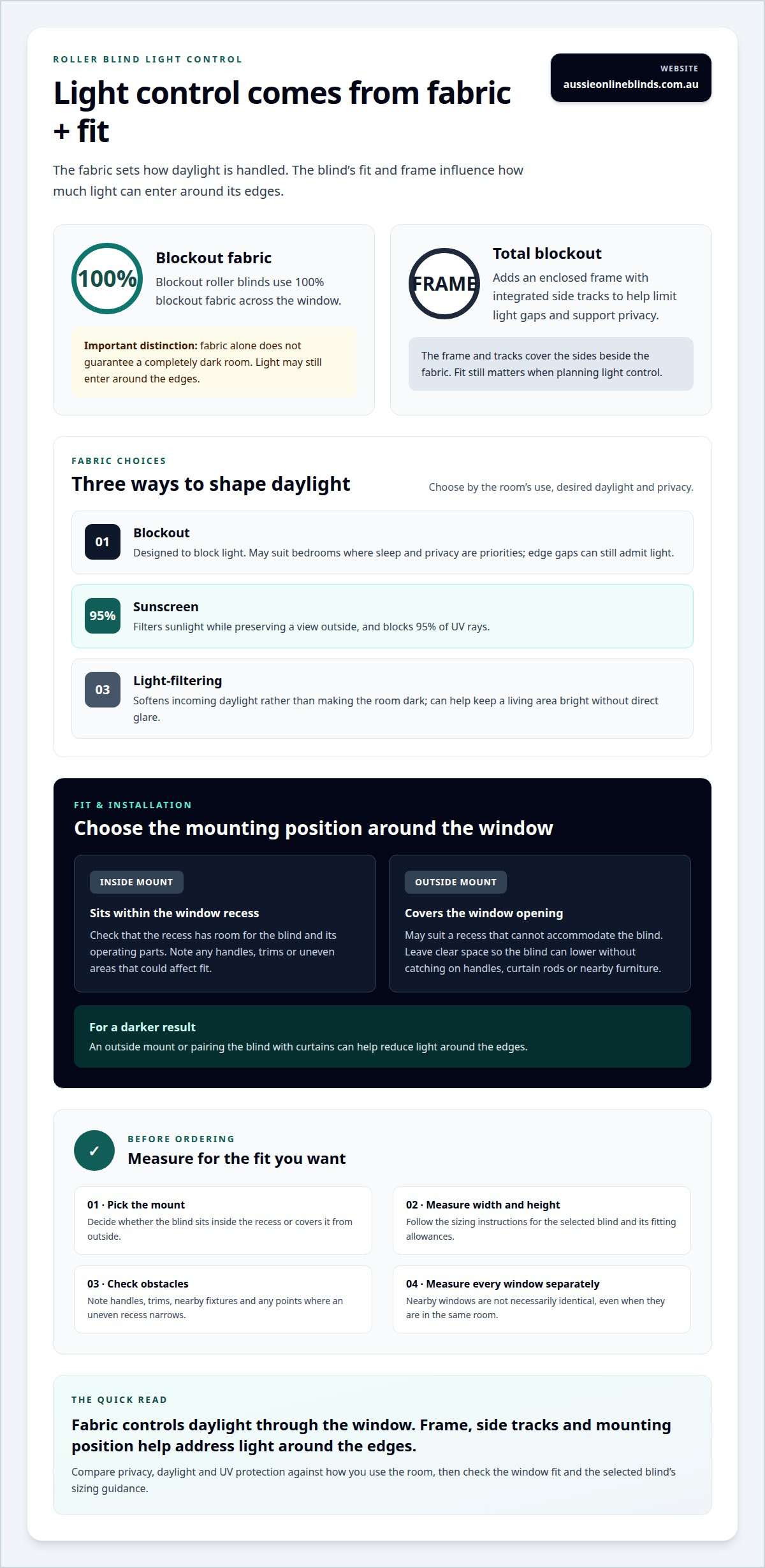
Blackout opacity and UV protection
Opacity describes how much visible light passes through fabric, while UV protection concerns ultraviolet rays. These are related, but not interchangeable: a dark room alone doesn’t indicate a fabric’s UV rating. In Australia, compare the fabric’s stated purpose and performance rather than relying on its colour or the word “blackout” alone.
Blockout fabric is designed to limit light passing through the material. The final effect in the room also depends on coverage, including gaps around the blind. For a bedroom used for daytime sleep, consider both fabric opacity and fit. This helps distinguish the fabric’s performance from light entering around its edges.
Sunscreen roller blinds block 95% of UV rays. Their open-weave fabric allows filtered daylight and a view outside, making them a different choice from blackout blinds. Think about a living room where you want filtered light rather than a darkened interior. If reducing UV exposure is a priority, use the stated percentage as a specific comparison point.
Sunlight can fade furniture, flooring and artwork over time. A sofa beside a sunny window, for example, may get repeated direct exposure. Lowering a blind during the brightest periods can reduce sunlight reaching those furnishings. The amount of protection depends on the fabric and coverage, so consider the whole window, not only the central panel.
Use a simple selection process. First, decide whether your priority is room darkening, filtered daylight or UV reduction. Next, compare the fabric information and any stated UV performance. Then consider which furnishings are near the window and when sunlight reaches them. These steps help you match the blind to the room’s daily use.
Fabric colour isn’t a substitute for a UV performance claim. A dark sample may look opaque indoors, while a pale one may suit a bright room’s finish. Compare samples in the light conditions where the blind will be used, then consult the fabric guide for its stated function. For example, choose blockout for limiting light through the fabric, or sunscreen when its 95% UV-blocking figure and filtered daylight suit the space.
Opacity alone doesn’t describe heat control. Blackout fabric changes incoming light, but the window, sun exposure and mounting position also affect room conditions. For a west-facing window that gets afternoon sun, consider when you’ll lower the blind and which furnishings need shade. This practical routine can complement your fabric choice without confusing darkness with a UV rating.
Differences between blockout, sunscreen and translucent blinds
Choose based on what each window needs to do: darken a room, filter sunlight or soften daylight. In an Australian home, the right fabric for a bedroom may not suit a living area where you want more natural light.
Blockout fabric is designed to prevent light passing through the material, making it useful where darkness and privacy matter. Consider a bedroom used for daytime rest or a media room where screen glare is distracting. Light can still enter around the blind, so fabric opacity and window coverage are separate parts of the decision.
Sunscreen fabric filters incoming sunlight while preserving an outdoor view. It suits a living room or study where you want daylight without direct sun falling across a desk or sofa. It offers a different balance from blockout, maintaining a connection to the outdoors rather than aiming to darken the room.
Translucent or light-filtering fabric softens daylight rather than blocking it completely. It can suit a kitchen where you want a bright, comfortable feel without an uncovered window. It may provide some privacy while letting light through, so consider the room’s use and the view from outside.
Compare the options against your everyday needs:
- For sleep or screen viewing: choose blockout fabric when limiting light through the fabric is the priority.
- For filtered sun and an outdoor view: consider sunscreen fabric in a living area or home office.
- For softened indoor daylight: look at light-filtering fabric in spaces such as kitchens and shared living rooms.
Also consider convenience across different rooms. Using the same fabric throughout an open-plan area can create a cohesive finish, while choosing by each window’s function may better suit varied routines. A bedroom and adjoining lounge, for example, may need different light levels even if both face the same direction.
Curtains can be paired with a blind for an extra layer or a softer decorative finish. That combination may suit a bedroom, while a sunscreen blind may better preserve an outdoor view in a study. Consider how you want the room to feel at different times of day.
Compare roller blind fabric options by their light-filtering purpose, privacy needs and the room they’ll serve. A clear choice starts with the window’s job, then matches the fabric to your preferred balance of light and comfort.
Aussie Online Blinds: Blockout Roller Blinds
Aussie Online Blinds offers blockout roller blinds for rooms where limiting light and improving privacy are priorities. Use what you’ve learned about fabric, window coverage and mounting position to decide what suits your space. If you want filtered daylight instead, sunscreen and light-filtering roller blinds offer different levels of light control.
Before choosing, consider how the room is used each day, how much daylight you want and whether limiting light through the fabric is your main goal. These practical details can help narrow your choice between blind types without treating every window the same.
For a window that needs a different approach, explore the relevant blind options for your home. Contact Aussie Online Blinds to discuss your blockout roller blind choice.
Choose the right fit for your next step
Your window coverings shape how a room feels throughout the day. Before choosing, consider what matters most in each space: calmer light for rest, filtered daylight for everyday comfort, or privacy for a street-facing window. That priority gives you a practical starting point for selecting block out roller blinds and choosing a fabric and fit that suit your home.
For other areas, Aussie Online Blinds also offers Outdoor Blinds, Zipscreen Outdoor Blinds and Deep Channel Blinds. These options address different needs around your home, while your indoor choice can focus on the light and privacy you want at each window.
Bring your preferences and window requirements together, then take the next step at a pace that feels right. Contact Aussie Online Blinds to discuss your blind needs. A considered choice can make your spaces feel more comfortable and better suited to everyday life.
Frequently Asked Questions
Are blockout roller blinds suitable for bedrooms and nurseries?
Yes, blockout blinds suit bedrooms and nurseries where limiting incoming light matters. In a nursery, consider where the blind’s operating parts sit and keep cords secured out of a child’s reach. Think about nap times and whether you need darkness during the day. A suitable fabric can support a calmer sleep space, while window coverage and fit affect light around the edges.
What is the difference between blockout and light-filtering roller blinds?
Blockout fabric limits light passing through the material; light-filtering fabric softens daylight while allowing some through. For example, choose blockout for a bedroom where you want less incoming light, and light filtering for a kitchen where you want a bright feel without direct glare. Consider the room’s activities and preferred daytime atmosphere rather than choosing one fabric for every window.
What blockout roller blind sizes and custom options are available in Australia?
Custom sizing lets you select dimensions to suit your window rather than relying only on standard sizes. Available choices can include fabric and colour, alongside decisions such as inside or outside mounting. The online build tool shows an example width of 2400 mm and drop of 2100 mm; these are example fields, not a universal size. Use the selected blind’s sizing guidance for your own window.
Which fabrics and colours block the most light and heat?
Blockout fabric is designed to limit visible light passing through it, but colour alone doesn’t indicate how much light or heat a blind will control. Compare fabric performance and intended use rather than assuming a dark colour blocks more heat. In a sunny room, consider when direct sunlight reaches the window and how much coverage you want. UV protection and heat control are separate considerations.
Are blockout roller blinds effective for insulation and energy savings?
Blockout blinds reduce light through the covered fabric, but that isn’t the same as a measured insulation rating. Don’t assume an opaque blind will deliver a particular energy saving or temperature change. In a west-facing room, lowering the blind during strong afternoon sun can limit direct light indoors. Your window, sunlight exposure and ventilation also affect room comfort, so assess energy performance separately.
How do you measure windows for blockout roller blinds?
First choose an inside or outside mount, as the position determines which part of the window to measure. For an inside fit, measure the recess width and height, and note handles or trims that may obstruct the blind. For an outside fit, measure the area you want covered. Record each window separately, even if two openings look alike, and follow the sizing instructions for your chosen blind.
How do you install blockout roller blinds inside or outside a window frame?
For an inside mount, position the blind within the recess; an outside mount sits beyond it and covers more of the opening. Check the fitting instructions, available fixing surface and clearance around handles before starting. Follow the supplied installation steps and keep the blind level as you fit its brackets. Click2Fit designs are intended to install without drilling into the window recess, while other methods depend on the blind design.
What are the best blockout roller blinds for bedrooms and nurseries in Australia?
The right choice depends on the window, desired coverage and daily routine. For a bedroom used during daylight, prioritise blockout fabric and consider whether a frame with side tracks suits your light-control needs. In a nursery, think about where operating parts sit and how the blind will be used around sleep times. Aussie Online Blinds offers Blockout Roller Blinds, which you can customise through the online ordering process.