
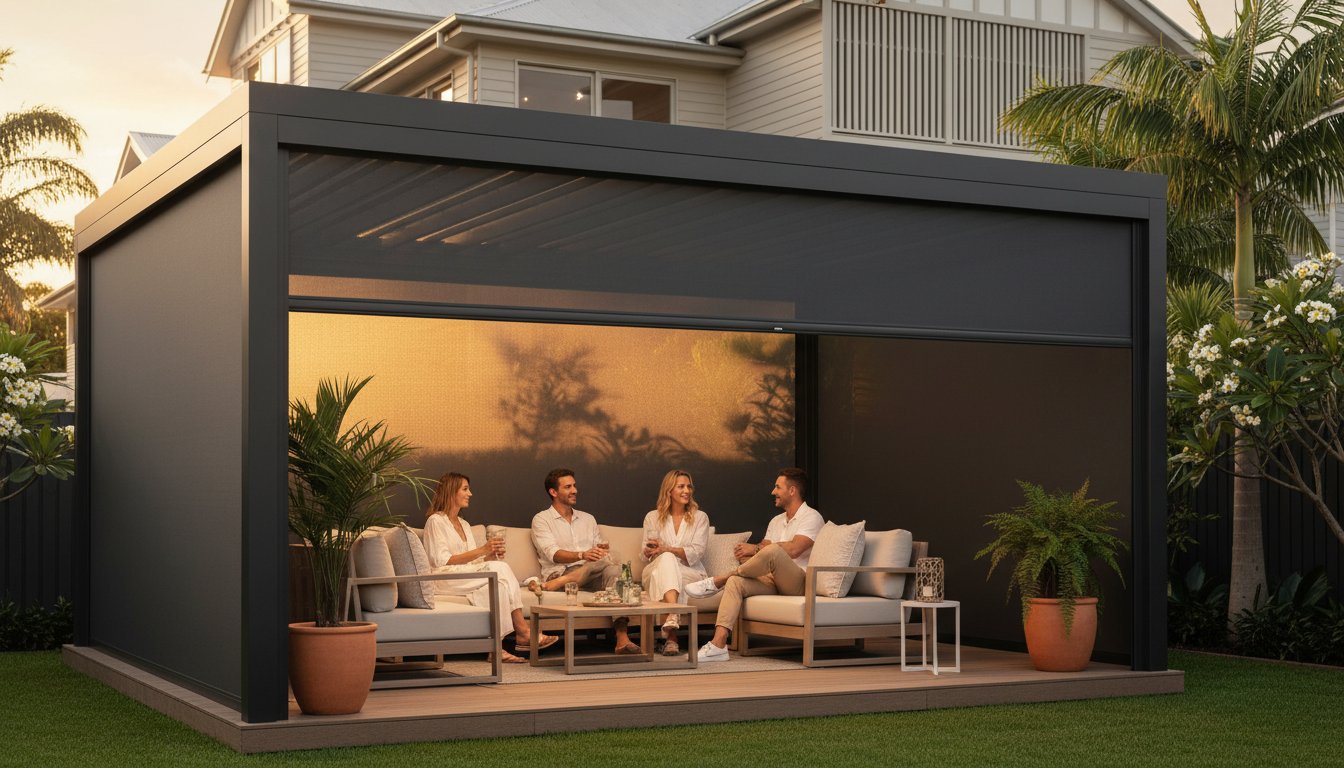
Last Saturday in Sydney, the Thompson family had to abandon their $90 BBQ lunch because a sudden 20-minute downpour turned their deck into a swamp. It’s a common frustration for homeowners across the country; most Australian pergolas sit empty for roughly 150 days a year because they’re either too hot or too wet. Installing high-quality pergola blinds to block sun and rain is the smartest way to stop your outdoor furniture from fading under 42-degree UV rays or rotting in the humidity.
We know you want a stylish, weather-proof room without being hit by a $5,000 professional installation bill or getting lost in technical talk about PVC grades and openness factors. This complete 2026 guide will show you how to choose durable, factory-direct materials that can slash your indoor cooling costs by up to 25%. We’ll walk you through the simple DIY steps to achieve a premium look that transforms your backyard into a functional, year-round living space.
Key Takeaways
- Learn why high UV-rated fabrics are essential for the harsh Australian climate and how to distinguish between water-resistant and 100% waterproof materials.
- Discover the structural advantages of Zipscreen systems and why they are the most effective pergola blinds to block sun and rain during windy storms.
- Master our professional DIY “Three-Point Check” measurement technique to ensure a seamless, weather-tight fit even if your pergola posts aren’t perfectly square.
- Find out how to save thousands on premium, custom-made outdoor room solutions by choosing factory-direct blinds designed specifically for local conditions.
The Australian Pergola Challenge: Why Standard Shades Aren’t Enough
We love our backyards, but the Australian elements are relentless. A standard off-the-shelf blind might work in a mild European spring, but it’ll likely crumble under the 40-degree heat of a Perth summer or a sudden Sydney thunderstorm. To truly enjoy your outdoor space year-round, you need heavy-duty pergola blinds to block sun and rain that are engineered for our local conditions. It’s a common mistake to assume any fabric will do, yet the difference between a generic shade and a custom-engineered solution is often the difference between a usable room and a soggy deck.
The Australian Radiation Protection and Nuclear Safety Agency (ARPANSA) notes that UV radiation levels in Australia are often 15% higher than in Europe. This means a standard fabric with a low UV rating won’t just let the heat in; it’ll physically degrade within two seasons. High-quality Aussie-made blinds use premium fabrics rated to block up to 99% of UVR. This isn’t just about personal comfort. It’s about stopping your expensive Jarrah decking from fading and preventing your outdoor lounge from rotting or cracking under the intense glare.
Don’t get caught out by the “water-resistant” label. In a real Australian downpour where we might see 25mm of rain in a single hour, water-resistant fabrics will eventually saturate and drip. You need waterproof PVC or high-tension treated fabrics to stay truly dry. While traditional awning and shade structures provide basic overhead cover, they often lack the sealed edges required to stop sideways, wind-driven rain. Even the best fabric fails if it’s just a straight-drop sheet flapping in the breeze. Rain rarely falls straight down in a storm; it comes at an angle. By sealing the edges with side tracks, you effectively create a weather-tight seal.
When you invest in custom-made solutions, you’re not just buying a piece of fabric. You’re reclaiming 20 or 30 square metres of living space that usually sits empty during the winter months. There’s a massive psychological benefit to knowing your weekend BBQ won’t be cancelled by a sudden change in the forecast. It turns your pergola from a seasonal luxury into a functional, permanent extension of your home.
Sun Protection: Beyond Just Blocking Light
Understanding UVR block versus simple shade is vital for your home’s efficiency. Premium pergola blinds to block sun and rain do more than stop the glare. They act as a thermal barrier. By stopping the sun before it hits your windows, you can reduce solar heat transfer into your home’s interior by up to 75%. This significantly lowers your A$ energy bills during a heatwave. It also creates a safe zone for kids and pets who want to play outside without the risk of high UV exposure.
The Rain Factor: Keeping the Alfresco Dry
Mesh blinds are fantastic for airflow, but they often only stop a light mist. In heavy rain, the “mist” becomes a spray that soaks your cushions. Fabric tension is the secret hero here. If a blind is loose, water will “puddle” in the centre. Just five litres of trapped water weighs 5kg, which can warp your tracks or tear brackets from the wall. A professionally installed, high-tension blind ensures water runs off instantly. This keeps your alfresco area bone-dry, effectively doubling your entertaining capacity even when the winter weather turns sour.
Fabric Science: Waterproof PVC vs. High-Performance Sunscreen Mesh
Choosing the right material for your pergola blinds to block sun and rain isn’t just about matching your outdoor furniture; it’s about engineering a comfortable environment. In Australia, we deal with some of the harshest UV levels on the planet, so your fabric choice determines whether your patio is a summer sanctuary or a humid sweatbox. You’re essentially choosing between a total weather seal and a breathable sun filter. Both have their place in the Aussie backyard, but the wrong choice can lead to a space you rarely use.
Polyvinyl Chloride, or PVC, is the gold standard for homeowners who want a year-round outdoor room. It’s a solid, non-porous membrane that offers 100% rain protection. If you’ve got a high-end timber deck or outdoor kitchen, PVC ensures those investments stay bone-dry during a winter storm. However, you need to be aware of the ‘Heat Trap’ effect. In high-humidity regions like Brisbane or Darwin, a fully enclosed PVC area can see temperatures rise by 6 to 9 degrees Celsius in less than 30 minutes. Without a breeze, the air becomes stagnant and heavy.
High-performance sunscreen mesh offers a different solution. These fabrics are rated by their “openness factor,” typically 95% or 99%. A 95% mesh means 5% of the fabric consists of tiny holes that allow air to circulate. This airflow is vital for cooling, but it impacts rain resistance. During a light sun-shower, the water will bead and roll off. During a heavy 20mm downpour, however, you’ll eventually notice a fine misting effect as water is forced through the weave. When researching UV safety information, you’ll find that shade is your first line of defense, and these mesh fabrics excel by blocking up to 99% of harmful rays while keeping the air moving.
The Case for Clear or Tinted PVC
PVC is the ultimate windbreak. It’s the best choice for southern states like Victoria or Tasmania where the wind-chill factor can make an outdoor area unusable for six months of the year. You get a completely clear, unobstructed view of your garden without the shivering. Just remember that PVC requires a bit more love; you’ll need to clean it regularly with a specialized cleaner to prevent the ‘clouding’ or ‘milking’ that occurs when salt and dust sit on the surface for too long.
The Case for High-Density Mesh
For most homes in Queensland and New South Wales, high-density mesh is the practical winner. It provides excellent daytime privacy, meaning you can see out to the kids in the pool, but the neighbours can’t see in. Because it breathes, it’s the perfect partner for pergola blinds to block sun and rain without turning your veranda into a sauna. It’s also much more forgiving with maintenance, as the textured weave hides dust and fingerprints far better than clear plastic.
Colour selection plays a bigger role than you might think. It’s a common mistake to assume lighter colours provide a better view. In fact, darker fabrics like charcoal or black absorb light, which allows your eyes to focus through the mesh on the landscape beyond. Lighter fabrics like cream or light grey reflect more light, which is fantastic for heat rejection, but they create more glare, making it harder to see through the blind. If you’re unsure which tint suits your home, you can check out our custom range to see how different densities look in a real-world setting.
- PVC: Best for wind-chill, 100% waterproof, requires frequent cleaning.
- 99% Mesh: Best for privacy and UV protection, handles light rain well.
- 95% Mesh: Best for maximum airflow in humid climates, limited rain protection.
- Dark Colours: Best for glare reduction and clear views of the backyard.
- Light Colours: Best for reflecting heat and keeping the area cool.
Zipscreen vs. Straight Drop: Which System Stops the Rain?
Choosing the right hardware for your outdoor area is the difference between a dry dinner party and a soggy disaster. When you are looking for pergola blinds to block sun and rain, you will usually find two main contenders: the classic straight drop and the modern Zipscreen. While they might look similar from a distance, their performance in a typical Australian downpour is worlds apart. Standard straight drop blinds rely on gravity or basic floor straps to stay down. This design creates a significant weakness because the sides of the fabric aren’t attached to anything. Even a moderate 20km/h breeze causes the fabric to bow and flap, which allows rain to spray around the edges and soak your furniture.
The Zipscreen system solves this by using a side-channel design. The fabric is welded to a high-tech zip that remains locked inside a powder-coated aluminium track. This creates a total seal with no gaps for wind or water to penetrate. Beyond keeping you dry, this edge-to-edge coverage is vital for sun safety. A quality installation that follows the Cancer Council NSW shade guidelines ensures you aren’t just blocking the direct heat but also the reflected UV rays that bounce off your pavers. By eliminating the 20mm to 30mm light gap found on traditional blinds, you create a truly protected outdoor room.
Wind resistance is another area where the Zipscreen shines. These systems are engineered to handle gusts of 50km/h and higher when properly installed. The secret lies in the heavy-duty weight bars and the tension of the side channels. While a straight drop blind might act like a sail and risk tearing its mounting brackets in a storm, the Zipscreen distributes the wind load evenly across the entire frame. It’s a robust solution that gives you peace of mind when the weather turns nasty unexpectedly.
The Zipscreen ‘Weather-Seal’ Mechanism
Our Zipscreen systems feature a hidden zip technology that makes them the gold standard for custom-made AU pergolas. It isn’t just about the sides; the bottom rail includes a thick rubber weather-seal. This seal is crucial because most Australian patios aren’t perfectly level. The rubber gasket can mask floor variations of up to 10mm, creating a flush finish that stops water from creeping underneath during heavy rain. It’s a seamless look that adds genuine value to your home.
Straight Drop and Wire Guide Alternatives
We often recommend wire guide blinds for homeowners on a tighter budget, as they can be roughly 30% cheaper than Zipscreen. These use a marine-grade stainless steel cable to keep the blind from swinging wildly. While they are great for sun protection, they don’t offer a 100% rain seal because the fabric still sits away from the posts. If you already own a straight drop blind, you can improve its stability by installing additional floor “dog-bone” clips or heavy-duty bungee loops to keep the fabric taut during light showers. However, for pergola blinds to block sun and rain effectively in coastal or high-wind areas, the investment in a tracked system is always worth it for the long-term durability and comfort.
DIY Measurement Secrets for a Weather-Tight Pergola
Measuring up for your new blinds isn’t just about getting the general size; it’s about ensuring a 100% weather-tight seal. If you want your pergola blinds to block sun and rain effectively, you need to account for the reality that most outdoor structures aren’t perfectly square. In fact, roughly 90% of timber and even some aluminium pergolas have a slight lean or “wonkiness” that can’t be seen with the naked eye until you try to install a straight blind.
The “Three-Point Check” is your best friend here. You must measure the width at the top, the middle, and the bottom of the opening. It’s common to find a 5mm to 15mm variance between these points. If you only measure the top and the bottom is wider, you’ll end up with a gap that lets the rain horizontal spray right into your entertaining area. Always record the smallest measurement for the width and the largest for the drop to ensure full coverage.
Managing out-of-square posts is where our U-Channels become the secret weapon of the DIYer. These side tracks are designed to hide up to 15mm of post-deviation on each side. They allow the blind material to glide smoothly while the channel itself absorbs the unevenness of your timber posts. This creates a seamless look that masks any structural imperfections. Don’t forget to look for obstacles like downpipes, door handles, or uneven beams. If a downpipe sits 20mm into your fixing space, you’ll need to use a “face fix” approach to mount the blind on the outside of the post rather than inside the opening.
Choosing the factory-direct route gives you a massive advantage over off-the-shelf products. Standard retail blinds usually come in fixed increments like 1200mm or 2100mm. If your opening is 1945mm, a pre-made blind will leave a massive gap or require awkward modifications. Our custom-made approach ensures your pergola blinds to block sun and rain are manufactured to your exact millimetre requirements, providing a professional finish that off-the-shelf options simply can’t match.
Step-by-Step Measuring for Zipscreen
First, identify your fixing points. A “reveal fix” sits inside the opening, which looks sleek but requires perfectly clear space. A “face fix” mounts onto the front of the posts, which is often better if you have handles or narrow posts. Use a high-quality steel tape measure rather than a fabric one. While a laser level is excellent for checking if your head-box will sit straight, a physical tape measure is still the gold standard for recording the exact millimetre distances between your tracks. Accuracy at this stage prevents light gaps and wind rattles later.
Avoiding Common DIY Installation Blunders
A level head-box is the difference between a smooth glide and a frustrating jam. If the top casing is even 3mm off-level, the fabric will bunch to one side, causing “telescoping” and eventual damage to the edges. Use a spirit level during every step of the bracket installation. Another pro tip is the “Spring Tension” secret. When you set your blind, you want enough tension so it stays put but remains light enough for one-handed operation. Getting this balance right ensures your outdoor area remains a stress-free zone for the whole family.
Why Aussie Online Blinds is Your Partner in Pergola Protection
Choosing the right pergola blinds to block sun and rain shouldn’t feel like a gamble. At Aussie Online Blinds, our story began in Brisbane. We started this business because we saw how quickly the harsh Queensland sun and unpredictable coastal storms destroyed cheap, mass-produced imports. Our products are engineered specifically for the Australian backyard. We focus on heavy-duty components that won’t buckle when a summer southerly hits or fade after six months of intense UV exposure. Being Brisbane-born means we understand the 2,800 hours of sunshine our region averages annually; your blinds are built to thrive in it.
We believe high-end outdoor living should be accessible to every homeowner. Traditional retailers often mark up their prices by 45% or more to cover expensive showroom rents and sales commissions. We’ve cut those overheads out completely. By shipping directly from our factory to your front door, our customers typically save between A$1,500 and A$3,800 on a standard outdoor area installation. You get trade-quality materials without the retail price tag, allowing you to invest those savings back into your home or your next weekend BBQ.
Confidence comes standard with every order. We back our gear with a comprehensive 3-year warranty that actually means something. This isn’t just a marketing promise; it covers our heavy-duty AU-made components and high-tensile fabrics against structural failure. If you run into a snag during your DIY build, you won’t be stuck waiting for an overseas email reply. Our local experts are just a phone call away. We’ve helped thousands of Australians through their first DIY projects since our founding, and we’re ready to guide you through every measurement and mounting bracket.
Quality You Can Feel
Coastal living is notoriously tough on outdoor hardware. Salt air can corrode standard metals in months. That’s why we use marine-grade aluminium for our tracks and channels to prevent rust and pitting. Our fabric selection features leading brands that offer a minimum of 95% UV protection. Take the Thompson family in Noosa, who installed our blinds in October 2022. They reported a temperature drop of 8 degrees on their deck immediately after installation. These are real results for real AU homeowners who want to reclaim their outdoor spaces from the elements.
Ready to Start Your DIY Journey?
Choosing the right shade for your home shouldn’t be a guessing game based on a computer screen. You can order free fabric samples today to see how the textures and colours look against your existing pergola frame in real daylight. Once you’ve made your choice, our checkout process is designed for speed and clarity. Simply enter your custom measurements, select your preferred hardware finish, and we’ll handle the rest. We deliver your custom-made blinds straight to your door with all the instructions you need for a professional-grade finish.
Don’t let another scorching summer or rainy afternoon keep you inside. You have the skills to transform your deck into a year-round sanctuary. Shop Custom Pergola Blinds Now and see why we are Australia’s most trusted name in DIY outdoor protection. It is time to get the most out of your home with pergola blinds to block sun and rain effectively.
Claim Your All-Weather Outdoor Lifestyle Today
Your outdoor area shouldn’t be off-limits just because the Australian weather decided to turn. By selecting high-performance PVC for total waterproof protection or a Zipscreen system for a seamless seal, you’re investing in a year-round retreat that adds genuine value to your home. Our 2026 guide highlights that custom-made DIY solutions often save homeowners over 30% on installation costs compared to traditional full-service retailers. Choosing the right pergola blinds to block sun and rain means you won’t have to cancel your next family BBQ just because of a sudden summer downpour or harsh UV rays. As a 100% Australian family-owned and operated business, we’ve engineered every component to withstand our local climate. You’ll get total peace of mind with our 3-year product warranty and the convenience of reliable nationwide shipping directly to your front door. It’s time to stop letting the elements dictate your weekend plans and start enjoying your backyard on your own terms. We’re here to help you measure, order, and install with total confidence.
Design Your Custom All-Weather Pergola Blinds Today
Frequently Asked Questions
Can I install pergola blinds myself or do I need a professional?
You can definitely install pergola blinds yourself and save roughly A$500 in professional labor costs per project. Our custom-made kits are designed for the everyday Aussie homeowner using basic tools like a drill and a spirit level. We provide clear, step-by-step guides that turn a complex job into a simple Saturday afternoon task. Most customers complete their first blind installation in under 60 minutes.
Which pergola blinds are best for blocking both wind and rain?
Zipscreen outdoor blinds are the top choice when you need pergola blinds to block sun and rain while handling coastal winds. These systems use a side-track channel that locks the fabric in place, which prevents the material from flapping or pulling out. For total rain protection, solid PVC is excellent; however, high-quality mesh like our 95% blockout fabric stops most rain while still allowing for essential airflow.
How do I stop rain from coming in the sides of my outdoor blinds?
To stop rain from entering the sides, you should install a track-guided system like Zipscreen rather than a traditional crank-handle blind. These tracks create a functional seal along the entire vertical edge of the opening. This design eliminates the 20mm to 30mm gaps found in standard outdoor blinds, keeping your patio furniture dry even during heavy rain events or winter storms.
Are clear PVC blinds better than mesh for Australian winters?
Clear PVC blinds are generally better for Australian winters because they act as a thermal barrier, trapping warmth and blocking 100% of wind and rain. A PVC-enclosed space can stay up to 5 degrees warmer than the outside air on a chilly July night. Mesh is great for sun protection, but it won’t hold the heat quite as effectively as solid PVC during a cold snap.
How much wind can Zipscreen pergola blinds actually handle?
Zipscreen pergola blinds are engineered to withstand wind speeds of up to 50km/h when properly installed in a residential setting. While they are incredibly durable, we recommend retracting them during severe weather warnings or wind gusts exceeding this limit to protect your home’s mounting points. This rating ensures your outdoor area remains usable during 85% of typical Australian weather conditions throughout the year.
What is the best way to clean my outdoor pergola blinds after a storm?
The best way to clean your blinds is with a soft brush and a bucket of lukewarm water mixed with a mild, pH-neutral detergent. Avoid harsh chemicals or high-pressure hoses which can damage the fabric coating or the clear PVC surface. Rinse the material thoroughly with a garden hose and ensure it is completely dry before retracting it to prevent mold growth from occurring.
Do outdoor blinds help reduce my home’s energy bills?
Yes, installing outdoor blinds can reduce your home’s cooling costs by up to 40% during the peak of summer. By blocking solar heat before it hits your window glass, you stop the greenhouse effect from warming your living rooms. This simple addition can lower the internal temperature of a north-facing room by as much as 8 degrees on a scorching 35-degree day.
How long does it take to receive custom-made blinds from Aussie Online Blinds?
You can expect to receive your custom-made blinds within 10 to 15 business days from the date you place your order. We manufacture everything locally in our Australian facility to ensure high quality and fast dispatch times for our customers. Once your order leaves our warehouse, we provide a tracking number so you can monitor the delivery straight to your front door.