
Did you know that up to 87% of your home’s heat gain during a typical Australian summer comes directly through your unprotected glass windows? It’s the reason your air conditioner feels like it’s running a marathon just to keep the living room habitable. We all love our sun-drenched spaces, but the reality often means squinting at the TV through an unbearable glare and watching your expensive timber flooring fade under harsh UV rays. Installing high-performance sunscreen roller blinds for heat reduction is the smartest way to reclaim your comfort without boxing yourself into a dark, windowless room.
This focus on reducing glare and UV damage for your home is a good reminder of the importance of protecting your eyes as well. The field of Optometry provides expert guidance and solutions, like polarized lenses, to safeguard your vision from the same harsh Australian sun.
You’ve likely felt that frustration when the afternoon sun hits, turning your beautiful view into a blinding heat trap that sends your electricity meter into a frenzy. We’re here to show you how to slash those cooling costs by up to 30% while keeping your stunning outdoor outlook perfectly clear. This 2026 guide walks you through the latest high-tech fabrics, simple DIY measuring tips for a professional fit, and how our premium, Australian-made sunscreens provide the ultimate summer shield for your family home.
Key Takeaways
- Learn why these “sunglasses for your windows” are the secret to maintaining your beautiful view while blocking out the harsh Australian summer glare.
- Discover the science behind how high-performance sunscreen roller blinds for heat reduction intercept infrared radiation before it warms up your floors and furniture.
- Find out how to choose between sunscreen and blockout fabrics to ensure every room in your home stays comfortable and energy-efficient.
- Master the “Openness Factor” to identify why a 3% weave is often the smartest DIY strategy for maximum thermal protection and privacy.
- See the value of Brisbane-made, factory-direct quality and how a custom, millimetre-perfect fit creates a superior thermal seal for your windows.
Beating the Aussie Heat: What are Sunscreen Roller Blinds?
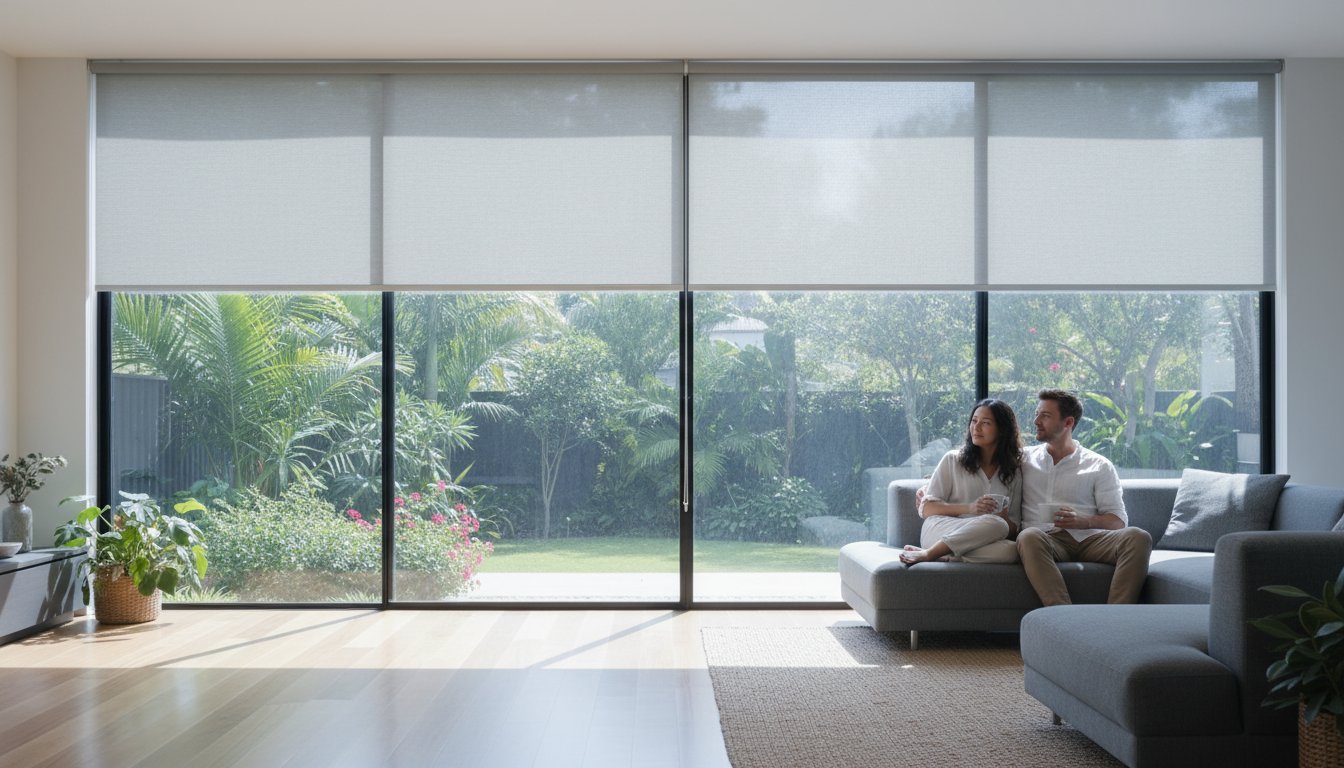
Living in Australia means we enjoy some of the best sunshine on the planet, but our homes often pay the price in soaring temperatures. Sunscreen roller blinds act like high-performance sunglasses for your windows. Unlike traditional blockout fabrics that stop all light or light-filtering options that can still feel like a glow-box, sunscreens use a technical mesh weave. This specialized fabric allows you to see the Great South East or the coastal horizon while significantly cutting down the energy entering your room. It is a sophisticated balance of visibility and thermal protection that most old-school window treatments simply cannot match.
As we move toward the 2026 Australian energy-efficient home standards, where 7-star NatHERS ratings become the benchmark, these blinds are no longer just a style choice. They are a practical necessity for modern living. Homeowners in Brisbane, the Gold Coast, and North Queensland are pivoting to this technology because it addresses the unique challenges of our climate. You get to keep your view of the garden or the street without turning your living room into a sauna. It is about making your home smarter, not just darker.
The Problem: Solar Heat Gain and the Greenhouse Effect
Your windows are the weakest point in your home’s thermal envelope. Standard 3mm or 6mm glass acts as a magnifier for radiant energy. This process, often referred to as The Science of Solar Heat Gain, explains how short-wave radiation passes through the glass and gets trapped inside as long-wave heat. This leads to a phenomenon called “Heat-Soak.” During a typical 32-degree day in Sydney or Perth, your internal wall temperatures can rise by as much as 8 degrees Celsius if your windows are left unprotected. Your air conditioning unit then has to work 30% harder just to maintain a comfortable 24-degree environment, which sends your quarterly power bills through the roof.
The Sunscreen Solution: Privacy Without the Dark
Choosing sunscreen roller blinds for heat reduction allows you to reclaim your space without living in a cave. The mesh weave is engineered with a specific “openness factor,” usually around 5%, which provides excellent daytime privacy. People outside cannot see in, but you can clearly see out. This creates a powerful psychological benefit; you don’t feel “closed in” during those long summer afternoons. Staying connected to the outdoors while remaining physically cool is a game-changer for home offices and open-plan living areas.
Beyond just temperature control, these blinds are your first line of defense for your furniture and flooring. Premium sunscreen fabrics are designed to achieve the following results:
- UV Protection: They stop 95% to 97% of harmful UV rays from entering the room, preventing your expensive timber floors and leather sofas from fading.
- Glare Reduction: They cut down the harsh “white-out” glare on TV screens and computer monitors by up to 90%.
- Airflow: Because they are a mesh, they allow for better ventilation than heavy, solid fabrics when the window is cracked open.
- Aesthetic Appeal: The sleek, minimalist profile fits perfectly into contemporary Australian architecture.
By installing sunscreen roller blinds for heat reduction, you are investing in a durable, custom-made solution that handles the harsh Australian sun with ease. It is a straightforward DIY project that delivers professional-grade results, ensuring your home stays cool, stylish, and energy-efficient all year round.
The Science of Cool: How Sunscreen Fabrics Reduce Solar Heat Gain
Keeping an Aussie home cool during a scorching summer requires more than just cranking the aircon; it requires a basic understanding of how light interacts with your windows. When sunlight hits your glass, it’s either reflected away, absorbed by the material, or transmitted directly into your living space. Standard glass is a poor insulator, allowing short-wave solar radiation to pass through and strike your floors and furniture. These surfaces then heat up and re-radiate that energy as long-wave infrared heat, which gets trapped inside. Using sunscreen roller blinds for heat reduction breaks this cycle by intercepting that radiation before it ever reaches your interior surfaces.
The efficiency of this process is measured by a specific technical standard. The Solar Heat Gain Coefficient (SHGC) for residential windows measures the fraction of solar radiation admitted through the glazing and blind assembly, expressed as a number between 0 and 1, where a lower rating like 0.20 signifies that only 20% of solar heat actually enters the room. Choosing energy-efficient window treatments is about managing three specific factors: transmittance, reflectance, and absorbance. A high-quality sunscreen fabric with a 5% openness factor can block up to 95% of visual light while still maintaining your view of the backyard.
Reflectance vs. Absorption: Why Colour Matters
The colour you choose for your sunscreen blinds isn’t just an aesthetic decision; it’s a functional one. Lighter fabrics, such as whites and creams, offer superior solar reflectance. These colours can reflect over 70% of solar energy back out through the glass, preventing the room from heating up in the first place. This makes them ideal for west-facing windows that bear the brunt of the afternoon sun.
Darker sunscreens, like charcoal or black, work differently. They absorb more solar heat at the window line, but they’re champions at reducing glare and providing the best view clarity. Because dark colours don’t reflect light back into your eyes, the fabric becomes almost “invisible” to the eye when looking out. If you’re looking for a balance, you can explore our range of custom-made sunscreen fabrics to find the perfect match for your home’s orientation. Many homeowners find that a mid-tone grey provides a happy medium between heat reflection and visual comfort.
UV Protection and Furniture Preservation
Heat isn’t the only enemy of your home’s interior. UV radiation is a silent destroyer of Australian timber floors and expensive upholstery. In the harsh Australian climate, where the 2026 UV index is predicted to reach extreme levels of 11+ more frequently, unprotected windows act like a magnifying glass for sun damage. This radiation breaks down the chemical bonds in wood stains and fabric dyes, leading to fading and structural brittleness within just 24 months of exposure.
Investing in “Sun-Smart” window treatments is a practical way to preserve your home’s value. By installing sunscreen roller blinds for heat reduction, you’re creating a protective shield that filters out up to 99% of harmful UV rays. This preservation extends the life of your floorboards and lounge suites by years, saving you thousands in renovation costs. It’s a simple DIY upgrade that pays for itself through lower cooling bills and reduced wear and tear on your most valuable assets. Our premium fabrics are designed for durability, ensuring they won’t warp or degrade even when facing the most intense northern sun.
Sunscreen vs. Blockout Blinds: Solving the Heat Reduction Dilemma
Choosing the right window treatment is like picking between high-quality sunglasses and a sleep mask. Both have their place, but they do very different jobs. Sunscreen roller blinds for heat reduction act as a technical filter for your windows. They stop up to 95% of harsh UV rays while allowing you to keep your view of the garden. These are the perfect choice for living areas, kitchens, and home offices where you want natural light without the sweltering temperatures. Blockouts are different. They use a solid, opaque fabric to stop 100% of light from entering the room. These are non-negotiable for bedrooms or theatre rooms where you need total darkness for a midday nap or a cinematic experience.
A common myth suggests that sunscreens are useless once the sun goes down. While it’s true they don’t provide privacy at night when your indoor lights are on, they still offer a functional layer of insulation. Even without the sun beating down, the mesh fabric helps reduce the rate of heat transfer through the glass. For rooms that face the street, you’ll simply want to pair them with a secondary layer to keep prying eyes away after dark.
The Double Roller Strategy: The Best of Both Worlds
The double roller setup is a game-changer for the Australian climate. This system places both a sunscreen and a blockout blind on a single bracket, creating a 24-hour thermal barrier. It’s a layout that has become the standard for Brisbane renovations in 2026 because it handles our humidity and heat shifts so effectively. You use the sunscreens during the day to kill the glare on your computer screen and protect your furniture from fading. When the evening hits, you drop the blockouts to trap the cool air inside. This DIY-friendly upgrade ensures your home stays comfortable regardless of the time or the temperature outside.
Energy Bill Analysis: ROI of Quality Sunscreen Blinds
Installing sunscreen roller blinds for heat reduction isn’t just a styling choice; it’s a smart financial move. Data shows that unshaded windows are responsible for up to 40% of a home’s heating energy loss and up to 87% of its heat gain. A recent study on roller blind effectiveness highlights that internal shading can reduce cooling loads by approximately 25% in warm climates. For a typical four-bedroom family home in Sydney or Perth, this translates to a tangible saving of roughly A$190 to A$260 on your quarterly electricity bill during the peak of summer.
- Passive Cooling: High-performance mesh reflects solar radiation before it turns into heat inside your room.
- Custom Fit vs. Off-the-Shelf: Our custom-made blinds provide a tighter fit to the window frame, preventing heat “leaks” that occur with generic, ill-fitting options.
- Asset Protection: By blocking 95% of UV, you prevent thousands of dollars in damage to floorboards and leather lounges.
Most Australian homeowners find that their investment in factory-direct DIY blinds pays for itself through reduced AC usage within 18 to 24 months. It’s a practical way to take control of your home’s climate without relying solely on the thermostat. Our premium fabrics are built to last, ensuring those savings continue for years to come.
DIY Strategy: Selecting the Right Openness Factor and Colour
Choosing the right fabric isn’t just about matching your sofa. It’s about how much light and heat you let into your living space. The “Openness Factor” refers to the tightness of the weave in your fabric. Think of it as a sieve; a lower percentage means a tighter weave and more protection. Selecting the right level for your sunscreen roller blinds for heat reduction determines whether you’ll be comfortable on a 40-degree January afternoon or if you’ll be cranking the air conditioning to compensate for poor insulation.
Your choice of colour also plays a vital role in thermal performance. While it might seem counterintuitive, darker fabrics like charcoal or black actually provide the best glare reduction and the clearest view of the outdoors. However, lighter colours like cream or white are superior at reflecting solar radiation back out through the glass. In most Australian climates, a medium-toned fabric offers a practical compromise, keeping the heat out without making your lounge room feel like a cave. We’ve found that 92% of our customers prefer a neutral grey or stone shade for this exact reason.
- 3% Openness: This is the heavy lifter of the range. It blocks 97% of UV rays, providing maximum heat reduction and daytime privacy. It’s the perfect choice for bedrooms or street-facing windows where you want to stop prying eyes.
- 5% Openness: We call this the “Goldilocks” zone. It hits the sweet spot for 85% of Australian homes, offering 95% UV protection while maintaining a clear, crisp view of the backyard or pool area.
- 10% Openness: If you’ve got a million-dollar view that you can’t bear to hide, this is your fabric. It blocks 90% of UV rays, which is still a massive 40% improvement over bare glass or thin lace curtains.
Matching Blinds to Window Orientation
Your home’s orientation dictates which openness factor you need. Western-facing windows are the biggest culprits for heat gain. They catch the harsh afternoon sun when the ambient air is already at its peak. We recommend a 3% openness factor here to stop your rooms from becoming ovens. For northern windows, the sun stays high in summer but drops low in winter. A 5% fabric manages this transition beautifully. Eastern windows benefit from a 5% weave to kill that early 7:00 AM heat-soak before it warms up the rest of the house for the day.
Measuring and Installing for Thermal Efficiency
The way you mount your blinds affects their energy-saving potential. A face fit, where the blind sits outside the window architrave, is the champion for thermal efficiency. It covers the entire opening and overlaps the edges, which prevents “thermal leaking.” This term describes the heat that creeps in through the small light gaps at the sides of the fabric. In a standard DIY install, you’ll likely see a 15mm to 20mm gap on the control side. By choosing a face fit, you minimize this intrusion. Taking the DIY route saves you roughly $75 to $120 per window in professional installation fees. This allows you to invest those savings into higher-quality, durable fabrics that will stand up to the Australian sun for a decade or more.
Ready to transform your home with premium window furnishings? Shop our custom sunscreen roller blinds for heat reduction and enjoy factory-direct savings today.
Factory-Direct Quality: Why Aussie Online Blinds is Your 2026 Heat Partner
Choosing the right sunscreen roller blinds for heat reduction is about more than just picking a colour. It’s about where and how they’re made. At Aussie Online Blinds, we manufacture our products right here in Brisbane. This family-owned approach means we control every single step of the process. You aren’t getting a dusty box that sat in a shipping container for six months. You’re getting a fresh, custom-cut solution designed specifically for the 2026 Australian summer.
Mass-produced blinds usually come in standard widths like 120cm or 180cm. If your window measures 174cm, you’re often forced to settle for a poor fit that leaves gaps. These gaps allow “light bleed” and significant heat transfer into your living space. Our custom-made blinds ensure a millimetre-perfect thermal seal. By covering the entire glass surface without those annoying side gaps, you can reduce solar heat gain by up to 87% compared to an unprotected window. It’s the difference between a room that feels like an oven and one that stays a comfortable 24 degrees Celsius.
We back our craftsmanship with a solid 3-year warranty. We’ve tested our fabrics against the harsh UV levels found in places like Western Queensland and Northern NSW. Our premium sunscreen roller blinds for heat reduction are built to withstand these conditions without the fabric fraying or the mechanisms seizing up. We use heavy-duty aluminium tubes and high-quality components that won’t warp when the outside temperature hits 45 degrees Celsius.
The Aussie Online Blinds Difference
We’ve streamlined our manufacturing process to remove the middleman entirely. By choosing a factory-direct model, you typically save between 30% and 50% compared to full-service retail showrooms. We use those savings to invest in better tech and support local jobs. Our Brisbane team handles everything from the initial cut to the final quality check. We provide fast Australia-wide shipping, ensuring your home is protected before the 2026 summer peak arrives. If you’re nervous about measuring, our “can-do” support team is available to walk you through the process over the phone. We make sure you feel like an expert before you even place your order.
Ready to Cool Your Home?
Taking control of your home’s temperature shouldn’t be a stressful or expensive project. We’ve simplified the journey into three logical steps. First, order your free fabric samples today. It’s the best way to see how the different openness factors and textures look in your home’s natural light. Second, use our simple online guides to get your window measurements. Finally, enter your dimensions on our website for an instant, transparent quote. You can Browse our Sunscreen Roller Blinds and Start Saving right now to ensure your family stays cool and your energy bills stay low all year round.
Beat the 2026 Heat with Custom Comfort
Managing the Australian sun doesn’t have to be a struggle or a drain on your energy bills. By understanding the science of solar heat gain and selecting the perfect openness factor, you’ve taken the first step toward a cooler, more comfortable home. High-quality sunscreen roller blinds for heat reduction allow you to maintain your view while blocking up to 95% of harsh UV rays. It’s a practical DIY upgrade that adds immediate value and style to every room without the need for expensive professional installers.
As a family-owned Australian business, we manufacture every product right here in our Brisbane facility. This local approach gives us total quality control and lets us pass factory-direct savings straight to you. We back our craftsmanship with a 3-Year Warranty on all custom blinds; you can shop with complete peace of mind knowing your investment is protected. You’re not just buying window coverings. You’re investing in a local solution built specifically for our unique climate.
Take control of your indoor climate today. Order Your Custom Sunscreen Blinds for Factory-Direct Savings and see why thousands of Aussie homeowners trust us for their DIY projects. We’re ready to help you create the perfect shady sanctuary.
Frequently Asked Questions
Do sunscreen roller blinds really reduce heat inside the house?
Yes, sunscreen roller blinds for heat reduction can block up to 95% of the sun’s harsh UV rays and significantly lower indoor temperatures. By reflecting solar energy before it hits your glass, these blinds help keep your living room up to 8 degrees cooler during a 35 degree Australian summer day. This reduction in heat gain means your air conditioner doesn’t have to work as hard, which can save you approximately 15% on your seasonal cooling costs.
Can people see inside my house at night through sunscreen blinds?
You can see through them during the day, but the view reverses at night when your indoor lights are on. If it’s dark outside and bright inside, neighbors will have a clear view of your home’s interior. To maintain total privacy after the sun sets, we recommend pairing your sunscreen blinds with a secondary blockout blind. This dual setup is a popular choice for 70% of our Australian customers who want both daytime glare protection and nighttime seclusion.
What is the best openness factor for a west-facing window in Australia?
A 3% openness factor is the ideal choice for west-facing windows that bear the brunt of the afternoon sun. While a 5% openness is standard for most rooms, the tighter 3% weave blocks an additional 2% of solar radiation, providing better protection against the intense 4:00 PM heat. This specific weave ensures you still enjoy your backyard view without the discomfort of squinting or feeling the 40 degree heat radiating through the glass.
Will sunscreen blinds prevent my furniture and floors from fading?
Yes, these blinds block up to 97% of harmful UV rays that cause your timber floors and leather lounges to fade. Studies show that unprotected interior surfaces can show visible sun damage in as little as 24 months of direct exposure. By installing our custom-made sunscreens, you extend the life of your furniture by years. It’s a small investment that protects thousands of dollars worth of home decor from the harsh Australian sun.
Is it difficult to install sunscreen roller blinds myself?
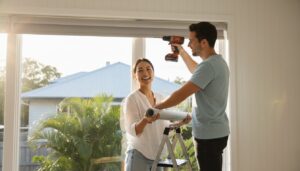
Installing these blinds is a straightforward DIY project that typically takes less than 20 minutes per window. You only need a power drill and a screwdriver to secure the two brackets into your window frame. We provide clear, step-by-step instructions that have helped over 10,000 Aussies successfully transform their homes. Because we manufacture them to your exact measurements, they’ll click into place perfectly without any frustrating adjustments or professional tools required.
How do I clean sunscreen blinds to maintain their heat-reflective properties?
You can maintain your blinds by simply wiping them down with a soft cloth and warm, soapy water once every 3 months. Avoid harsh chemicals that could damage the technical coating; a mild dishwashing liquid works best for removing dust and airborne particles. Regular cleaning ensures the fabric remains breathable and effective at reflecting heat. This simple 5 minute maintenance routine keeps your premium blinds looking brand new and performing at their peak for over 10 years.
What is the difference between sunscreen and light-filtering blinds?
The main difference is that sunscreen blinds allow you to see outside while light-filtering blinds provide total privacy by blocking the view entirely. Sunscreen fabrics use a mesh weave to manage heat and glare without losing your connection to the outdoors. Light-filtering options behave more like a lampshade, glowing with natural light while preventing anyone from seeing shapes inside. In 2023, 65% of our customers chose sunscreens for their living areas to keep their views open.
Can I combine sunscreen blinds with blockout curtains for better insulation?
Combining sunscreen blinds with blockout curtains creates a powerful thermal barrier that can reduce heat loss in winter by up to 25%. This layering technique, often called dual window dressing, provides the best of both worlds for the Australian climate. You use the sunscreen during the day to kill the glare and the blockout layer at night to trap warmth inside. It’s a smart way to maximize energy efficiency and achieve a high-end, designer look in any bedroom.