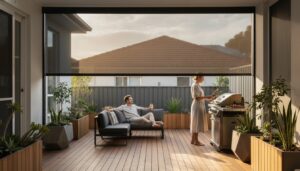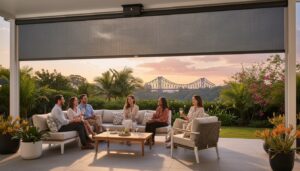

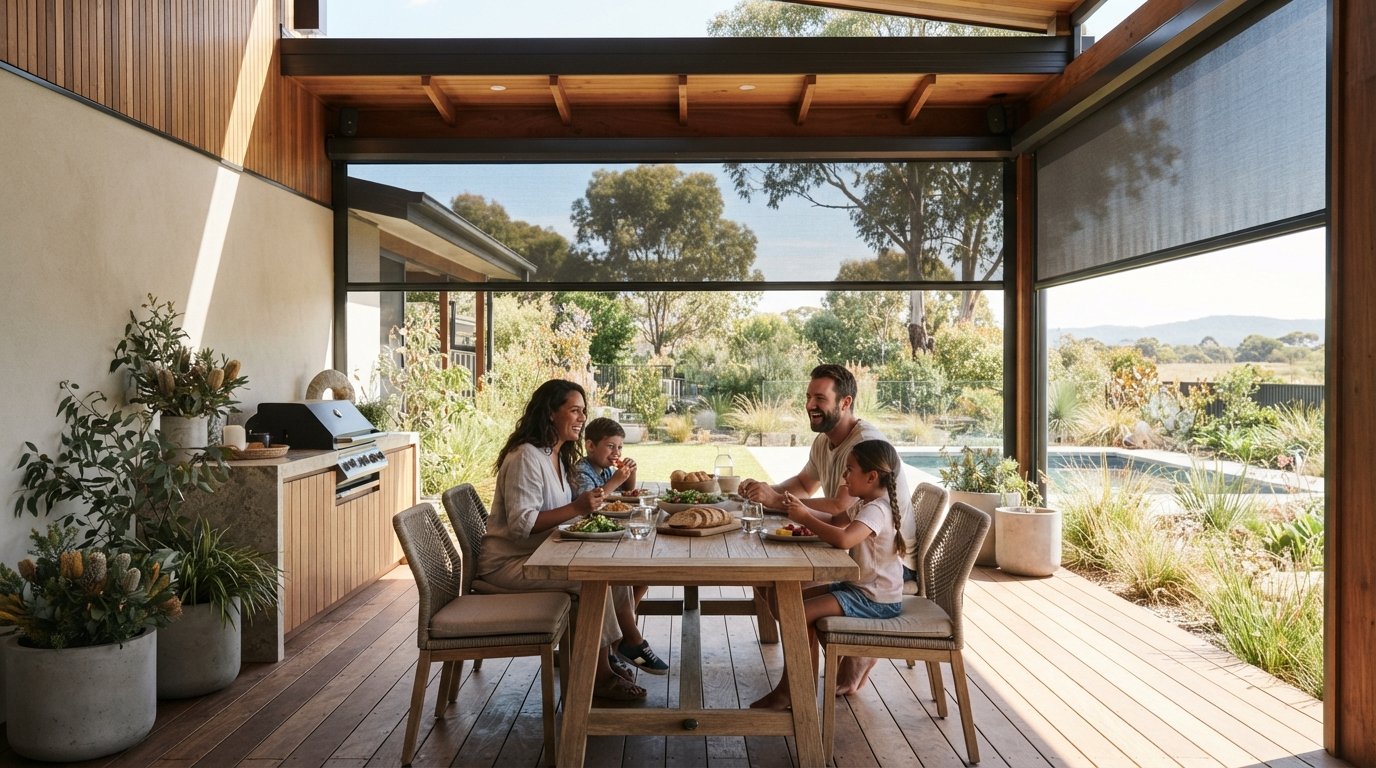
Did you know that up to 90% of the solar heat hitting your home enters through unprotected glass and open spaces before you even think about turning on the air con? While internal blinds have their place, installing roller shades outdoor is the single most effective way to stop that blistering Australian sun from turning your patio into a furnace. It’s about stopping the heat before it even reaches your windows, keeping your alfresco area comfortable even on a 40 degree day.
We’ve all experienced that midday glare that makes outdoor dining impossible, or the feeling that the neighbors are peering right into your weekend lunch. It’s frustrating when a beautiful backyard becomes a “no-go zone” for half the year because it’s simply too hot or exposed. You want a professional, sleek look for your home, but the massive quotes from full-service installers can be a real shock to the system when you’re just trying to improve your lifestyle on a budget.
This guide is designed to help you reclaim your outdoor room with confidence. You’ll learn exactly how to choose between track-guided Zipscreen systems and sleek wire guides, how to measure to the millimeter, and how to handle the DIY installation yourself. By the end of this article, you’ll have the roadmap to a private, cool sanctuary that looks like a high-end designer fit-out without the premium price tag.
Key Takeaways
- Learn the specific functional differences between Zipscreen, Wire Guide, and Straight Drop systems to choose the best protection for your home’s wind exposure.
- Discover how choosing custom-made roller shades outdoor allows you to bypass professional installer markups while securing a higher quality product than standard retail options.
- Master the “measure twice, order once” philosophy by identifying whether a face fit or reveal fit is the right choice for your patio’s unique structure.
- Get practical advice for a stress-free DIY installation day and the essential maintenance steps to keep your blinds operating smoothly in the Australian climate.
- Understand the long-term value of Australian-made durability and how a 3-year warranty provides peace of mind for your outdoor investment.
What are Outdoor Roller Shades and Why Does Your Patio Need Them?
Think of your patio as a potential extra room that’s currently being held hostage by the afternoon sun. In Australia, we’ve traditionally called these patio blinds or drop blinds, but the term roller shades outdoor has become the modern standard for a reason. It describes a sleek, retractable system that does more than just block the wind; it transforms a basic deck into a functional, climate-controlled alfresco space. Unlike the heavy, flapping canvas of the past, today’s systems use technical fabrics and precision engineering to stay taut and look professional.
Choosing a custom-made solution over a standard retail size is what separates a DIY project from a professional-grade renovation. Off-the-shelf blinds often leave gaps where heat and insects can sneak in, whereas a bespoke fit ensures every millimeter of your opening is covered. This precision is essential for creating a true “outdoor room” feel. When you invest in a custom system from Aussie Online Blinds, you’re getting durability designed for our harsh climate, often backed by a solid warranty that off-the-shelf products simply can’t match.
The Battle Against the Australian Sun
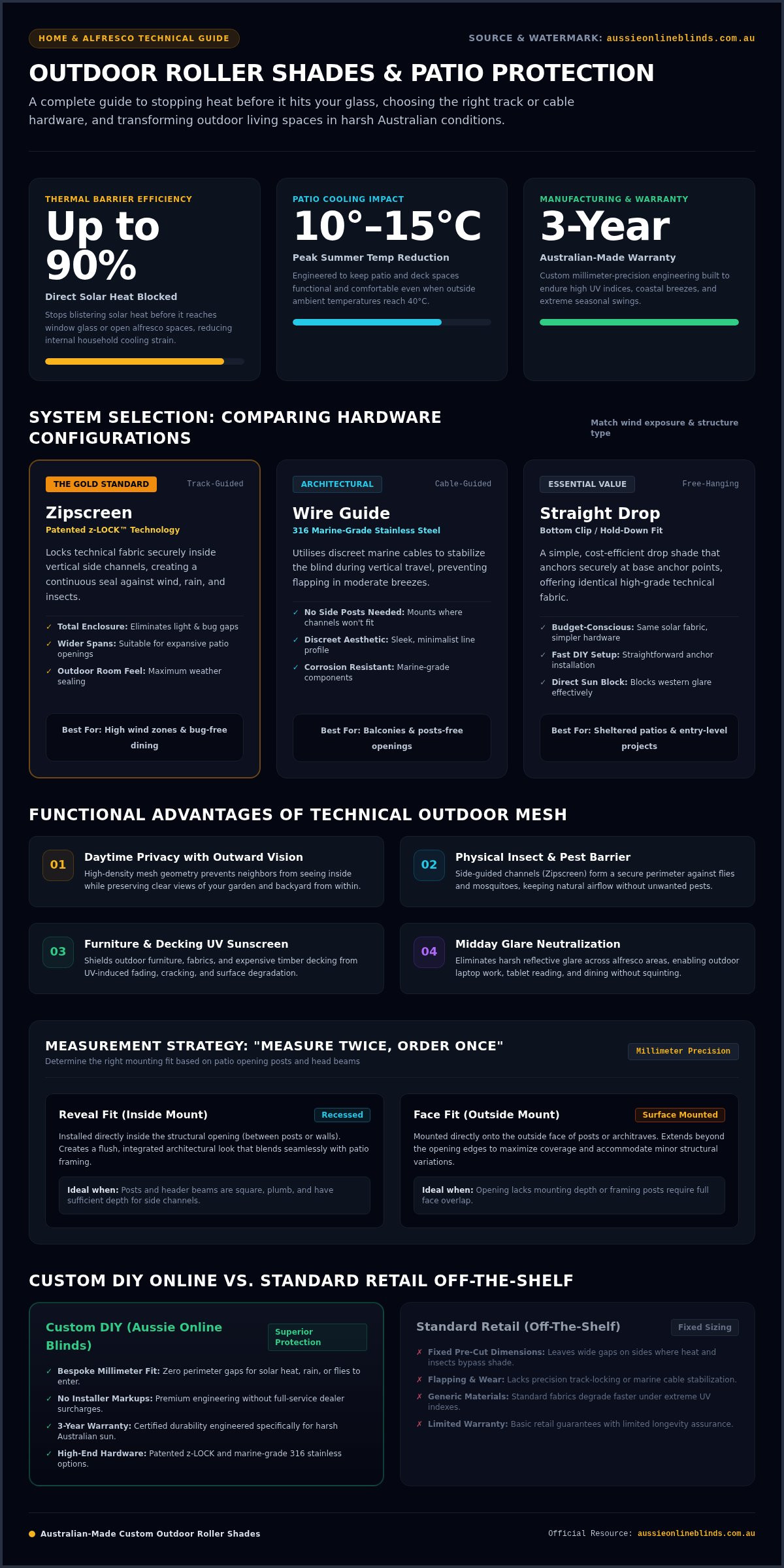
External shading is your best defense against rising power bills and unbearable summer heat. Industry data shows that external blinds can reduce direct solar heat gain by up to 90%. In practical terms, this can drop the temperature on your patio by 10 to 15 degrees during a peak summer afternoon. By stopping the heat before it hits your glass doors, you keep your internal living areas cooler too. Beyond the temperature, these roller shades outdoor act as a sunscreen for your furniture and timber decking. They prevent the fading and cracking caused by harsh UV exposure while creating a glare-free space where you can actually see your laptop screen or enjoy a family lunch without squinting.
Privacy and Insect Protection
Privacy is a major concern in modern Australian suburbs where houses are built closer together. High-quality mesh allows you to see out and enjoy your garden while making it nearly impossible for neighbors to see in. If you choose a track-guided system like Zipscreen, you also get a physical seal against flies and mosquitoes. By locking the fabric into side channels, you create a bug-free zone that still allows for natural airflow. It’s about finding that perfect balance where you feel enclosed and protected without feeling boxed in. You get the benefit of the breeze without the nuisance of pests or prying eyes.
Choosing the Right System: Straight Drop, Wire Guide, and Zipscreen
Selecting the right hardware for your roller shades outdoor project depends on how you use your space and the level of wind exposure you face. Not every patio needs a full seal, and not every balcony can accommodate side channels. We generally look at three main systems that cover almost every Australian domestic setting. Whether you want a completely enclosed “outdoor room” or just a simple way to block the western sun, there’s a hardware configuration designed to handle the job without breaking your budget.
Zipscreen Outdoor Blinds: The Gold Standard
If you want to create a space that feels like a seamless extension of your home, Zipscreen is the top choice. It uses patented z-LOCK technology to secure the fabric inside vertical side channels, leaving no gaps for wind, rain, or insects. This system is perfect for enclosing alfresco areas and can handle wider spans than most other options. For a deeper look at how this compares to other track systems, you can read our Zipscreen vs. Ziptrak comparison to see which engineering style suits your DIY goals.
Wire Guide and Straight Drop Systems
For areas where side posts aren’t available or you prefer a more discreet look, Wire Guide Blinds are an excellent alternative. They use 3.16 marine-grade stainless steel cables to keep the blind steady as it travels up and down. This prevents the fabric from blowing around in a light breeze while maintaining a sleek, architectural aesthetic. If you’re working with a very sheltered area or a tight budget, Straight Drop Blinds offer the same high-quality fabric but secure at the bottom with simple straps or clips. For standard windows where you still want airflow, Pivot Arm Blinds are the go-to, as they project the fabric away from the glass at an angle.
Fabric Selection: Sunscreen vs. Privacy Mesh
The mesh you choose for your roller shades outdoor determines your level of privacy and heat control. We talk about “openness factors” in percentages. A 1% mesh is tight, offering maximum privacy and blockout, while a 10% mesh allows for more breeze and a clearer view of your garden. Most Australian homeowners find that 5% mesh is the “Goldilocks” zone. It’s also a common myth that lighter colors provide a better view. In reality, darker mesh colors like charcoal or black are much easier to see through because they absorb light rather than reflecting it back into your eyes.
Regardless of the system you choose, aesthetics matter. Our hardware can be powder-coated to match standard Colorbond palettes like Monument or Surfmist, ensuring your new blinds look like they were part of the original house design. You can choose between a simple manual crank or the convenience of motorisation, which is especially helpful for large spans. If you’re ready to start planning your transformation, you can browse our full range of DIY blinds online to find the perfect match for your home’s style.
The DIY Advantage: Custom Quality Without the Installer Markup
Choosing to install your own blinds is about more than just saving money; it’s about taking control of your home’s quality. Professional installers often add significant markups to cover their travel time, vehicle maintenance, and administrative staff. When you source roller shades outdoor directly and handle the fitting yourself, those extra costs vanish. You’re putting your hard-earned money into the product itself, ensuring you get the best possible materials for your patio.
Is DIY Right for You?
If you can use a tape measure and a power drill, you already have the basic skills needed to succeed. We’ve designed our systems to be approachable for every homeowner, regardless of previous experience. For larger spans, we always recommend having a mate or partner help out. Lifting a heavy headbox into place is much safer and easier with a second set of hands to keep things steady while you secure the brackets. For a full list of the simple tools you’ll need, take a look at our DIY Blinds guide.
Custom-Made vs. Off-the-Shelf
There’s a common temptation to grab a “cut-to-size” blind from a big-box retailer, but these generic options often lead to frustration. Off-the-shelf products are frequently made with lighter fabrics and plastic components that can’t handle the intense Australian UV levels. By ordering custom roller shades outdoor, you’re getting a product built to your exact millimeter specifications. This precision is vital for track-guided systems like Zipscreen, where a perfect fit is the difference between a smooth glide and a jammed track.
A custom-made solution also allows you to choose the exact hardware finish that matches your home’s architecture. Instead of settling for whatever is in stock, you can coordinate your blinds with your existing Colorbond colors. We back this superior quality with a 3-year warranty, giving you long-term peace of mind that a cheap retail alternative simply can’t provide. It’s a professional-grade result that you can be proud to say you installed yourself.
Measuring and Selection: How to Get the Perfect Fit
Getting your measurements right is the most important part of the job. It’s the difference between a sleek, professional looking patio and a blind that jams or leaves ugly gaps. When you’re dealing with roller shades outdoor, you’re often mounting onto brickwork, timber posts, or steel beams. These surfaces aren’t always as straight as they look to the naked eye. We live by the “measure twice, order once” philosophy to ensure your custom blinds fit like a glove the first time they arrive.
First, you need to decide between a “reveal fit” and a “face fit.” A reveal fit sits inside the opening of your patio or window, providing a built-in, architectural appearance. However, this requires your opening to be perfectly square. A face fit mounts onto the front of the posts or wall, which is much more forgiving if your pillars are slightly out of alignment. Don’t forget to look for obstructions like downpipes, door handles, or light fittings that might get in the way of the blind’s path. For spans over 3 meters, we recommend using a laser measurer. It’s much easier than wrestling with a sagging metal tape and gives you accuracy down to the millimeter.
Step-by-Step Measuring for Success
Don’t just take one measurement and call it a day. Measure the width at the top, the middle, and the bottom of the opening. If there’s a variation, use the smallest measurement for a reveal fit. To check for squareness, measure the diagonals from corner to corner. If the two diagonal numbers are different by more than 20mm, your opening is out of square, and a face fit might be the safer bet. You can find more detailed tips in our How to Measure for Blinds Online guide.
Ordering Your Custom Shades Online
Once you have your numbers, our online configurator makes the rest simple. You’ll select your system type, fabric openness, and the hardware color to match your home’s trim. This is also where you decide on your control side. Think about which side of the patio is easiest to access or where your power source is if you’re choosing motorisation. Before you hit the order button, run through this quick checklist:
- Double-check your width and drop measurements.
- Ensure you’ve selected the correct mounting type (Face vs. Reveal).
- Confirm your fabric color and hardware finish match your home’s Colorbond palette.
- Verify your control side or motor preference.
Taking these extra few minutes during the ordering phase prevents headaches during installation. If you’re ready to get started, customise your outdoor blinds using our simple online tool.
Installation and Maintenance: Keeping Your Shades Like New
You’ve done the hard work of measuring and selecting your custom blinds; now comes the most rewarding part of the project. Installing your roller shades outdoor is a straightforward process that usually takes just a few hours per opening. By handling the fitting yourself, you’re ensuring every bracket is exactly where it needs to be for a professional, long-lasting finish. Once they’re up, a simple care routine will keep them looking and operating like the day they arrived.
Installation Best Practices
The secret to a smooth-rolling blind is a perfectly level headbox. Even a slight tilt can cause the fabric to track to one side, leading to fraying or jamming over time. Always use a spirit level across the brackets before you secure them. If you’ve chosen motorised roller shades outdoor, take a moment to set your upper and lower limits carefully so the motor doesn’t strain against the hardware. One pro tip we always share: clean up any “swarf” (tiny metal filings) after drilling. If these bits stay on your mounting surfaces or the fabric, they’ll rust and cause permanent staining in our humid Australian air.
Long-Term Care and Cleaning
Our harsh climate can be tough on any exterior product, but technical sunscreen mesh is remarkably resilient. To keep it in top shape, give your blinds a gentle rinse with fresh water every few months to remove dust and salt spray. Use a soft brush for any stubborn spots, but avoid high-pressure hoses as they can stretch the weave. It’s vital that you never use harsh detergents or solvent-based chemicals, as these can strip the UV-protective coating from the mesh. For more detailed advice on protecting your alfresco area, check out The Ultimate Guide to Blind Maintenance.
Operating your blinds correctly during extreme weather is just as important as cleaning them. While our systems are engineered for durability, they aren’t designed to be used as storm shutters. In high winds or during severe weather warnings, it’s best to retract your blinds into their headbox. This prevents the “sail effect” from putting unnecessary stress on your patio posts. We back our materials and engineering with a 3-year warranty, giving you peace of mind that your investment is protected against the elements. With just a little bit of regular attention, your custom shades will continue to provide comfort and privacy for many years to come.
Reclaim Your Alfresco Lifestyle Today
You don’t have to let the summer heat or prying eyes dictate when you can enjoy your backyard. By choosing custom-made roller shades outdoor, you’re investing in a durable, stylish solution that keeps your home cooler and your family more comfortable. We’ve shown you how easy it is to bypass the expensive installer markups by measuring and fitting these systems yourself. Whether you opt for the total seal of a Zipscreen or the sleek minimalism of a wire guide, the result is a professional finish that adds genuine value to your property.
As an Australian family-owned and operated business, we understand exactly what our local climate demands. That’s why we back our custom-made quality with a 3-year product warranty; it’s our way of ensuring your new alfresco room stands up to the sun for years to come. You now have the tools and the confidence to take on this project and transform your home. We’re here to help you every step of the way, providing high-quality materials that are built to last.
Browse Our Custom Outdoor Roller Shades and Get a Quote Today
Frequently Asked Questions
Can outdoor roller shades handle high winds?
High-quality systems like Zipscreen are engineered to handle continuous wind gusts between 50 km/h and 80 km/h when locked into their tracks. However, you should always retract your blinds during severe weather warnings or storms. A large blind acts like a ship’s sail, which can put immense pressure on your patio posts. Retracting them into the headbox protects both the fabric and your home’s structure from damage during unpredictable Australian weather events.
How much can I save by installing outdoor blinds myself?
You can save hundreds of dollars per opening by choosing the DIY route. Professional installers typically charge between A$150 and A$300 per blind just for the labor, and that doesn’t include their high markups on the hardware itself. By measuring and fitting your own roller shades outdoor, you’re only paying for the custom-made quality of the product. This allows you to invest in better materials while keeping your total project costs manageable.
What is the best fabric for privacy without blocking the view?
A 5% openness sunscreen mesh is the most popular choice for balancing privacy and visibility. This specific weave blocks roughly 95% of UV rays and prevents neighbors from seeing in during the day, yet it still allows you to enjoy your garden view. We recommend choosing darker colors like charcoal or black for the best results. Darker fabrics absorb light and glare, making it much easier to see through them compared to lighter colors.
Are motorised outdoor roller shades worth the extra cost?
Motorisation is a fantastic investment for large alfresco spans or hard-to-reach windows. It removes the need for manual cranking and allows you to deploy your shades with a single button press. Modern solar-rechargeable battery motors are particularly popular because they don’t require a licensed electrician for installation. Adding smart sensors can even automate your blinds to retract if the wind gets too high, protecting your investment while you’re away from home.
How do I clean my outdoor shades without damaging the fabric?
Keep your shades looking new by hosing them down with fresh water every few months to remove dust and salt spray. For stubborn spots, use a soft brush and a bucket of mild, soapy water. Never use high-pressure cleaners or solvent-based chemicals, as these can strip the UV-protective coating from the technical mesh. Always let the fabric dry completely before rolling it back into the headbox to prevent any issues with mildew or staining.
What is the difference between Zipscreen and a standard straight drop blind?
Zipscreen systems use side channels with a welded zip spline that locks the fabric securely from top to bottom. This creates a complete seal against wind, rain, and insects, essentially turning your patio into an enclosed room. A standard straight drop blind hangs freely and only secures at the base with straps or clips. While straight drops are cost-effective for simple shade, they lack the structural stability and total protection provided by track-guided systems.
Do outdoor roller shades provide 100% blockout?
Most outdoor blinds utilize technical mesh rather than total blockout fabric to allow for essential airflow. A 1% openness factor provides the highest level of shade and privacy, blocking 99% of UV rays, but it isn’t a “zero-light” solution like an indoor blockout blind. This slight breathability is important because it prevents heat from becoming trapped behind the blind, ensuring your alfresco area stays cool and comfortable rather than becoming a stifling greenhouse.
Can I install outdoor blinds onto a metal pergola?
You can definitely install roller shades outdoor onto a metal pergola using the appropriate self-tapping screws or bolts. The key is ensuring the metal posts are structurally sound and capable of handling the weight and wind load of the blinds. We provide detailed guides to help you through the process. If your posts are slightly uneven, a face fit installation onto the metal surface is usually the easiest way to achieve a professional, level result.