
What if the only thing standing between you and a designer-look home is a single millimeter? It’s a common fear that keeps many homeowners from upgrading their space, especially when they’re staring at their windows with a tape measure in hand. Learning how to measure for roller blinds shouldn’t feel like a high-stakes gamble with your budget. Even if your window frames look a bit wonky or you’re feeling stuck between a recess and a face fit, getting those numbers right is a straightforward process when you have the right local advice by your side.
We know that the worry of mismeasuring a custom order is real. You want total privacy and perfect light control, not a costly mistake that leaves you with frustrating gaps. This guide promises to replace that DIY anxiety with the confidence of a seasoned pro. We’ll walk you through our updated 2026 checklist for a flawless fit, covering everything from the latest cordless safety requirements to the tricks for handling uneven architraves. You’ll gain all the practical steps needed to ensure your new blockout or sunscreen roller blinds look stunning and function perfectly from the moment they arrive at your door.
Key Takeaways
- Start with the right tools, especially a metal tape measure, to ensure your measurements are spot-on from the very beginning.
- Understand the functional differences between a sleek recess fit and a light-blocking face fit to choose the best style for your room’s needs.
- Master how to measure for roller blinds by checking three different points on your window to account for any hidden irregularities or uneven frames.
- Save time and money by learning to avoid common DIY blunders, such as recording measurements in centimetres instead of the industry-standard millimetres.
- Build the confidence to order custom-made blinds online that deliver a high-end, professional finish tailored specifically to your home.
Preparing for Success: Tools and Fit Styles for Your Roller Blinds
Achieving a professional result starts long before you pull out the tape measure. It begins with understanding your space and how you intend to use it. Whether you’re aiming for a minimalist aesthetic or trying to cut down on your cooling bills, the way your blind sits on the window makes all the difference. Learning how to measure for roller blinds is a skill that saves you money and ensures your home looks exactly how you imagined it. We want to help you get it right the first time so you can enjoy that custom look without the custom price tag.
In our experience, the biggest mistakes happen because of the wrong tools. You need precision, and that requires a specific setup. Think of this preparation as the foundation of your project. If the foundation is solid, the rest of the process flows smoothly, leaving you with a finish that looks like it was done by an expert. Let’s get stuck into what you’ll need to have on hand.
The Essential Tool Checklist
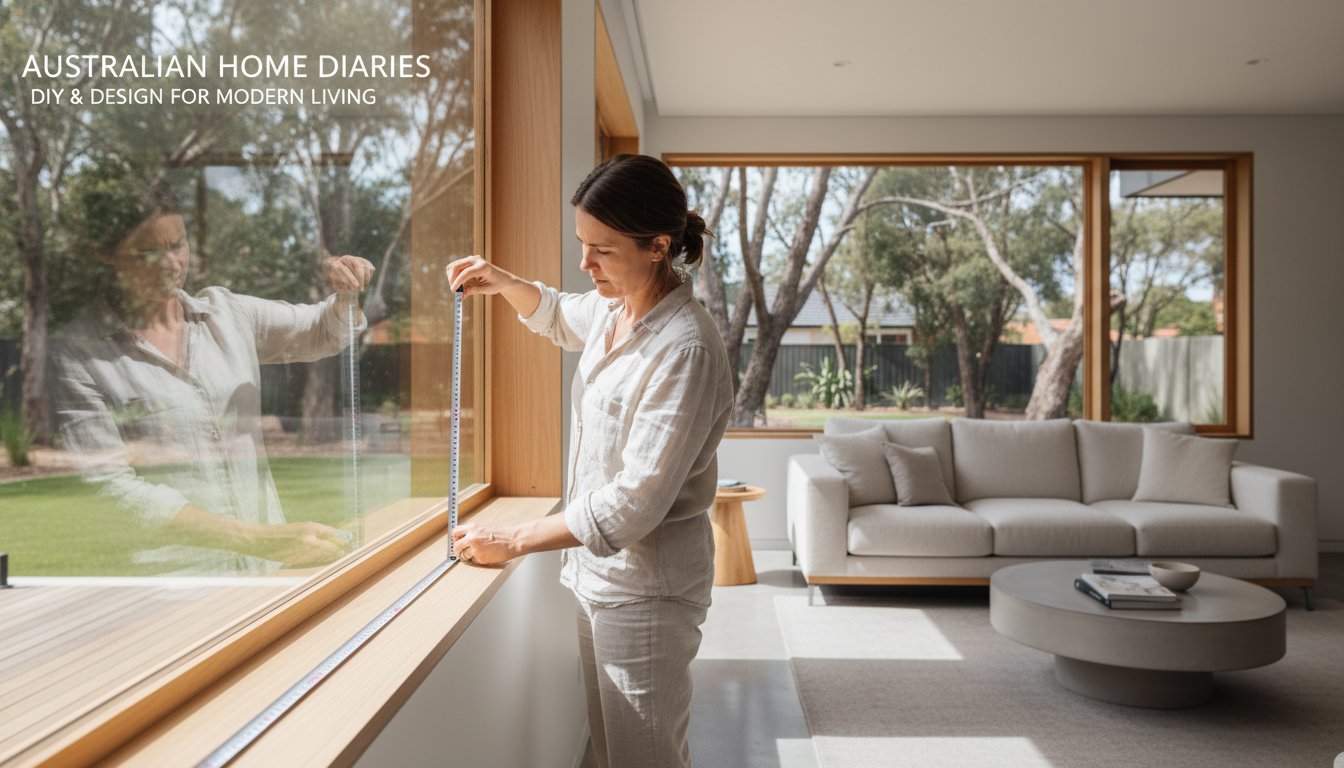
A high-quality metal tape measure is your best friend here. Don’t be tempted to use an old fabric sewing tape; they stretch over time and can lead to measurements that are off by several millimetres. You’ll also want a sturdy ladder to reach the top corners safely and a second pair of eyes to double-check your numbers. While digital notes are handy, we always recommend a good old-fashioned pen and paper. It’s much easier to sketch out your window and jot down the dimensions as you go, reducing the risk of a simple typo that could ruin a custom order. Accuracy is everything when you’re ordering bespoke furnishings online, and brands like Save On Blinds rely on these precise details to ensure your custom shutters or shades fit perfectly.
Recess Fit vs. Face Fit: Which Is Right for Your Home?
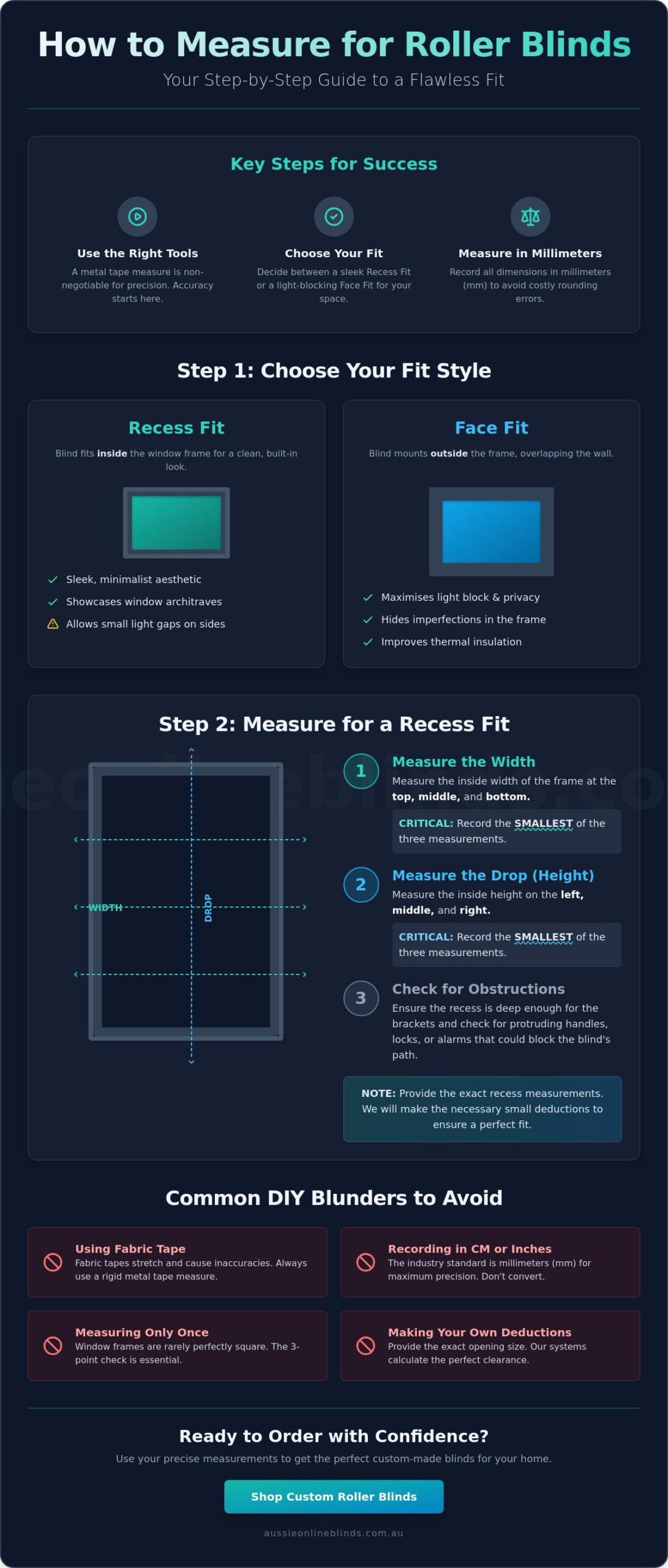
The Window blind you choose will either sit inside your window frame (Recess Fit) or on the outside of the architrave (Face Fit). A Recess Fit offers a sleek, modern finish that doesn’t hide your beautiful timber work, but it does allow for a small amount of light bleed around the edges. This is something to consider in the harsh Australian sun. If you’re installing blinds in a nursery or a bedroom where total darkness is the goal, a Face Fit is usually the better choice. It covers the entire opening and overlaps the frame, providing superior thermal insulation and privacy. Just be sure to check for protruding handles or window winders that might get in the way of the fabric as it rolls down. Choosing the right style is the first step in mastering how to measure for roller blinds effectively.
Finally, always record your measurements in millimetres. It’s the industry standard for a reason. Working in centimetres or inches leaves too much room for rounding errors, and when it comes to custom-made products, every millimetre counts for that perfect, snug fit. Take your time, be methodical, and you’ll be ready to place your order with total confidence.
How to Measure for a Recess Fit: The Sleek Inside Mount
A recess fit is the go-to choice if you’re looking for a clean, integrated finish that doesn’t hide your window’s timber work or architraves. By sitting the blind inside the window opening, you create a minimalist look that feels like a natural part of the architecture. However, knowing how to measure for roller blinds for a recess fit requires a bit more attention to detail than a standard face fit. The secret to success is realizing that very few windows are perfectly square, even in brand-new builds. To get that professional result, you’ll need to find the narrowest point of the opening so the blind can operate without catching.
Before you start, take a quick look for any obstructions. Protruding window handles, winding mechanisms, or even security sensors can get in the way of the fabric. If these items sit too far forward, your blind might not be able to roll down smoothly. In these cases, you might need to mount the blind further forward in the recess or consider a face fit instead. If your frame is clear, you’re ready to start measuring.
Measuring the Width for Recess Blinds
Start by measuring the inside width of your window frame at three different levels: the top, the middle, and the bottom. When you’re learning how to measure for blinds, the most critical step is to record the smallest of these three widths. If you provide a measurement based on a wider section of the frame, your blind simply won’t fit into the narrower gaps.
Don’t worry about making your own deductions for the brackets. Most manufacturers prefer you to provide the exact “tight” opening measurement. They’ll then calculate the necessary clearance for the mechanisms. This results in a small “light gap” on either side of the fabric, which is a standard part of how these blinds function within a recess. For those who need total darkness, exploring our range of blinds online will help you decide if a recess fit provides enough coverage for your needs.
Measuring the Drop for Recess Blinds
For the drop, or the height of the blind, you’ll also measure in three places: the left, the centre, and the right. Measure from the top inside edge of the frame down to the windowsill. Unlike the width, this is a vital part of learning how to measure for roller blinds because it ensures the blind reaches the bottom of the sill without leaving a gap or bunching up unnecessarily.
Finally, check the depth of your window recess. You’ll generally need at least 60mm to 75mm of depth for the roller tube and brackets to sit comfortably inside the frame. If your recess is shallower than this, the blind might protrude out into the room. Taking these extra few minutes to be precise ensures that when your custom order arrives, it slides into place perfectly for that high-end, DIY-installed look.
How to Measure for a Face Fit: Maximising Privacy and Blockout
While a recess fit offers a tidy look, the face fit is the true champion for the Australian climate. If you’re looking for the best way to keep the summer heat out and the warmth in during winter, mounting your blinds on the outside of the window frame is the way to go. This style is the superior choice for blockout roller blinds because it allows the fabric to overlap the window opening entirely. By covering the gaps where light usually sneaks in, you create a much more effective barrier against the sun. It’s also a fantastic solution for hiding older window frames or dealing with windows that aren’t perfectly square.
Learning how to measure for roller blinds with a face fit is slightly different because you aren’t restricted by the inside of the frame. Instead, you have the freedom to decide exactly how much coverage you want. This is particularly helpful for square-set windows that don’t have traditional architraves. In these modern homes, you simply create a “virtual” frame by measuring beyond the window opening to ensure the blind looks balanced and provides the privacy you need.
Measuring Width for Face Fit
To get the width right, measure from the outer edge of the left architrave to the outer edge of the right architrave. If your window has no architraves, measure the opening and add at least 100mm to that total. This ensures you have a healthy 50mm overlap on each side. To truly beat the Australian sun, an overlap of 50mm on each side is your secret weapon for total darkness and maximum privacy. This extra width prevents that annoying “light halo” effect that can wake you up at dawn. Always double-check your width at the top where the brackets will sit to ensure you have enough flat surface for a secure installation.
Measuring the Drop for Face Fit
Determining the drop for a face fit blind depends on where you want the roll to sit. We suggest starting your measurement at least 50mm above the window opening or directly on the top architrave. This gives the brackets plenty of solid material to bite into. From there, measure down to the windowsill. If you want the blind to hang past the sill for a more dramatic look or to cover a gap, add another 50mm to your final number. For floor-length windows or sliding doors, measure all the way to the floor and subtract 10mm to ensure the fabric doesn’t drag. Mastering how to measure for roller blinds in this way ensures your custom order fits your lifestyle as well as it fits your windows.
The DIY Blind Measurement Checklist: 7 Mistakes to Avoid
Even with the best intentions, a small slip-up can turn an exciting home project into a headache. We’ve seen it all before. Most errors don’t happen because people lack skill; they happen because they skip the final peer-review of their own numbers. Learning how to measure for roller blinds is about precision, and that means being aware of the common traps that catch out even the handiest DIYers. Before you hit that order button, run through this checklist to ensure your measurements are bulletproof.
- Mistake 1: Mixing up width and drop. It sounds simple, but swapping these two numbers is the most common reason for returns. Always write “Width” first, then “Drop.”
- Mistake 2: Measuring in centimetres or inches. Our manufacturing process uses millimetres for a reason. Centimetres lead to rounding errors, and inches simply aren’t precise enough for a snug custom fit.
- Mistake 3: Assuming your window is square. Houses settle and frames shift. If you only measure one spot, your blind might jam or leave a lopsided gap.
- Mistake 4: Confusing “fabric width” with “bracket-to-bracket” width. This is a big one. The fabric will always be narrower than the total width of the blind.
- Mistake 5: Forgetting internal obstructions. That sleek window handle or security sensor can stop a blind in its tracks.
- Mistake 6: Measuring the old blind instead of the window. Your new rollers might have different bracket requirements. Always measure the opening itself.
- Mistake 7: Rounding your numbers. Never round up or down to the nearest ten. Give us the exact millimetre reading you see on your tape.
The “Double Check” Protocol
We always suggest a “measure twice, record once” approach. Once you have your numbers, grab a partner and have them measure the window while you read your recorded notes aloud. This simple step catches transcription errors that you might overlook on your own. If you’re unsure about how your window compares to standard sizes, check our indoor roller blinds sizing guide to see how custom measurements differ from off-the-shelf options. Having that second pair of eyes builds the confidence you need to place a custom order.
Width vs. Fabric Width: The Critical Distinction
One of the most important parts of learning how to measure for roller blinds is understanding the gap. Every roller blind requires brackets and a control mechanism. This means the actual fabric will be approximately 30mm to 35mm narrower than the total bracket-to-bracket width you provide. For a recess fit, this creates a small light gap on the sides. If you are opting for a face fit, you should adjust your measurements to ensure the fabric still covers the glass effectively even with these bracket gaps. Taking this into account ensures you get the total privacy and light control you’re after. If you’re ready to put your measurements to work, you can browse our range of DIY blinds and start customizing your perfect fit today.
Ordering Your Custom Blinds with Confidence
Now that you’ve mastered how to measure for roller blinds, you’re standing at the most exciting part of the journey. You’ve done the hard yards with the tape measure, double-checked your millimetres, and avoided those common traps we discussed earlier. Now, it’s time to turn those numbers into a reality that transforms your home. Choosing custom-made blinds isn’t just about getting a perfect fit; it’s about investing in the long-term comfort and value of your property with a partner you can trust. Our process is designed to be straightforward, ensuring you feel supported from the moment you start browsing until your new blinds are hanging perfectly.
While off-the-shelf options might seem convenient, they often require “cutting down” to fit your specific window size. This not only ruins the manufacturer’s warranty but also leaves you with frayed edges and a finish that looks anything but professional. Custom-made diy blinds are built to your exact specifications, ensuring they glide smoothly and sit perfectly within your frame from day one. You’re getting a bespoke product that’s designed to last, rather than a generic compromise that leaves unsightly light gaps and compromises your privacy.
When you use our configuration tool at Aussie Online Blinds, you’ll have the chance to select the perfect fabric for your needs. If you want to maintain your view while reducing glare and heat, Sunscreen Roller Blinds are an excellent choice for living areas. For spaces where you want a soft, ambient glow without sacrificing privacy, our light filtering options provide that gentle diffusion of the Australian sun. Every fabric choice is an opportunity to tailor the mood and functionality of your room to your exact lifestyle.
Why Custom-Made Wins Every Time
The precision of a custom fit goes beyond just aesthetics. It plays a vital role in your home’s energy efficiency. A blind that fits snugly against the frame or overlaps correctly in a face fit acts as a thermal barrier, helping to keep your rooms cooler in summer and warmer in winter. This level of performance is something off-the-shelf products simply can’t match. You’ll also avoid the hassle of trying to trim down metal tubes or fabric rolls in your garage. Our blinds arrive finished to a high standard, giving you the pride of a professional DIY result without the professional price tag or the risk of mistakes.
This commitment to quality and detail is shared by experts in other custom fields; for instance, if you’re looking to showcase your home improvement projects in a professionally bound volume, you can learn more about bespoke publication solutions.
Next Steps: From Measuring to Installing
Once you place your order, our team gets to work on your bespoke furnishings with the care they deserve. We keep the process transparent, so you’ll know exactly what to expect as your blinds move through production and out for delivery across the country. While your custom hardware is being prepared, it’s a good idea to clear your window sills and ensure your mounting surfaces are clean and ready for action. Most of our customers find that the installation process is even quicker than the measuring phase. When you’re ready to take that final step toward a more beautiful and functional home, start configuring your custom roller blinds today and enjoy the confidence that comes with a job well done.
Transform Your Home With a Flawless Finish
You now have the exact blueprint for a professional window transformation. By choosing the right fit style and sticking to our precise measurement checklist, you’ve removed the guesswork that often leads to costly DIY mistakes. You know that how to measure for roller blinds is less about complex math and more about taking your time with a sturdy metal tape measure. Whether you’ve opted for a sleek recess mount or a light-blocking face fit, those numbers on your page are the key to a more comfortable and stylish home.
As a family-owned Australian business, we’re here to support your project every step of the way. We back all our custom blinds with a 3-year warranty and offer Australia-wide shipping to ensure your DIY journey is as smooth as possible. Now that your measurements are ready, it’s time to see your vision come to life. Browse our range of custom-made roller blinds and get an instant quote today. We can’t wait to help you achieve that perfect, bespoke fit you’ve been dreaming of.
Frequently Asked Questions
Do I need to take any deductions from my measurements for a recess fit?
You don’t need to take any deductions yourself when providing measurements for a recess fit. Simply provide the exact “tight” measurement of the window opening. Our manufacturing process automatically calculates the necessary clearances for the brackets and control mechanisms. This ensures the blind fits snugly within the frame without you having to guess how much room the hardware needs for a smooth operation.
What is the difference between “Blind Size” and “Window Size” when ordering?
The difference lies in whether the measurements include the installation hardware. “Window Size” refers to the literal opening of your window frame. “Blind Size” is the total width of the finished product from the outside of one bracket to the outside of the other. We generally recommend providing the window size so we can handle the technical adjustments for your specific mounting style and hardware requirements.
How do I measure for roller blinds if my window has no architrave?
Measuring for windows without architraves, often called square-set windows, is simple once you decide on your fit style. For a recess fit, measure the internal opening as you would for any other window. For a face fit, measure the opening and add at least 50mm of overlap to each side and the top. This creates a clean, professional look even when there is no existing timber work to follow.
Can I measure for two blinds to fit on one large window?
You can certainly install two blinds on one large window to make operation easier and manage the weight of the fabric. Measure the total width of the opening and determine the exact point where you want the two blinds to meet, such as at a window mullion. Remember that there will be a small gap of approximately 20mm between the fabric of the two blinds where the brackets sit side-by-side.
What should I do if my window frame is not perfectly square?
When a frame isn’t square, the golden rule is to work with the smallest width measurement for a recess fit. Take three measurements at the top, middle, and bottom of the frame to find the narrowest point. This ensures your blind won’t get stuck as it rolls down. For the drop, measuring in three places and using the smallest height prevents the bottom rail from resting unevenly on the windowsill. For significant settling or renovation needs that extend beyond cosmetic adjustments, consulting an experienced contractor like Metro Reconstruction Services, Inc. can help address underlying framing and structural issues.
Is it better to measure in centimetres or millimetres?
It’s always better to measure in millimetres to ensure the highest level of precision for your project. When learning how to measure for roller blinds, using millimetres eliminates the temptation to round your numbers up or down. A few millimetres might not seem like much, but they can be the difference between a blind that slides into a recess perfectly and one that is just a fraction too wide to install.
How much overlap should I allow for a face fit roller blind?
We recommend allowing an overlap of at least 50mm on each side of the window opening for a face fit. This 100mm total increase in width ensures the fabric adequately covers the glass and minimizes light leakage around the edges. For the drop, adding 50mm above the opening for the brackets and 50mm below the sill creates a balanced look while providing superior privacy and insulation for your home.
What tools do I need to measure for roller blinds accurately?
The only tools you need for the job are a quality metal tape measure, a sturdy ladder, and a way to record your notes. A metal tape is non-negotiable because fabric tapes can stretch, leading to inaccurate results. It’s also helpful to have a partner to hold the tape steady on wider windows. This simple toolkit is all it takes to get the professional numbers needed for your custom order.