

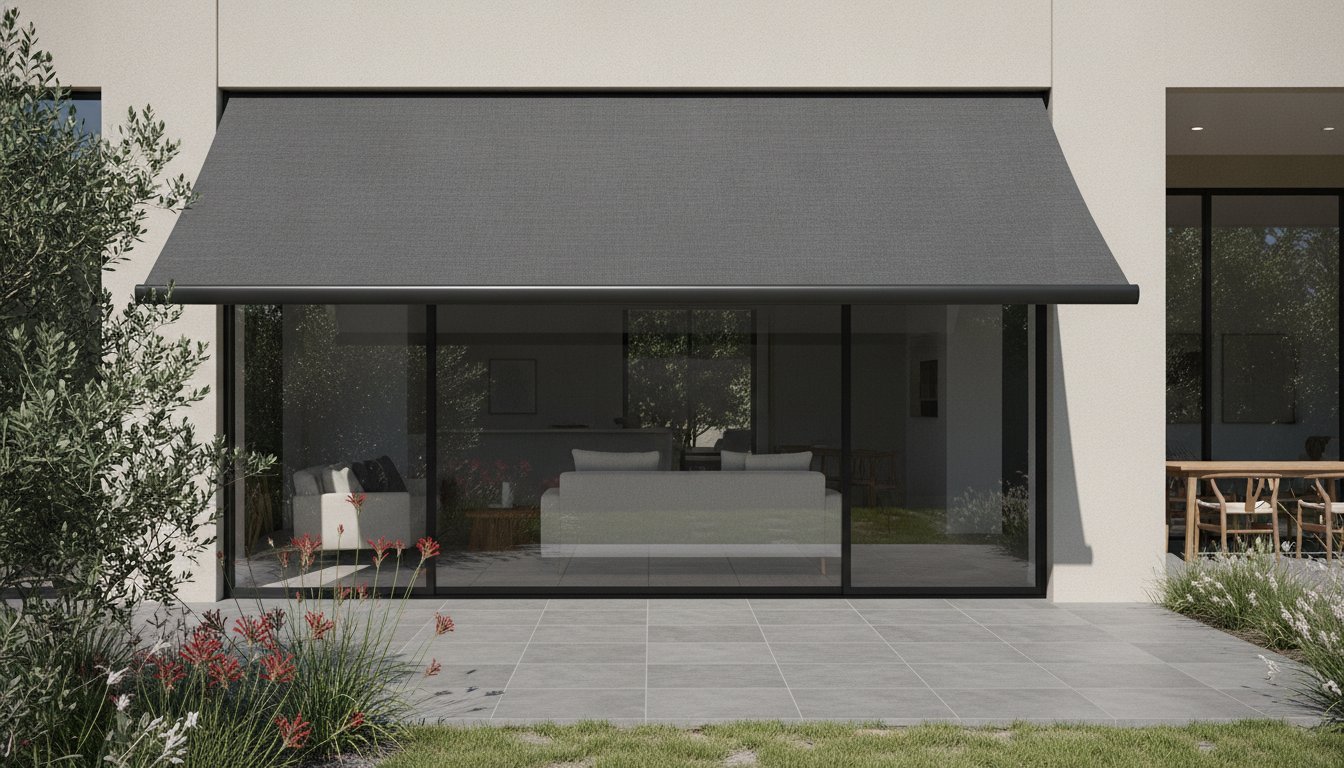
Why do most outdoor shades force you to choose between a cool breeze and a glare-free room? If you’ve ever spent a sweltering Australian afternoon sitting in the dark because your blinds are pulled tight against the sun, you know the frustration. Standard vertical drops might block the heat, but they also kill the airflow, leaving your living room feeling like a sauna. Choosing pivot arm blinds for windows changes that dynamic completely. These clever systems project outward in an arc, creating a canopy that stops the sun’s rays while letting the air circulate freely into your home.
We’re here to show you how this simple design can transform your comfort levels and lower your cooling costs. Research from the Professional Awning Manufacturers Association shows that awnings can reduce solar heat gain by up to 77 percent, making them a powerhouse for energy efficiency. This effectiveness is why leading North American providers like Awnings And More Inc. continue to champion custom shading as a primary defense against rising home temperatures. In this guide, you’ll discover why pivot arm blinds are the ultimate DIY solution for homeowners who want to protect their furniture from UV damage without losing their view. We’ll walk you through everything you need to know to get started. It’s time to reclaim your windows and enjoy a cooler, brighter home on your own terms.
Key Takeaways
- Understand how the spring-loaded arm mechanism creates a canopy that invites airflow while blocking harsh direct sunlight.
- See why pivot arm blinds for windows outperform standard vertical shades when it comes to keeping non-enclosed areas breezy and cool.
- Learn exactly how to measure your window width and drop so you can order custom-made blinds with confidence.
- Discover how to protect your home’s interior from UV damage and lower your energy bills by effectively managing solar heat gain.
- Find out why choosing a custom DIY approach offers better value and a superior fit compared to one-size-fits-all retail options.
What Are Pivot Arm Blinds and How Do They Work?
Pivot arm blinds for windows are more than just a shade solution; they’re a heavy-duty outdoor awning designed to handle the unique demands of the Australian sun. Unlike a standard vertical blind that sits flush against your window frame, these blinds project outward in an adjustable arc. To understand the basics, you might ask, what is an awning? In this case, it’s a versatile structure that uses a set of spring-loaded arms to hold the fabric away from the glass. This specific “projected” design is the secret to keeping your home cool while maintaining a clear view of the garden.
The Mechanism: Arms, Springs, and Fabric
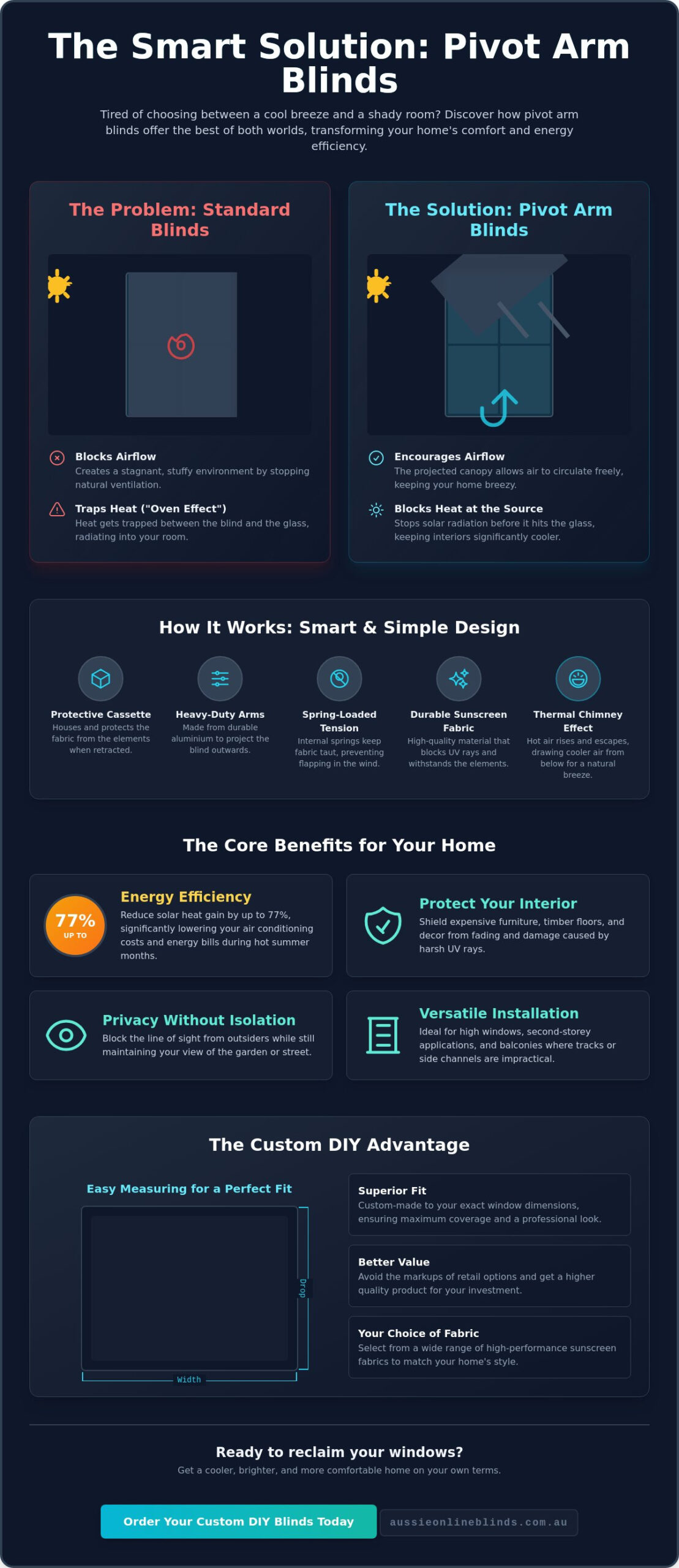
The strength of these blinds lies in their heavy-duty aluminium components. These arms aren’t just there for show. They contain internal springs that maintain constant tension on the fabric. This tension is vital because it stops the material from flapping or sagging when the wind picks up. When you retract the blind, the fabric rolls up into a protective top hood or cassette. This housing keeps your investment safe from the elements and ensures the fabric stays clean and vibrant for years. It’s a simple, robust system that’s built for longevity and ease of use.
Why Airflow Matters in the Australian Climate
Standard vertical blinds often create an “oven effect.” Because they sit so close to the glass, heat gets trapped in the small gap, baking the window and eventually radiating into your living room. Pivot arm blinds for windows solve this by creating a generous space between the shade and the glass. This gap allows air to circulate freely. You get the benefit of full shade without the stagnant, hot air that usually follows. It’s a practical design that prioritizes your comfort during the peak of summer.
This design relies on a specific physical process to keep things fresh. The thermal chimney effect is a process where hot air rises and escapes through the top and sides of the projected blind, drawing cooler air in from below to maintain a natural breeze. This constant movement of air prevents heat from building up against your windows, which means your air conditioner doesn’t have to work nearly as hard to keep things comfortable. It’s a logical way to manage the summer heat without feeling boxed in.
The Core Benefits of Installing Pivot Arm Blinds
Installing pivot arm blinds for windows is a smart move that goes beyond simple shade. While many homeowners start looking at these for their stylish appearance, the real value lies in how they protect your home’s interior. High-quality sunscreen fabrics act as a barrier against intense UV rays, which are notorious for bleaching expensive timber floorboards and fading your favorite lounge suite. If you’ve invested in quality flooring or designer furniture, you know how devastating sun damage can be. By stopping the sun in its tracks, you’re extending the life of your furnishings and keeping your home looking fresh for years to come. It’s a simple way to preserve the value of your home’s interior without having to keep the lights on during the day. Similarly, protecting your eyes from harsh glare is vital, and for expert ophthalmology services, you can visit brightsight.com.au.
One of the most refreshing benefits is the ability to maintain your privacy without feeling like you’re living in a cave. Because these blinds project outward, they block the line of sight from the street or the neighbor’s second-storey window while still allowing you to look out and enjoy your garden. This angle is particularly useful for those who want to keep an eye on the kids playing outside while keeping the prying eyes of passers-by at bay. It’s the perfect middle ground for suburban living where houses are built close together but you still want to feel connected to the outdoors.
Energy Efficiency and Cost Savings
The most effective way to keep a house cool is to stop the sun from hitting the glass in the first place. Once heat passes through your window, it’s already inside your home, forcing your air conditioner to work overtime. Using external shading can reduce solar heat gain by up to 77 percent, which translates directly into lower energy bills. This proactive approach is significantly more effective than using internal curtains or blinds alone. For a deeper look at how different styles compare, our outdoor blinds guide covers the full range of options available for Australian conditions.
Versatility for High Windows and Balconies
If you have second-storey windows that catch the afternoon sun, pivot arms are often the safest and most practical choice. They don’t require tracks or side channels, making them easier to install in tricky locations. You can choose from several operation methods to suit your lifestyle. A manual crank is a reliable, cost-effective option, while internal pull-cords allow you to adjust the shade from inside the room. For ultimate convenience, motorisation lets you control your pivot arm blinds for windows with the touch of a button. If you’re ready to start your project, you can browse our range of DIY blinds online to find the perfect match for your home’s architecture.
Pivot Arm Blinds vs. Zipscreens and Straight Drops
Choosing the right shade for your home often feels like a balancing act between style and function. While we’ve discussed how pivot arm blinds for windows create a canopy-like effect, it’s important to see how they stack up against other popular outdoor options. The biggest differentiator is airflow. Because pivot arms project outward, they don’t seal off the window. This allows a constant stream of fresh air to move behind the fabric, which is a major advantage for windows that you like to keep open during the day. In contrast, track-based systems or vertical drops sit much closer to the building, which can limit that natural ventilation.
When it comes to DIY installation, pivot arm systems are surprisingly straightforward. You’re essentially mounting two main brackets and the arm supports, rather than aligning long vertical tracks that must be perfectly plumb. This makes them a forgiving choice for older Australian homes where walls might not be perfectly straight. Visually, they also add a bit of architectural depth to your facade. While a flat blind can look a bit clinical, the projected arc of a pivot arm creates a classic, high-end look that complements both traditional weatherboards and modern brickwork.
When to Choose a Zipscreen Instead
There are times when a different tool is better for the job. If your primary goal is to create a completely enclosed outdoor room that is bug-proof and wind-stable, a Zipscreen is the way to go. These use side-channel technology to lock the fabric in place, which is fantastic for patios but can be overkill for a standard bedroom window. If you’re weighing up these two for an alfresco area, our guide on zipscreen vs ziptrak offers a deeper look at how enclosure systems work. Generally, if you want “breathability” for your windows, stick with the pivot arm.
Pivot Arms vs. Straight Drop Blinds
Straight drop blinds are the cousins of the pivot arm, but they serve a different purpose. A straight drop falls vertically, usually secured at the bottom by straps or a wire guide. These are excellent for balconies where space is tight and you can’t have arms projecting over a walkway. However, for a standard window, the pivot arm is often the superior choice because it allows you to lower your energy bills more effectively by creating that vital air gap. Determination of which style fits best usually comes down to your mounting surface. If you have plenty of room for the arms to swing, the pivot arm provides better heat management and a more traditional awning aesthetic that straight drops simply can’t match.
The DIY Selection Guide: Measuring and Fabric Choices
Getting the perfect fit for your pivot arm blinds for windows starts with a few simple measurements. While standard retail stores offer limited sizes that rarely fit Australian window frames perfectly, our DIY model empowers you to get a bespoke finish without the designer price tag. You’ll need to decide on the width of the blind and the total drop, but don’t forget about the projection. The arm length you choose determines how far the blind will sit from the window, which is the key to balancing shade and airflow.
Adding an aluminium hood is a practical choice that pays off in the long run. This cassette protects the fabric roll from rain, dust, and debris when the blind is retracted. Without a hood, the top of your fabric is constantly exposed to the elements, which can lead to uneven fading or deterioration over time. It’s a small detail that ensures your pivot arm blinds for windows look brand new for many seasons. It also adds a sleek, finished look to your home’s exterior that hides the mechanical components from view.
Sunscreen Mesh vs. Canvas: Which Fabric Wins?
Sunscreen mesh is the most popular choice for modern homes because it manages heat without blocking the light. You can choose between a 95 percent and 99 percent UV block. The 95 percent option is great for general shade, while the 99 percent version is a lifesaver for windows that face the harsh afternoon sun. If you need total darkness for a bedroom or a nursery, traditional canvas is a solid alternative that provides a complete blockout. The openness factor of a sunscreen mesh determines how clearly you can see through to your garden while the blind is down.
Measuring Like a Pro for DIY Success
Before you pick up the tape measure, look for potential hurdles. External plumbing, downpipes, or even a porch light can stop the arms from moving through their full arc. Most people choose a “Face Fit” for these blinds, mounting them onto the architrave or the wall above the window. This ensures the fabric covers the entire opening and the arms have plenty of room to operate. To get these numbers right the first time, follow our masterclass on how to measure for blinds online. Once you have your dimensions ready, you can order your custom pivot arm blinds online and have them delivered straight to your door.
Why Custom DIY Pivot Arm Blinds are the Smart Choice
Choosing to install pivot arm blinds for windows yourself is one of the most rewarding home improvement projects you can tackle. The biggest win is the immediate cost saving. By skipping professional installation fees, you keep more money in your pocket while still achieving a high-end result. This direct-to-consumer model means you aren’t paying for a salesperson’s commission or a technician’s van. You’re simply paying for the quality of the materials and the craftsmanship that goes into every custom-made piece we produce.
Off-the-shelf blinds might seem convenient at first, but they often lead to frustrating compromises. A standard 2.1-metre width rarely aligns perfectly with your window frame, leaving gaps that let heat and light bleed through. When you choose a custom DIY approach, we build the blind to your exact millimetre measurements. This ensures full coverage and a professional finish that looks like it was designed specifically for your home’s architecture. It’s the difference between a “near enough” fit and a perfect one.
Regarding the installation process, you don’t need a shed full of specialized equipment to get the job done. Most homeowners already have the essentials: a sturdy ladder, a power drill with masonry or timber bits, a spirit level, and a tape measure. Because we provide heavy-duty aluminium components that are ready to go, the actual assembly is logical and fast. It’s a project you can easily complete in a single morning, even if you aren’t a seasoned handyman.
The Aussie Online Blinds Difference
We take immense pride in our regional heritage and our status as a family-owned business. Our commitment to quality is backed by a 3-year warranty, giving you peace of mind that your investment is protected against the harsh Australian climate. We ship nationally, so whether you’re in a capital city or a regional town, you can have custom blinds delivered right to your door. If you get stuck during the measurement or installation phase, our team is here to guide you through the process. We aren’t a faceless corporation; we’re your partners in this project journey.
Ready to Transform Your Windows?
Pivot arm blinds for windows add tangible value to your property by improving energy efficiency and boosting curb appeal. They allow you to enjoy a cooler home without sacrificing the natural light or the view you love. Before you place your order, run through this final checklist:
- Verify your measurements for both width and drop.
- Check for any external obstructions like downpipes or lights.
- Ensure your chosen fabric colour complements your exterior walls.
- Decide on your preferred operation method, whether manual or motorised.
Once you’re ready to upgrade your comfort, we’re here to help. Browse our custom Pivot Arm Blinds and get an instant quote today!
Enjoy a Cooler, Brighter Home This Summer
You now have the tools to transform your living spaces with a solution that doesn’t force you to choose between fresh air and a cool room. Pivot arm blinds for windows provide that unique canopy effect, letting the breeze in while stopping the sun’s heat before it ever hits your glass. It’s a practical, stylish way to protect your furniture and slash those summer energy bills without feeling boxed in. By taking the DIY route, you’re ensuring a perfect millimetre-fit that standard retail options simply can’t match.
As a family-owned Australian business, we’re proud to help you achieve professional results on a DIY budget. Every custom blind we craft comes with a 3-Year Warranty and access to our easy-to-follow installation guides. You’ve seen how simple the measurement process is, and now it’s time to take the final step toward a more comfortable living environment. Order Your Custom Pivot Arm Blinds Online Now and start enjoying the benefits of a custom-shaded home. We’re here to support you every step of the way, from the first measurement to the final screw. You’ve got this!
Common Questions About Pivot Arm Blinds
Can pivot arm blinds be installed on the second storey of a house?
Yes, pivot arm blinds for windows are a perfect choice for second storey installations because they don’t require side tracks or channels. This makes mounting them from a ladder or from inside the room much simpler for a DIY project. For upper floors, we suggest choosing motorisation or an internal pull-cord so you can adjust the shade easily without having to go outside and use a manual crank.
Are pivot arm blinds wind-rated for coastal areas?
These blinds are built with heavy-duty internal springs to handle moderate breezes, but they aren’t designed for gale-force winds or severe storms. If you live in a coastal area, the aluminium components will resist rust, but we recommend hosing them down regularly with fresh water to remove salt spray. It’s best to retract your blinds when the wind picks up to protect the fabric and the arm mechanism from unnecessary strain.
How do I clean the fabric on my pivot arm awnings?
Cleaning your blinds is a simple task that ensures they stay looking fresh for years. Use a soft-bristled brush to remove loose dust, then wash the fabric with a mixture of mild soapy water and a soft cloth. Avoid using high-pressure hoses or harsh chemicals that might strip the UV coating. Always let the fabric dry completely before you roll it back into the hood to prevent mould or mildew from forming.
Can I operate pivot arm blinds from inside the house?
You can definitely operate your blinds from inside the house by selecting the internal pull-cord or motorised option during the ordering process. This is a popular choice for bedrooms or high-up windows where reaching an external crank isn’t practical. Motorisation allows you to control multiple pivot arm blinds for windows with a single remote, making it easy to manage your home’s temperature with the touch of a button.
What is the difference between a pivot arm blind and a folding arm awning?
The main difference is the design and the primary purpose of the shade. A pivot arm blind uses arms that swing in a fixed arc to cover a window, while a folding arm awning extends horizontally to create a roof over a patio or deck. Pivot arms are specifically designed for vertical window protection and airflow, whereas folding arms are meant to provide overhead cover for outdoor entertaining areas.
Do pivot arm blinds provide privacy at night?
Sunscreen mesh fabrics provide excellent daytime privacy, but they can become semi-transparent at night when your indoor lights are on. If total night-time privacy is your priority for a bedroom or bathroom, we suggest choosing a blockout fabric. These materials stop the silhouette effect and ensure that passers-by can’t see into your home after the sun goes down, giving you complete peace of mind.
How long does a typical DIY installation take for one window?
Most homeowners find that a single window installation takes between one and two hours to complete once your tools are ready. This timeframe includes the initial set-up of your brackets and the final adjustments to the arm tension. Once you’ve finished your first window and feel comfortable with the process, you’ll likely find that subsequent windows go much faster. Our guides are designed to help you move through the steps without any guesswork.
What happens if I make a mistake in my measurements?
If you realize you’ve made a mistake in your measurements, contact our support team immediately before the manufacturing process begins. We encourage everyone to use our measure twice, order once rule to ensure a perfect fit for your window. If the blinds have already been made, we can often provide advice on how to adjust your mounting position, but custom-made products usually can’t be resized easily once they are finished.