


Imagine settling in for a quiet afternoon on the patio, only to have your sunset view interrupted by a Zipscreen that’s shuddering and sticking halfway down. It’s a frustrating moment that many Australian homeowners face, especially when dust and salt air start to take their toll on the hardware. We know you invested in your outdoor blinds to create a comfortable, stylish retreat, and seeing them struggle against the elements is the last thing you want. This zipscreen maintenance guide is designed to help you protect that investment with practical, easy-to-follow advice.
Effective maintenance is really a two-part process: cleaning for crystal-clear visibility and lubricating for long-term mechanical health. You don’t need a degree in engineering or a shed full of expensive chemicals to get the job done right. In fact, using the wrong cleaners can often do more harm than good to your mesh. We’ll show you exactly how to clear out those side channels, keep the motor responsive, and maintain that unobstructed view you love. By following these simple steps, you’ll avoid the cost of professional repair call-outs and keep your outdoor area looking brand new for years to come.
Key Takeaways
- Master the “Golden Rule” of cleaning your mesh to prevent permanent stains from sap or bird droppings without using damaging high-pressure hoses.
- Use this zipscreen maintenance guide to identify early signs of channel friction and learn the correct way to lubricate tracks for silent operation.
- Quickly troubleshoot motorized issues by understanding “thermal cut-out” and simple battery checks before you book an expensive technician.
- Protect your investment from the harsh Australian climate with specific care routines for coastal homes and smart wind-management tips.
- Recognize the subtle signs of wear and tear that signal when it is time to refresh your outdoor blinds versus when a simple DIY fix will do.
Cleaning Your Zipscreen Mesh: Essential Care for Longevity
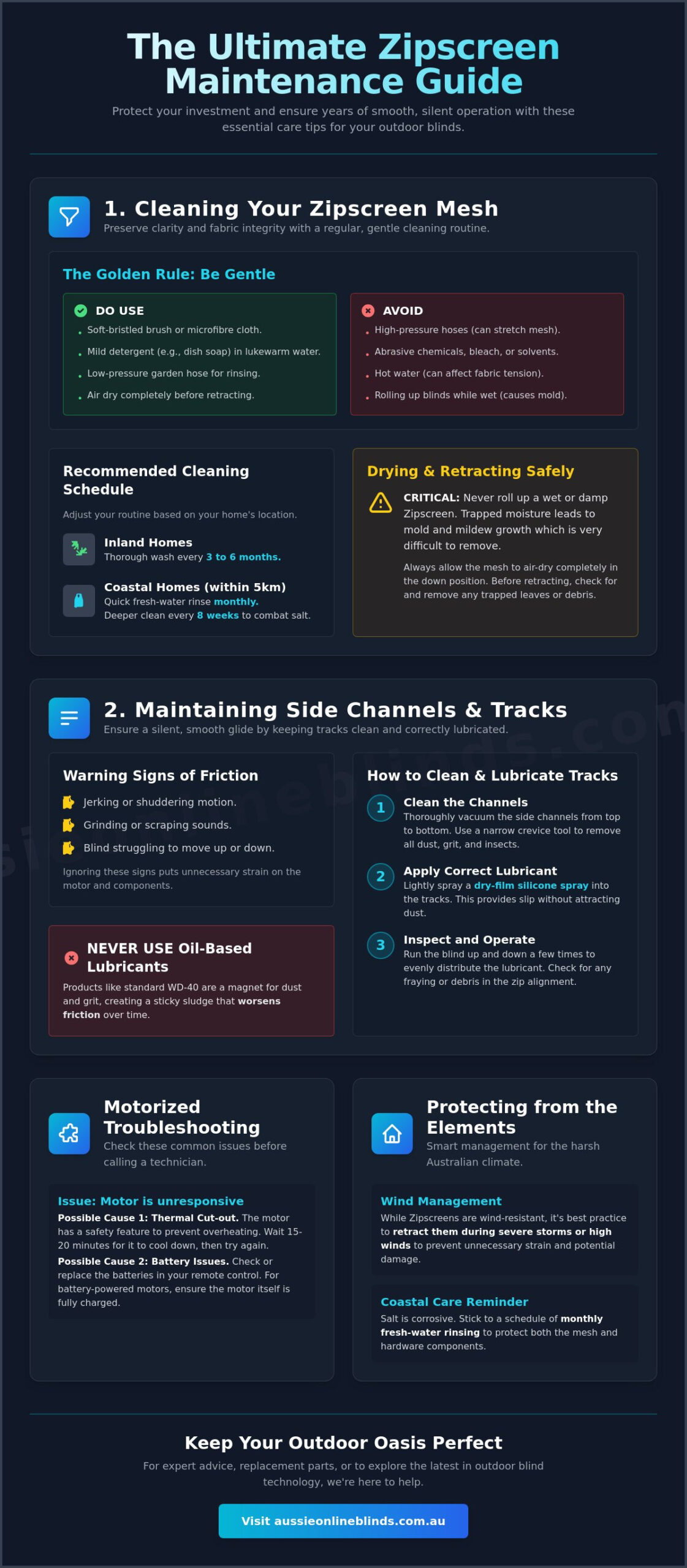
Keeping your outdoor blinds in top shape starts with the mesh. It is the first thing you see when you step outside, and it is also the part most exposed to the sun, wind, and rain. This zipscreen maintenance guide wouldn’t be complete without emphasizing that regular cleaning is about more than just curb appeal. Bird droppings, tree sap, and pollen are naturally acidic. If these contaminants sit on the fabric for too long, they can cause permanent staining or even eat away at the protective coatings that keep your blinds looking fresh.
The “Golden Rule” of mesh care is simple: be gentle. You might be tempted to blast away stubborn dirt with a high-pressure hose, but that is a mistake that can lead to expensive repairs. High pressure can stretch the weave of the mesh or damage the delicate seals in the side channels. Similarly, stay away from abrasive chemicals, bleach, or solvents. These harsh products can strip the UV stabilizers from the fabric, making it brittle and prone to tearing after only a few seasons in the Australian sun.
Your cleaning schedule should depend on your local environment. If you live in a leafy inland suburb, a thorough wash every three to six months is usually enough to keep things operating smoothly. However, for those enjoying life within five kilometers of the coast, salt build-up is a constant challenge. In these areas, we recommend a quick fresh-water rinse every month and a deeper clean every eight weeks to prevent salt from corroding the hardware or clouding your view through the mesh.
Your Zipscreen Cleaning Tool Kit
You don’t need a professional cleaning kit to get great results. A soft-bristled brush or a clean microfibre cloth is perfect for gentle agitation without snagging the fibers. Mix a small amount of mild detergent, like standard dish soap, into a bucket of lukewarm water. Avoid using hot water, as it can occasionally affect the tension of the fabric. Finally, keep a low-pressure garden hose handy for a final rinse to ensure no soapy residue is left behind to attract more dust.
Drying and Retracting Safely
One of the most important parts of this zipscreen maintenance guide is knowing when to put your blinds away. You must never roll up a wet Zipscreen blind for extended periods. Trapping moisture inside the headbox creates a breeding ground for mold and mildew, which can be nearly impossible to remove once it takes hold. On high-humidity days, give the fabric plenty of time to air-dry completely in the down position. Before you finally retract the blind, do a quick visual check for any trapped leaves or twigs. Small debris can get caught in the roll, causing unsightly dents or even punctures in the mesh over time.
Maintaining Side Channels and Tracks for Smooth Operation
The genius of the Zipscreen system lies in its side channels. Unlike traditional blinds that flap in the breeze, these are locked into a dedicated track using a clever “zip” edge. While this design provides incredible wind resistance and a sleek finish, it also means there is more surface area where friction can occur. This part of our zipscreen maintenance guide focuses on ensuring those tracks stay slick and clear, allowing the fabric to glide effortlessly every time you press the remote.
You’ll know it is time for a bit of track maintenance if you notice your blinds moving with a jerking or shuddering motion. Sometimes, you might even hear a faint grinding sound as the bottom bar struggles against the resistance. If you ignore these signs, you place unnecessary strain on the motor or the manual crank mechanism. We recommend a quick visual inspection of the inner zip alignment every six months to catch any minor fraying or debris before it becomes a sticking point.
When it comes to lubrication, there is one mistake we see far too often: the use of oil-based lubricants like standard WD-40. While it might seem like a quick fix, oil-based products are a magnet for dust, grit, and salt. Over time, they create a thick, sticky sludge that actually makes the friction worse. Always reach for a dry-film silicone spray instead. It provides the necessary slip without the sticky residue, keeping your Zipscreen outdoor blinds operating as quietly as the day they were installed.
How to Lubricate Your Zipscreen Tracks
Keeping your tracks moving doesn’t take much effort if you follow these three simple steps:
- Step 1: Thoroughly vacuum the side channels from top to bottom. Use a narrow crevice tool to suck out any trapped grit, dried leaves, or the inevitable Aussie spiders that love to nest in the gaps.
- Step 2: Apply a light, even coat of dry-film silicone spray to the inner track. You don’t need much; a single pass along the length of the channel is usually plenty.
- Step 3: Cycle the blind up and down two or three times. This movement helps distribute the lubricant evenly across the entire “zip” mechanism and ensures a smooth run.
Debris Removal and Obstruction Checks
Beyond the tracks themselves, keep an eye on the surrounding hardware. Check the bottom bar regularly for small twigs or leaves that might have hitched a ride; even a tiny obstruction can cause the bar to sit unevenly, which puts the fabric out of alignment. Don’t forget to look up, too. The top pelmet is a favorite spot for mud-dauber wasps and cobwebs. A quick sweep with a cobweb brush ensures nothing falls into the roll and disrupts the tracking. Ensuring the fabric remains centered within those side guides is the best way to prevent long-term wear on the edges of your mesh.
Motorised Zipscreen Troubleshooting: Fixing Common Issues
If your tracks are clear and your mesh is clean but your blinds still won’t budge, it is time to look at the electrical side of things. Most issues with motorized systems are simpler than they seem. Before you assume the worst, this part of our zipscreen maintenance guide will walk you through the basic checks that solve the vast majority of unresponsive motor calls. Usually, it’s just a matter of a power supply hiccup or a remote battery that’s finally given up the ghost.
Maintaining motorized components is a common task for modern homeowners; for those needing assistance with other automated systems like garage entries, We Do Garage Doors provides expert repair and maintenance services throughout Melbourne.
One common “issue” that often alarms homeowners is actually a built-in safety feature called thermal cut-out. If you have been operating your Zipscreen outdoor blinds repeatedly in a short window, perhaps while showing them off to friends, the motor can heat up. To protect itself from permanent damage, the motor will stop responding for about 10 to 20 minutes until it cools down. If your blind stops halfway and won’t move, give it a rest before reaching for the toolkit. If it still won’t move after an hour, check your fuses or the circuit breaker in your main switchboard to ensure the circuit hasn’t tripped.
Resetting Your Blind Limits
Sometimes a blind might stop a few inches too early or refuse to close completely. This usually means the “limits” need a quick refresh. You’ll know a reset is required if the motor still runs but the positioning is just slightly off. Most modern motors use a “jog” sequence; this is where the blind moves up and down a tiny bit to confirm it has received a command. While every brand has a slightly different button combination, the general process involves holding specific keys on your remote to enter programming mode. However, if you hear a loud grinding sound or the fabric is bunching up, stop immediately. These are signs of a mechanical jam rather than a settings error, and forcing it could lead to a full motor replacement.
Remote Control and Battery Maintenance
Don’t overlook the simplest culprit: the remote control. Most Zipscreen remotes use CR2430 or CR2450 lithium coin batteries. These usually last a couple of years, but extreme heat or frequent use can drain them faster. When you replace them, make sure the battery is seated firmly and the contact points are clean. If your remote has lost its connection entirely, you may need to re-pair it with the motor by following the manufacturer’s sequence. Also, keep in mind that other household electronics like smart hubs or even some older baby monitors can occasionally cause signal interference. If your remote is temperamental, try moving closer to the motor head to see if the responsiveness improves.
Protecting Your Investment from the Australian Elements
The Australian climate is as beautiful as it is brutal. Whether your home faces the scorching western sun or the relentless salt spray of the coast, your outdoor blinds are on the front lines every single day. This zipscreen maintenance guide is here to help you navigate these environmental challenges so your blinds stay functional and stylish for years. While the hardware is engineered for durability, the combination of high UV and moisture requires a proactive approach to prevent premature wear.
For a broader look at preserving all the window coverings in your home, you can see our ultimate guide to blind maintenance. However, when it specifically comes to Zipscreen systems, the focus must be on protecting the powder-coated aluminium and managing fabric tension during extreme weather. UV rays can eventually affect the elasticity of the mesh and the vibrancy of the hardware finish if they aren’t cared for correctly.
Coastal Corrosion Prevention
If you live within five kilometres of the coastline, salt air is your biggest hurdle. Salt is highly corrosive and can eventually lead to “tea staining” or pitting on aluminium components. We recommend rinsing the side channels, bottom bar, and pelmet with fresh water at least once a month to wash away salt deposits. Keep a sharp eye out for any “bubbling” on the powder-coat finish; this indicates that salt has found a way underneath the coating. To add an extra layer of protection, you can apply a thin coat of non-abrasive automotive wax to the exposed hardware. This helps water and salt bead off the surface rather than sitting on the metal.
Wind and Storm Preparation
Zipscreens are famous for their wind resistance, but even the best hardware has its limits. The most important safety tip is the “fully up or fully down” rule. Never leave your blinds halfway open during a storm or high-wind event. A partially open blind acts like a giant sail, catching the wind and putting immense pressure on the side tracks and mounting points. By keeping them fully retracted or fully locked at the bottom, you allow the system to distribute the wind load evenly. After a major storm, do a quick check for any fabric “smiling” or sagging. This is where the mesh has stretched slightly under pressure; it usually settles back, but it’s a good time to ensure no debris has been forced into the tracks. If you’re looking to upgrade your patio with hardware built for these conditions, explore our range of DIY Zipscreen outdoor blinds today.
Longevity and Upgrades: When to Refresh Your Zipscreens
Even with the most dedicated care, every home feature eventually reaches the end of its natural lifespan. A high-quality Zipscreen system is a robust investment, often providing between 10 and 15 years of reliable service if you have followed a consistent zipscreen maintenance guide. However, the harsh Australian sun and coastal salt air will eventually take their toll. Knowing when to stop repairing and when to start refreshing your outdoor area is key to maintaining both the value of your home and the comfort of your patio.
There are a few clear signs that your blinds have moved beyond simple DIY fixes. If the mesh fabric has become brittle to the touch, or if you notice significant fraying along the “zip” edge that causes frequent jamming, the structural integrity of the material is likely compromised. Similarly, if the powder-coated hardware shows deep pitting or “bubbling” that can’t be cleaned away, it is usually a sign that the underlying aluminium is reacting to years of environmental stress. While these issues don’t always mean an immediate failure, they do suggest that your blinds are no longer performing at their peak.
Replacing Parts vs. Replacing the Blind
In many cases, you don’t need to start from scratch. If your hardware and motor are still in great shape but the fabric is looking tired or has suffered accidental damage, replacing just the mesh is a cost-effective way to refresh your space. You can also source replacement side-track inserts or bottom bar seals to fix minor tracking issues. However, if you find yourself calling out technicians for multiple motor resets or if the hardware is outdated, a full replacement often proves more economical in the long run. Modern systems offer tighter tolerances and better weather sealing than older models, providing a noticeable jump in performance.
Just as regular servicing prevents issues with outdoor blinds, maintaining other high-use mechanical systems is key to home longevity. For residents in Melbourne’s west or north, Brimbank Garage Doors & Repairs offers specialized expertise in maintaining and repairing garage systems to the same high standard.
Upgrading to Smart Home Integration
The most exciting reason to refresh your Zipscreens isn’t just about wear and tear; it’s about the technology. Modern outdoor blinds can now be integrated into your wider smart home ecosystem. By adding a Wi-Fi hub, you can control your blinds via a smartphone app or voice commands, even when you aren’t at home. Perhaps the best upgrade for longevity is the addition of sun and wind sensors. These clever devices act as an automated zipscreen maintenance guide, retracting your blinds automatically when wind speeds get too high or lowering them when the sun hits a certain intensity. This automation prevents accidental damage and ensures your blinds are always in the safest position for the current conditions.
Ready for a new look? Explore our custom Zipscreen range and see how the latest hardware can transform your outdoor living experience.
Enjoy Your Outdoor Retreat for Years to Come
Taking care of your outdoor space shouldn’t feel like a chore. By sticking to this zipscreen maintenance guide, you’re doing more than just cleaning; you’re actively protecting the comfort and style of your home. Remember to keep those side channels clear of grit, use only dry-film silicone for lubrication, and always give your mesh a gentle fresh-water rinse after coastal winds. These simple habits ensure your blinds operate smoothly and look stunning through every Australian season.
A beautiful outdoor area isn’t just about the blinds; keeping your paving and stone surfaces free from stains is equally important for a complete retreat, and you can discover Patio Black Spot Removal Australia for professional-grade restoration chemicals.
When you’re relaxing in your clean, well-maintained outdoor area, you can also learn more about HoneyBee Wrap to discover how their reusable food wraps made from Australian beeswax provide a sustainable way to keep snacks fresh while you enjoy the view.
If you find that your current setup is beyond a simple refresh or you’re ready to complete your patio transformation, we’re here to help. We’re an Australian family-owned and operated business, and we take pride in providing high-quality solutions that you can easily manage yourself. Every product we sell comes with a 3-year warranty and is custom-made for a perfect DIY fit. This means you can upgrade your space with total confidence. Order your custom Zipscreen outdoor blinds today and enjoy a more comfortable home tomorrow.
Frequently Asked Questions
Can I use a pressure washer to clean my Zipscreen blinds?
No, you should never use a pressure washer on your Zipscreen blinds. The intense force of a high-pressure spray can stretch the mesh weave or dislodge the delicate seals within the side channels. Instead, use a low-pressure garden hose and a soft brush. This approach removes dirt and salt effectively without risking the structural integrity of your fabric or hardware.
What is the best lubricant for Zipscreen side channels?
A dry-film silicone spray is the only lubricant we recommend for your side channels. You should avoid oil-based products like standard WD-40 at all costs. Oil-based lubricants attract dust, grit, and salt, which eventually creates a thick, sticky sludge that makes friction worse. Silicone provides a clean, slick surface that helps the “zip” glide effortlessly without leaving a messy residue.
How do I fix a Zipscreen blind that is stuck or jerking?
A jerking blind is usually caused by a build-up of debris or a lack of lubrication in the side tracks. Start by vacuuming the side channels to remove grit, dried leaves, or spider webs. If the movement is still restricted, apply a light coat of silicone spray. This is a key step in any zipscreen maintenance guide to ensure the fabric glides smoothly without straining the motor.
Should I leave my Zipscreens down during a storm?
You should leave your Zipscreens either fully retracted or fully locked in the down position during a storm. Never leave them halfway open, as this creates a sail effect that puts extreme pressure on the side tracks and mounting points. By keeping them fully closed or open, you allow the system to handle wind loads exactly as it was designed to do.
How often should I clean my outdoor blinds if I live near the beach?
If you live within five kilometres of the coastline, we suggest a fresh-water rinse once a month to prevent salt build-up. A deeper clean with mild soapy water should happen every eight weeks. This regular routine is essential for coastal homes to prevent salt from corroding the aluminium hardware or permanently clouding the view through your mesh fabric.
Why is my motorised Zipscreen not responding to the remote?
Most unresponsive motors are caused by a flat remote battery or the thermal cut-out safety feature. If you have been operating the blind repeatedly, the motor may have heated up and stopped to protect itself. Wait about 20 minutes for the motor to cool down before trying again. If it still doesn’t move, check the CR2430 or CR2450 battery in your remote control.
Can I wash the Zipscreen mesh with a microfibre cloth?
Yes, a microfibre cloth is an excellent tool for cleaning your mesh. It provides enough gentle agitation to lift bird droppings, sap, or dust without snagging the fibers of the fabric. Use it with a solution of lukewarm water and mild dish soap for a safe finish. This method keeps your mesh looking brand new and ensures your views remain crystal clear.
What should I do if the fabric starts to pull out of the side tracks?
If your fabric begins to pull out of the tracks, it usually points to a tracking misalignment or a limit setting that needs a quick refresh. First, check the bottom bar for any trapped debris that might be tilting the blind. If the hardware is clear, you might need to perform a limit reset to ensure the fabric remains centered within the side guides during operation.