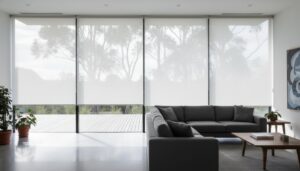

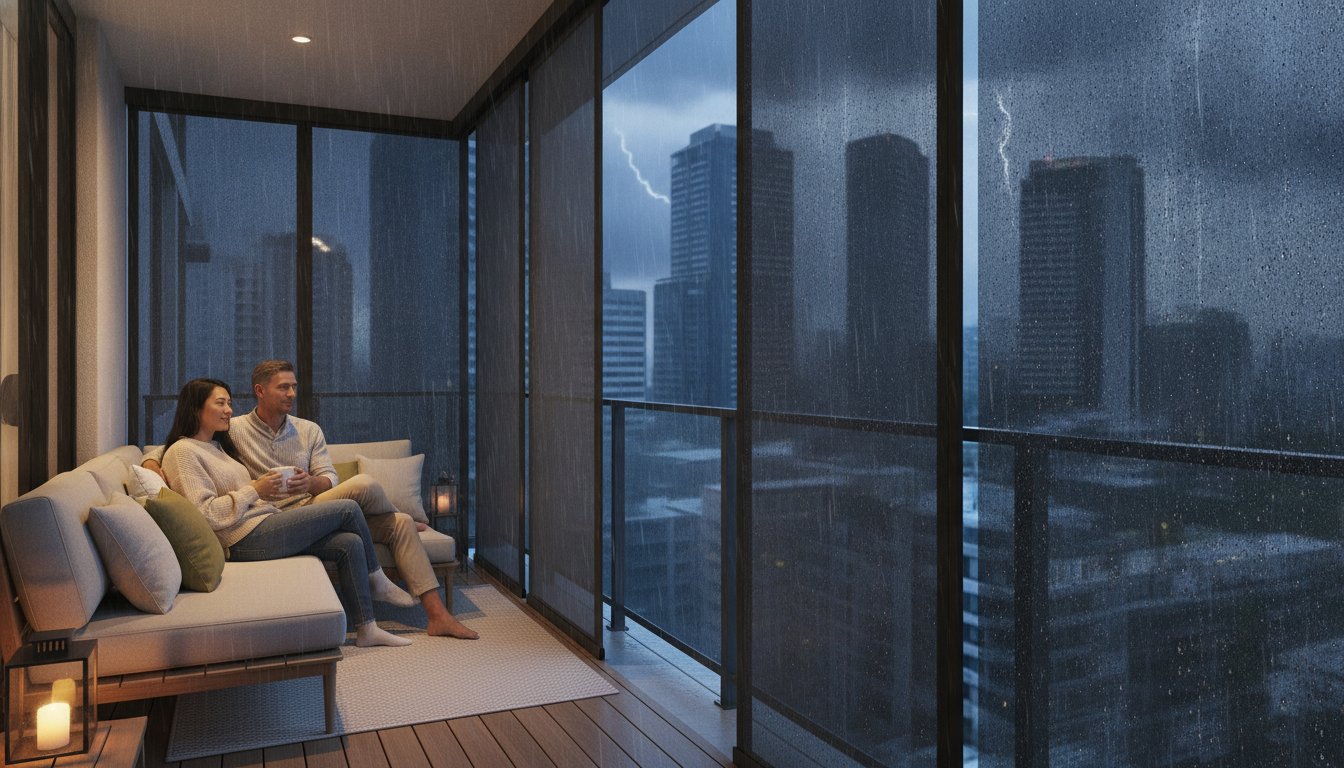
What if your balcony didn’t have to “close” just because the clouds rolled in? It’s a familiar scene for many of us; the rain starts blowing sideways, your outdoor furniture gets soaked, and you realize that the right waterproof outdoor blinds for balcony use are the only thing standing between a dry afternoon and a soggy mess. You want that extra space to feel like a real room, but the harsh sun and prying eyes from next door make it hard to truly relax. We believe you shouldn’t have to sacrifice your comfort just because of the weather.
Discover how to choose and install the perfect setup to turn your balcony into a dry, usable room all year round. We’ve put together this 2026 guide to help you navigate the latest weather-resistant materials and standards, like ISO 811 for hydrostatic pressure, so you know your investment will actually stay dry. You’ll learn how to achieve a sleek, professional finish with durable hardware that stands up to salty coastal air; all while keeping the project simple enough to handle yourself. We’re going to cover everything from fabric selection to the secrets of a “sealed system” install that turns your balcony into a year-round sanctuary.
Key Takeaways
- Learn the technical difference between water-resistant and waterproof fabrics to ensure your outdoor space remains usable even during heavy downpours.
- Discover why Zipscreen systems are the gold standard for waterproof outdoor blinds for balcony areas, providing a fully sealed edge-to-edge finish that keeps rain out.
- Compare clear PVC, tinted, and blockout fabrics to find the perfect balance between maintaining your view and achieving total weather protection.
- Follow our straightforward DIY guide to measure and install your own custom blinds on concrete or metal structures for a professional result at a fraction of the cost.
- Understand why custom-made blinds offer superior longevity and better moisture protection compared to standard off-the-shelf alternatives.
What Makes an Outdoor Blind Truly Waterproof?
If you’ve ever stood on your balcony during a summer storm, you know that water-resistant often isn’t enough. Many homeowners assume any outdoor screen will keep them dry, but there’s a massive difference between a mesh that sheds light spray and a true barrier against driving rain. Choosing the right waterproof outdoor blinds for balcony use means looking past the surface and understanding how the fabric and hardware work together as a complete system. It’s about creating a seal, not just a hanging screen.
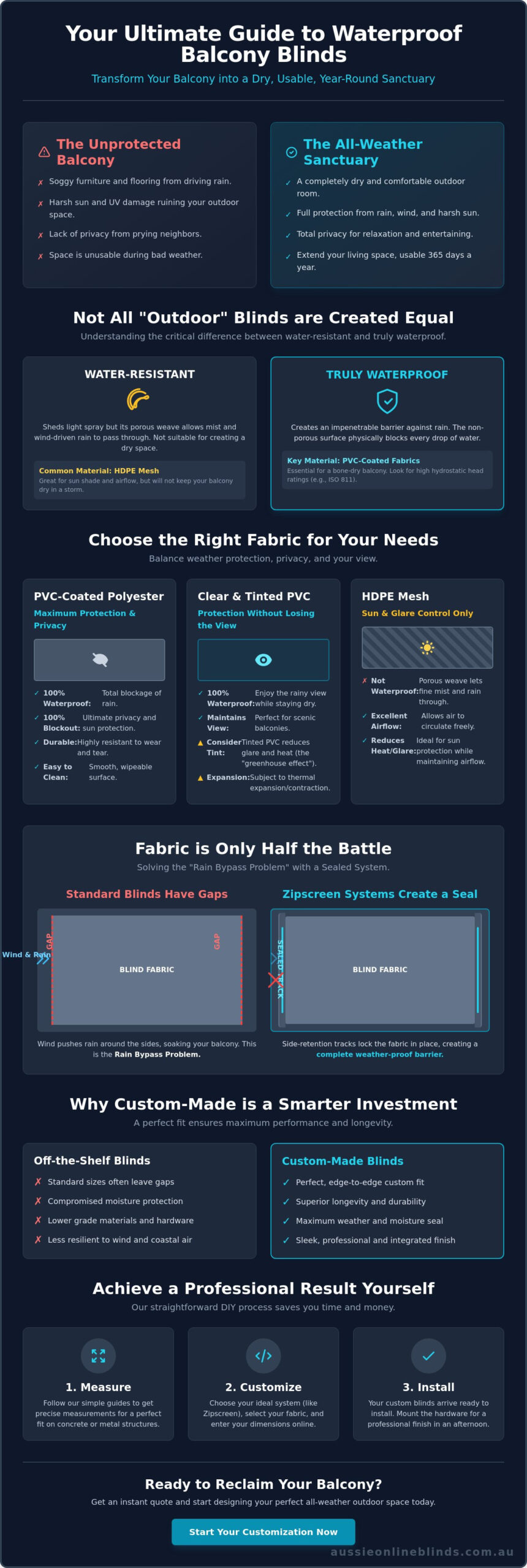
A common mistake is thinking that standard sunscreen mesh will do the job. While these are excellent for cutting down glare and heat, their open weave allows fine mist to pass right through during a heavy downpour. To stay bone-dry, you need a fabric with zero porosity. This is usually achieved through a heavy PVC coating or a solid vinyl finish that physically blocks every drop. However, the fabric is only half the battle. If your hardware isn’t designed to hold that fabric tight against the wind, the rain will simply find another way in.
Waterproof vs. Water-Resistant: Which Do You Need?
High-density polyethylene (HDPE) is a popular choice for general shade, but it’s naturally porous to allow air to circulate. If your goal is a dry room, you’ll want to look at PVC-coated polyester. This material creates a solid, impermeable skin that’s easy to wipe down and completely waterproof. Hydrostatic head is the technical measurement of how much water pressure a fabric can withstand before it starts to leak through the weave. For a balcony that doubles as a living room, you want the highest rating possible to ensure your cushions and electronics stay safe.
- PVC-Coated Polyester: Best for total rain blockage and easy cleaning.
- Tinted or Clear PVC: Perfect for keeping the rain out while maintaining your view of the garden or street.
- High-Density Polyethylene (HDPE): Great for sun, but will let mist through during storms.
The ‘Rain Bypass’ Problem on Balconies
Even the best fabric fails if the rain just blows around the sides. This is known as the rain bypass problem. On an exposed balcony, wind pushes water through the gaps between the blind and the pillar or wall. This is why a standard window blind design usually isn’t enough for outdoor use. You need a system that anchors the fabric securely.
To solve this, we recommend side-retention systems like Zipscreen or Deep Channel blinds. These systems lock the fabric into a side track, creating a sealed edge that stops the weather in its tracks. Getting your measurements exactly right is the final piece of the puzzle. When you choose custom-made waterproof outdoor blinds for balcony spaces, you ensure a tight fit that leaves no gaps for the wind to exploit, turning a leaky outdoor area into a comfortable, dry extension of your home.
Choosing the Right Fabric for Balcony Weather Protection
Once you’ve decided on a system that seals your space, the next big choice is the fabric. This is where you decide how your balcony feels. Do you want to watch the rain fall while staying dry, or do you want a private sanctuary that feels like a permanent extension of your home? Selecting the right waterproof outdoor blinds for balcony use requires balancing visibility with heat control. It’s not just about the rain; it’s about making the space comfortable every single day.
Clear and Tinted PVC: The Classic Choice
PVC is the go-to for many homeowners because it offers 100% rain protection without sacrificing the view. Clear PVC acts like an outdoor window. It’s perfect for south-facing balconies that need all the natural light they can get. However, in our local climate, thermal expansion is a real factor. PVC can expand in the heat and contract in the cold. We recommend tinted PVC for west-facing areas to cut down on glare and manage the “greenhouse effect” that can trap heat behind a solid barrier.
Beyond just keeping you dry, choosing the right fabric can impact your home’s temperature. The energy-saving benefits of window coverings are well-documented, helping to reduce cooling costs during those blistering summer afternoons. By blocking the sun before it hits your glass doors, you’re taking the load off your air conditioner. If you’re unsure which fabric suits your balcony’s orientation, you can explore the different options for Outdoor Blinds on our site to see what fits your style best.
Blockout Outdoor Fabrics for Maximum Privacy
If your balcony is overlooked by neighbors or faces a busy street, solid blockout fabrics are the answer. These are 100% waterproof and create a true “extra room” feel. They’re particularly effective for north-facing alfresco areas where the sun is relentless. Unlike sunscreen mesh, which has tiny holes for airflow, these fabrics are a solid barrier. This means you get total privacy and a high-end aesthetic that matches your interior decor perfectly.
To keep your fabrics looking sharp for years, look for materials with high UV stability. This prevents the “yellowing” or brittleness that often plagues cheaper, off-the-shelf options. Maintenance is surprisingly simple. A quick wipe with a damp cloth and mild soapy water every few months is usually all it takes to keep them crystal clear or vibrantly colored. Avoid harsh chemicals, as these can strip the protective UV coatings. Stick to the basics, and your investment will stand up to the elements for a long time.
The Best Blind Systems for Balcony Wind and Rain
Choosing the right hardware is just as vital as picking the fabric. While we’ve discussed how the right material blocks water, the mechanical system is what keeps that material in place when the wind picks up. Balconies often face unique challenges, like high-velocity gusts and strata regulations that limit what you can install. Finding the right waterproof outdoor blinds for balcony use means matching the system to your specific exposure level. It’s about finding that balance between a clear view and a sturdy barrier.
Zipscreen: The Ultimate Weather Seal
If you want a balcony that feels like a genuine indoor room, Zipscreen is the gold standard. This system uses clever side-zip technology to lock the fabric into hidden channels. It creates a complete seal against rain, wind, and even those pesky mosquitoes. Because the fabric is held tight on all sides, there’s no flapping or rattling during a storm. For those looking for the technical details and mounting options, you can check out the specifications for zipscreen outdoor blinds to see how they fit your space. It’s the most robust way to ensure a bone-dry environment regardless of the weather outside.
Wire Guide and Straight Drop Alternatives
Not every balcony needs a full enclosure. If you have a more sheltered area or prefer a minimalist look, Wire Guide blinds are a fantastic option. They use discreet stainless steel cables to guide the blind up and down, offering a sleek “floating” appearance that doesn’t clutter your view. While they don’t provide the airtight seal of a Zipscreen, they’re excellent at resisting wind and keeping rain from blowing directly onto your furniture. They’re a great middle ground for modern apartments where style is just as important as function.
For a more traditional approach, Straight Drop blinds are a cost-effective choice for DIY installers. They’re simple to mount and easy to operate. To prevent the bottom rail from “clapping” against your balcony railing in a breeze, we recommend choosing heavy-duty weighting options or floor-mounted hold-downs. This keeps the blind steady and ensures your waterproof outdoor blinds for balcony protection stay exactly where you need them. If your balcony is on a higher floor and needs constant airflow even during a light drizzle, Pivot Arm blinds are another smart pick. They project the fabric outward, deflecting rain while allowing a cooling breeze to circulate underneath. No matter which system you choose, the goal is to make your outdoor area a reliable part of your home.
DIY Measuring and Installation for Balconies
Installing your own blinds might feel a bit daunting, especially when you’re working several stories up. However, getting a professional finish for your waterproof outdoor blinds for balcony protection is completely within your reach. It’s all about preparation and having the right tools for the job. Most balcony structures are made of concrete or metal, which means you’ll need a bit more than just a standard screwdriver to get a secure, watertight fit. We’ve helped thousands of homeowners tackle this exact project, and the secret is always in the setup.
Measuring Your Balcony Like a Pro
The golden rule is to measure twice so you only have to order once. Balcony pillars are notorious for being slightly “out of square,” meaning the distance at the top might be different from the bottom. To account for this, take three width measurements: one at the top, one in the middle, and one at the base. If you’re opting for a reveal fit, use the smallest measurement to ensure the blind doesn’t jam. Don’t forget to look out for obstructions like downpipes, handrails, or floor slopes that might interfere with the blind’s travel. For a deeper dive into the technicalities, check out our guide on how to measure for blinds online.
When it comes to the actual install, your tools will depend on your building’s construction. If you’re drilling into a concrete soffit or pillar, you’ll definitely need a hammer drill and quality masonry anchors. For metal railings or beams, self-tapping “tek” screws are your best friend. Safety is paramount on a high-rise. Never lean over the edge to secure a bracket; always work from a stable ladder and have a helper nearby to pass you tools and keep the blind steady during the mounting process. Keeping your tools on a lanyard is a smart move to prevent anything from falling to the street below.
Strata and Apartment Considerations
Before you pick up a drill, you must check your strata bylaws. Most apartment complexes have strict rules about external modifications to maintain a uniform look. This often includes specific requirements for fabric colors or the type of hardware allowed. Face-fit means mounting the blind onto the front surface of the pillars, while reveal-fit involves installing the blind inside the opening between the pillars or walls. Choosing the right fit ensures your waterproof outdoor blinds for balcony use look like they were part of the original building design rather than an afterthought. Once you have your strata approval and measurements ready, you can browse our range of DIY Blinds to find the perfect match for your home.
Why Custom-Made Waterproof Blinds are the Best Investment
Choosing the right protection for your home is about more than just a quick fix. While off-the-shelf “standard size” blinds might look like a bargain at first, they often fall short when the weather turns. These generic options rarely fit balcony openings perfectly, leaving gaps where wind-driven rain can bypass the fabric and soak your furniture. By choosing custom-made waterproof outdoor blinds for balcony use, you’re ensuring every millimeter of your space is protected. It’s a long-term investment that keeps your balcony dry and usable, and if you’re also looking to maximize your property’s value in the Queensland market, you can visit Brisbane City Home Loans for expert local mortgage advice.
At Aussie Online Blinds, we’re proud to be a family-owned Australian business. We understand the local climate because we live in it. That’s why our products come with a 3-year warranty designed to handle everything from coastal salt spray to the blistering summer sun. We offer national shipping, so whether you’re in a city apartment or a beachside retreat, you can access high-quality, bespoke shading solutions delivered right to your door. Supporting a local business means you get a product built for our specific conditions, not a generic import that wasn’t made for the Australian sun.
Durability and Longevity in Coastal Air
If you live near the ocean, you know that the salt air is relentless on metals. We use high-grade aluminium and stainless steel hardware in our systems to prevent rust and corrosion. This is especially important for balconies, where exposure levels are often higher than in a sheltered backyard. Every component is finished with professional-grade powder coating, ensuring your blinds look as good in five years as they do on day one. This level of hardware quality is what separates a true all-weather system from a temporary shade. For a closer look at our full range of materials and styles, you can explore our various outdoor blinds options.
The DIY Advantage: Quality Without the Markup
One of the biggest advantages of our model is the significant cost savings. You get the same high-end materials used by luxury installers, but without the heavy professional labor markup. By taking on the measuring and installation yourself, you’re keeping that money in your pocket while still achieving a professional result. We’ve designed our process to be as straightforward as possible, so you don’t need to be a tradie to get it right.
We’re here to help you throughout your project journey. From the moment you start measuring to the final turn of the screwdriver, you have access to our expert support and plain-English guides. We believe that luxury home styling should be accessible to everyone, and our direct-to-consumer model makes that possible. Ready to transform your balcony into a year-round room? Browse our waterproof outdoor blinds today and start enjoying your outdoor space in any weather.
Transform Your Balcony Into a Year-Round Sanctuary
You now have the knowledge to reclaim your outdoor space from the elements. By combining a sealed system like Zipscreen with the right 100% waterproof fabric, you can effectively block driving rain and create a dry, comfortable room. Remember that a professional result depends on those three width measurements and choosing hardware that won’t rust in our salty coastal air. Taking the DIY route doesn’t just save you money; it gives you total control over the quality and look of your home.
Investing in custom-made waterproof outdoor blinds for balcony use ensures your furniture stays protected and your privacy remains intact. As an Australian family-owned and operated business, we’re here to support you with a perfect fit and a 3-year warranty on all our outdoor blinds. You’ve got the plan, and we’ve got the gear to make it happen. Shop our custom-made waterproof outdoor blinds and save with DIY installation. We can’t wait to see how you transform your space into a sanctuary you can enjoy every day of the year.
Frequently Asked Questions
Are all outdoor blinds waterproof?
No, not all outdoor blinds are designed to block water completely. Most standard blinds use a mesh fabric that is great for shade but allows fine mist to pass through during a heavy storm. To get a truly waterproof outdoor blinds for balcony setup, you need to choose solid materials like PVC or vinyl-coated polyester that physically stop water from penetrating the weave.
Can Zipscreen blinds be used with waterproof PVC fabric?
Yes, you can definitely pair Zipscreen hardware with waterproof PVC fabric. This combination is actually the best way to create a fully enclosed, dry room on your balcony. The Zipscreen side tracks hold the PVC tight so the rain can’t blow in through the sides. It gives you a crystal clear view while you stay bone dry during a downpour.
How do I stop my balcony blinds from rattling in the wind?
The best way to stop rattling is to choose a side-retention system like Zipscreen or Deep Channel blinds. These systems lock the fabric into a track so it can’t move or flap. If you have a straight drop blind, using heavy-duty bottom rail weights or floor-mounted hold-down straps will help keep the fabric steady when the breeze picks up.
Will waterproof blinds make my balcony too hot in summer?
Solid waterproof fabrics can trap heat because they don’t allow for much natural airflow. If your balcony gets direct afternoon sun, we suggest choosing a tinted PVC to reduce glare or simply leaving the blinds slightly open at the bottom to let a breeze through. This helps prevent the greenhouse effect while still providing plenty of protection from the elements.
Do I need strata approval for outdoor blinds on my balcony?
Most apartment buildings and townhouses require strata approval before you install anything on the exterior. This is because the building management needs to maintain a consistent look from the street. It’s a smart move to check your specific bylaws regarding colors and mounting styles before you place your order for waterproof outdoor blinds for balcony use. If your property improvements involve more significant structural work that interacts with utility lines, you can explore Sewer Encasements to ensure your project meets all regulatory requirements.
How do I clean bird droppings or salt spray off my waterproof blinds?
Cleaning is simple and only requires a bucket of warm, soapy water and a soft microfibre cloth. Gently wipe away any salt spray or dirt, then rinse with fresh water from a garden hose. Avoid using harsh chemicals or abrasive scrubbers. These can damage the UV-protective coating and make the fabric go cloudy or brittle over time.
Can I install outdoor blinds into a concrete balcony ceiling?
Yes, you can securely mount blinds into a concrete ceiling using a hammer drill and masonry anchors. This is a very common installation method for modern balconies. Just make sure you use high-quality stainless steel fixings to prevent rust. This is especially important if you live near the coast where the salt air is quite corrosive.
What is the difference between a wire guide and a Zipscreen for rain protection?
A Zipscreen provides a much better rain seal because the fabric is zipped into a side track, leaving no gaps for water to enter. A wire guide system uses stainless steel cables to keep the blind from swinging, but there is still a small gap between the fabric and the wall. While wire guides look sleek, Zipscreen is the superior choice for total weather protection.