

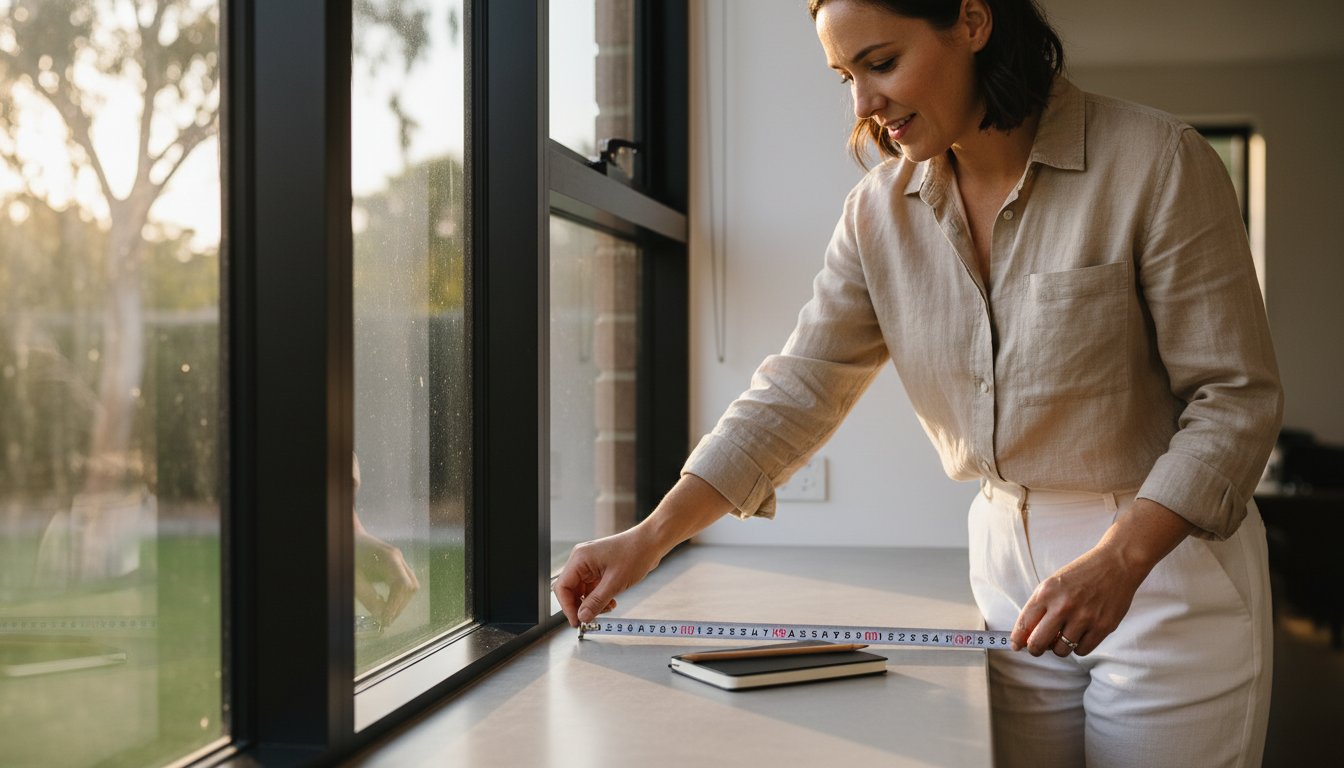
What if you could skip the hefty professional fees and still guarantee your new window treatments fit like a glove? We know that hovering over the “order” button can feel a bit nerve-wracking, especially when you’re worried that a single misplaced millimeter might turn your investment into an expensive mistake. It’s completely natural to feel a little stuck between the high cost of full-service retailers and the fear of getting the sizing wrong on your own. Mastering how to measure for blinds online is the secret to getting that crisp, custom look without the stress of a measurement mishap.
The good news is that precision measuring is a practical skill that any homeowner can master with just a bit of neighborly guidance. We’ve helped people all over the region transform their homes by demystifying the process and proving that bespoke style is well within reach. By following our simple three-point system, you’ll gain the confidence to handle tricky architraves and window handles like an expert. This guide walks you through the essential steps for both inside and outside mounts, ensuring you get a perfect, cordless-standard fit while saving significantly on labor costs. Let’s get your tape measure ready and turn that DIY hesitation into a beautifully finished room.
Key Takeaways
- Save hundreds on professional call-out fees by mastering our “Measure Twice, Order Once” philosophy for custom furnishings.
- Learn the difference between sleek Recess fits and light-blocking Face fits to choose the perfect mounting style for your space.
- Follow our professional 3-point system to learn exactly how to measure for blinds online with millimeter precision.
- Discover how to identify “out of square” windows and manage the 30mm fabric gap to avoid common DIY sizing mistakes.
- Gain the confidence to use an online configurator and select the right blockout, sunscreen, or light-filtering fabrics for your home.
Preparation: Why Accurate Measurements Are Your Best DIY Investment
Taking the time to get your measurements right is the smartest move you can make for your home budget. Professional installers often charge expensive call-out fees just to show up and measure your windows, but by handling this step yourself, you’re already saving a significant amount before you’ve even picked out a fabric. Our “Measure Twice, Order Once” philosophy isn’t just a catchy phrase; it’s the foundation of a perfect installation. When you master how to measure for blinds online, you ensure that your custom furnishings arrive ready to fit seamlessly into your space. This precision at the very start is what guarantees the functional longevity of your blinds, preventing them from catching on frames or wearing out prematurely due to a poor fit. Mastering the basics of how to measure for blinds online is about doing the job right the first time so you can enjoy the results for years to come.
The Essential DIY Measuring Toolkit
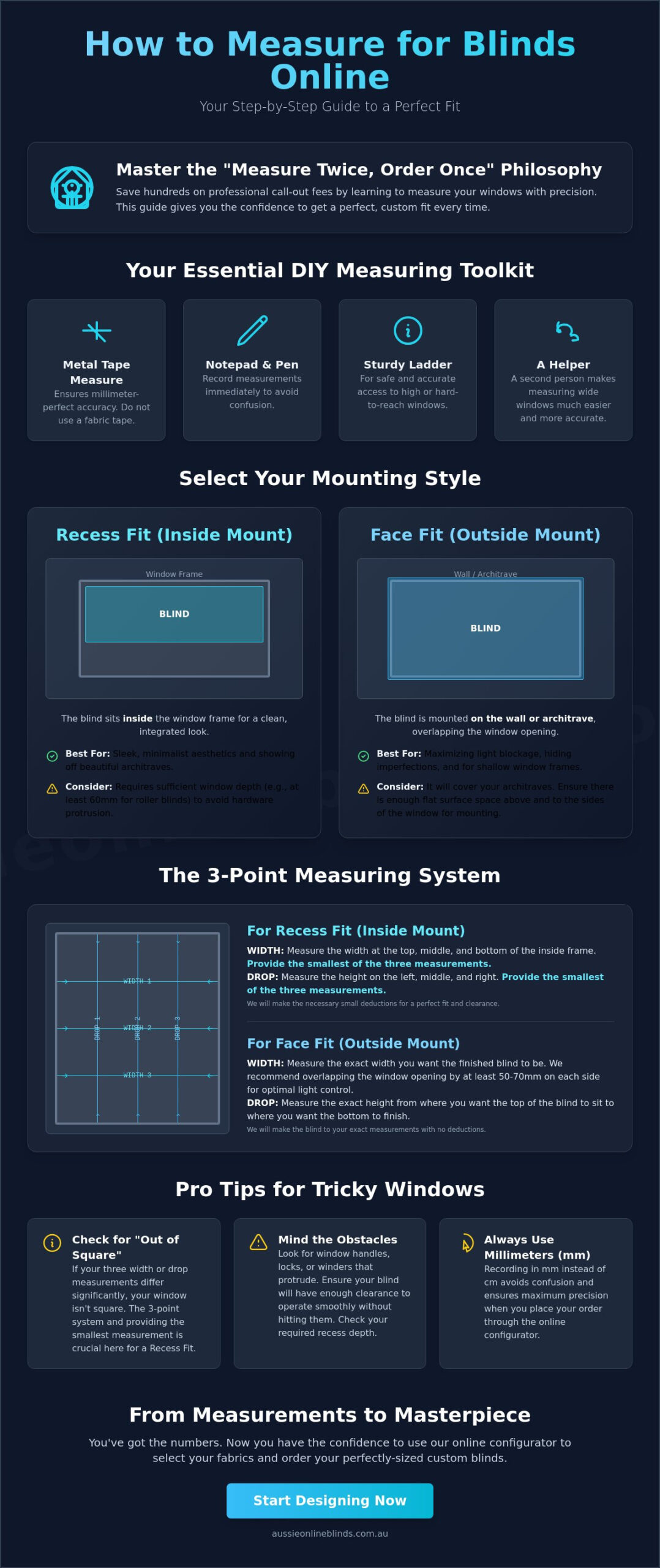
You don’t need a shed full of expensive tools to get professional results, but you do need the right ones. A high-quality metal tape measure is your most important ally. Unlike cloth tapes used in sewing, metal tapes don’t stretch or sag, providing the millimeter-perfect accuracy required for high-quality Australian manufacturing. We always recommend recording your findings in millimeters (mm) rather than centimeters. This avoids confusion during the ordering process and ensures your blinds are cut to the exact size you need.
For a smooth and safe session, make sure you have these items ready:
- A high-quality metal tape measure (not a fabric one)
- A sturdy, level ladder for high windows
- A notepad and pen to record measurements immediately
- A second set of hands to assist with wider windows
Having a neighbor or family member hold the other end of the tape makes the whole process much more efficient and helps prevent errors on those large spans.
Preparing Your Windows for Assessment
Before you start pulling out the tape, clear the area to give yourself plenty of room to move. Remove any existing window coverings, decorative items, or furniture that might get in your way. You need a clear view of the entire window frame to spot potential obstacles. Look closely for window hardware like handles, winders, or locks that might protrude into the space where the blind will hang. These small details can change how different types of window blinds sit against your glass or within the recess. Finally, identify your window frame material. Whether it’s timber, aluminium, or plaster, knowing what you’re working with helps you plan the installation later. This quick assessment ensures a stress-free measuring session and a beautiful, professional-looking end result for your home update.
Selecting Your Mounting Style: Recess vs. Face Fit
Before you dive into how to measure for blinds online, you need to decide where those blinds will actually sit. The choice between a Recess (Inside) Fit and a Face (Outside) Fit completely changes the final look and performance of your indoor roller blinds. It’s not just about aesthetics; it’s about choosing the right tool for the job. Each window in your home might require a different approach depending on the room’s purpose, the window’s depth, and whether you want to show off your architraves or hide them away.
When to Choose a Recess Fit
A Recess Fit sits snugly inside the window frame. This creates a sleek, integrated look that’s particularly popular in modern Australian homes with “square set” windows where the plaster meets the window without any decorative trim. If you’ve got beautiful timber architraves you want to show off, this is the way to go because it keeps the woodwork fully visible. Just keep in mind that you need enough depth in the frame. Most roller blinds need at least 60mm of clear space to sit flush, while Roman styles might need even more. If your windows are shallow, the blind hardware might protrude into the room, which can look a bit untidy. This style is fantastic for a clean, minimalist finish that feels like part of the architecture.
When a Face Fit Is the Better Option
A Face Fit (or Outside Fit) mounts directly to the architrave or the wall above the window. This is the best choice for shallow windows where there isn’t enough room inside the frame for the hardware to sit comfortably. It’s also the superior option for light control. When you use blockout roller blinds with a Face Fit, the fabric overlaps the window frame to minimize those pesky light gaps at the edges. This setup can also help reduce heat loss through windows by creating a better seal against the glass, making your home more comfortable year-round.
Face fits are also a clever trick for hiding older or damaged window frames that have seen better days. If you’re dealing with “out of square” windows, mounting on the face allows you to level the blind perfectly even if the window itself is a bit wonky. As you explore how to measure for blinds online, consider which style solves your room’s specific problems. Maybe you need to stop glare on a TV or fix a drafty corner. If you’re feeling inspired to start your project, browsing our range of DIY blinds is a great way to visualize how different mounts look in real homes before you even pick up the tape measure.
The Step-by-Step Guide to Measuring Your Windows
Most windows look perfectly square at a glance, but once you pull out the tape measure, you’ll often find they’re slightly wonky. This is why a professional three-point measurement system is your best friend. By taking three separate readings for both width and height, you account for any structural variations in your home. It’s the most reliable way to learn how to measure for blinds online because it eliminates the guesswork. Whether you’re refreshing a single bedroom or outfitting a whole patio, these steps ensure your order fits perfectly on delivery day. Don’t worry if the numbers differ by a few millimeters; that’s exactly why we measure in three spots.
Measuring Width Like a Pro
Start by measuring the width across the top, the middle, and the bottom of your window frame. If you’re opting for a recess fit, you must record the smallest of these three figures. This ensures your blind doesn’t get stuck on a narrow section of the frame as it rolls down. For a face fit, measure the width of the architrave from outer edge to outer edge. We recommend adding a little extra to each side if you want to ensure the fabric completely covers the trim for better light blockout. Precision is non-negotiable here, so always record your numbers in millimeters rather than rounding off. You might find The Home Depot’s guide to measuring for blinds helpful for visualizing these specific points. This same meticulous approach applies when measuring for external privacy screens, where getting the width right is key to maintaining both style and seclusion on your deck or balcony.
Calculating the Drop (Height)
Next, measure the vertical drop on the left, in the center, and on the right side. Just like the width, sills can often slope or settle over time. For recess fits, record the smallest drop to prevent the blind from bunching at the bottom. If you’re measuring full-height windows or sliding doors, remember to account for floor clearance so the fabric doesn’t drag or collect dust. When you’re looking at how to measure for blinds online for outdoor spaces, pay extra attention to zipscreen outdoor blinds on your patio. These require a very specific measurement of the opening to ensure the side tracks align perfectly with your posts or walls. Unlike indoor rollers, these outdoor systems rely on a tight fit within the tracks to handle the wind. If you’re still deciding between track-guided outdoor blind systems, our detailed zipscreen vs ziptrak comparison for DIY homeowners breaks down the key technical differences to help you choose the right system before you start measuring. Once you’ve got all your numbers down, do yourself a favor and measure everything one more time. It only takes a minute, but it’s the ultimate insurance policy for your project journey.
Avoiding Costly Mistakes: Pro Tips for Tricky Windows
One of the most common traps homeowners fall into is trying to be too helpful. When you’re learning how to measure for blinds online, the golden rule is to never deduct any millimeters yourself. It’s a natural instinct to want to leave a little “breathing room” so the blind doesn’t rub against the frame, but our factory handles those precise deductions automatically based on the mounting style you select. If you provide a measurement that you’ve already reduced, your blind will arrive much too small, leaving you with unsightly gaps. Simply give us the exact, tight measurements of your opening. We’ll take care of the technical math to ensure your custom fit is spot on.
You also need to keep a close eye on “out of square” windows. Older homes often settle, meaning the top of your window might be slightly wider than the bottom. If the difference is more than 5mm to 10mm, a recess fit might struggle to operate smoothly. In these cases, we often suggest switching to a Face Fit. This allows you to mount the blind perfectly level on the architrave, cleverly disguising the fact that the window underneath is a bit wonky. This proactive approach saves you the frustration of a blind that jams or hangs crookedly.
Handling Obstructions and Protrusions
Handles, winders, and even tiles can be real troublemakers if you don’t account for them early. If you have a window winder that sticks out past the frame, a recess-fitted blind will simply hit it on the way down. This can cause the fabric to ripple or the hardware to jam. For windows with deep handles, you can use the “spacer” trick for face-fitted blinds. By adding a small block or spacer behind the bracket, you can project the blind further into the room so it clears the handle with ease. Don’t forget to check for cornices or skirting boards near the top of the window that might interfere with the bracket placement. In modern apartments, bulkheads can also limit your mounting space, so always check the clearance above the window before you commit to a Face Fit. Taking a moment to spot these hurdles now prevents a headache during installation.
Managing the Light Gap
It’s a technical reality that the fabric on a roller blind will always be narrower than the total width of the brackets. This is known as the 30mm Rule. The brackets and the control mechanism need space to sit, which naturally creates a small light gap on either side of the fabric. If you’re outfitting a bedroom where total darkness is the goal, using a Face Fit is the most effective way to eliminate this side-light leakage. By overlapping the architrave, the fabric covers the entire glass area and minimizes those pesky morning sunbeams. Mastering these small details is how diy blinds can achieve a professional-level finish that rivals any high-end installer. If you’re ready to put these tips into practice, you can start exploring our range of blinds online to find the perfect style for your tricky windows.
From Measurements to Masterpiece: Ordering Your Custom Blinds Online
Once you have double-checked your figures, you have already cleared the biggest hurdle in your DIY journey. Learning how to measure for blinds online is the key to a professional finish, and now you can reap the rewards. Our online configurator is designed to be straightforward and helpful. You simply input those precise millimeters you recorded earlier, select your mounting style, and choose the fabric that best suits your room’s needs. Whether you need the total darkness of Blockout Roller Blinds, the glare reduction of Sunscreen Roller Blinds, or the soft, diffused glow of Light Filtering Roller Blinds, the process is quick and stress-free.
Ordering factory-direct gives you a level of quality control that you just won’t find in a big-box retail store. Because we ship directly from our production floor to your doorstep, we can offer a 3-year warranty that reflects our confidence in every product we make. This direct-to-consumer approach doesn’t just save you money; it ensures that your custom furnishings are handled with care by the same people who built them. It is a smarter way to shop that prioritizes both your budget and your home’s aesthetic appeal—a philosophy shared by Good Budget Website, which helps Australian small businesses build professional online presences affordably.
To further enhance these digital experiences, many growing companies are now turning to Chatterbots to provide AI-driven customer service and automated lead generation.
Why Custom-Made Beats Off-the-Shelf
Off-the-shelf blinds might seem convenient, but they often require messy home cutting or trimming that leaves frayed edges and a lopsided look. When you order custom, your blinds are manufactured to your exact specifications for a perfect fit right out of the box. We use superior Australian-made materials that are specifically engineered to withstand our harsh local climate, ensuring they won’t fade or warp over time. By choosing a custom solution, you are also supporting a family-owned business that takes immense pride in local production. We offer national shipping across Australia, bringing high-end styling to every neighborhood, no matter how remote.
What Happens After You Click Order?
As soon as your order is finalized, our precision manufacturing process begins. Each blind undergoes rigorous quality control checks to ensure the dimensions are spot on and the fabric is flawless. You will receive tracking information so you can follow your delivery’s journey to your home. While you wait, you can access our simple DIY installation guides which walk you through the final steps of the project. We also recommend thinking about a regular blind maintenance routine from day one. Keeping your new blinds clean and dust-free will protect your investment and ensure they continue to operate smoothly for years to come. You have done the hard work of learning how to measure for blinds online; now it is time to sit back and wait for your custom masterpiece to arrive.
Transform Your Home with Confidence
Taking control of your home improvement project is incredibly rewarding. You’ve learned that precision isn’t about being a professional; it’s about using the right tools and following a simple, three-point system. By deciding between a sleek recess fit or a light-blocking face fit, you’ve already done the heavy lifting to ensure a beautiful result. Understanding how to measure for blinds online gives you the power to skip the expensive middlemen and get high-quality, custom-made results that fit your windows perfectly every time.
We’re here to support you at every step of the journey. As an Australian family-owned and operated business, we take pride in delivering factory-direct quality straight to your door. With our 3-year warranty on all custom products and reliable Australia-wide shipping, you can order with total peace of mind. It’s time to put that tape measure to use and give your rooms the stylish update they deserve. Start measuring and shop our custom range today and see how easy it is to achieve a professional look on a DIY budget. We can’t wait to help you finish your project.
Frequently Asked Questions
Should I use a metal or cloth tape measure for blinds?
You should always use a high-quality metal tape measure for your window measurements. Cloth tapes are designed for sewing and can stretch or sag over time, which leads to inaccurate results that could ruin your custom fit. A steel tape stays rigid and provides the millimeter-perfect precision required for high-quality manufacturing. This simple tool ensures your new blinds fit snugly without any unexpected gaps or overlaps.
Do I need to take off any millimetres for a recess fit myself?
You should never deduct any millimeters yourself when ordering a recess fit. Our factory automatically applies the necessary technical deductions to ensure the blind operates smoothly within your frame. Simply provide the exact “tight” window opening measurements from your tape measure. If you make your own deductions, the blind will arrive much too small, resulting in light leakage and a poor finish that’s difficult to fix.
What if my window frame isn’t perfectly square?
If your window frame isn’t perfectly square, you should record the smallest measurement from our three-point system for a recess fit. This ensures the blind won’t get stuck on the narrower parts of the frame as it moves. If the frame is significantly out of square, a face-fit mount is often the better choice. This allows you to level the blind on the architrave while hiding the uneven window underneath for a crisp look.
How much should a face-fit blind overlap the architrave?
We recommend a minimum overlap of 50mm on each side of the architrave for a face-fit blind. This provides the best light control and ensures the fabric fully covers the window opening for a professional appearance. If you have particularly deep architraves or want to minimize side-light even further in a bedroom, you can increase this overlap. This extra coverage is vital for achieving the best performance from blockout fabrics.
Can I measure for outdoor blinds the same way as indoor blinds?
Measuring for outdoor blinds follows the same three-point principle as indoor blinds, but you must pay closer attention to your mounting surfaces. For systems like Zipscreen outdoor blinds, you need to measure the exact opening between the posts or walls where the side tracks will be fixed. Always check that your mounting points are sturdy and level to ensure the tracks align perfectly. This prevents the fabric from jamming or blowing out in the wind. If you’re also weighing up which outdoor track system to choose, our honest zipscreen vs ziptrak guide for Australian homeowners covers wind performance, sizing limits, and DIY installation differences to help you decide before you measure.
What is the minimum window depth required for an inside mount?
Most indoor roller blinds require a minimum window depth of 60mm for a fully recessed inside mount. This depth allows the fabric and the hardware to sit flush within the frame without protruding into your room. If your windows are shallower than 60mm, you can still install them as a partial recess, though the brackets will be visible. In these cases, many homeowners find a face-fit mount to be a more attractive and practical solution.
What do I do if there is a handle in the way of my blind?
If a window winder or handle is in the way, the best solution is usually to opt for a face-fit mount. This places the blind on the architrave, allowing the fabric to roll down in front of the obstruction without catching. If you’ve got your heart set on an inside mount, you might need to use spacers to project the blind forward. Learning how to measure for blinds online involves spotting these hurdles early to avoid installation headaches later.
Should I measure in centimetres or millimetres?
You should always record your measurements in millimetres (mm) for the best possible accuracy. Most Australian manufacturing processes use millimetres as the standard unit, and it helps prevent simple rounding errors that can lead to a lopsided fit. Providing your details in millimetres is the most reliable way to learn how to measure for blinds online and ensures your custom order is built exactly to the size you need for your home.